
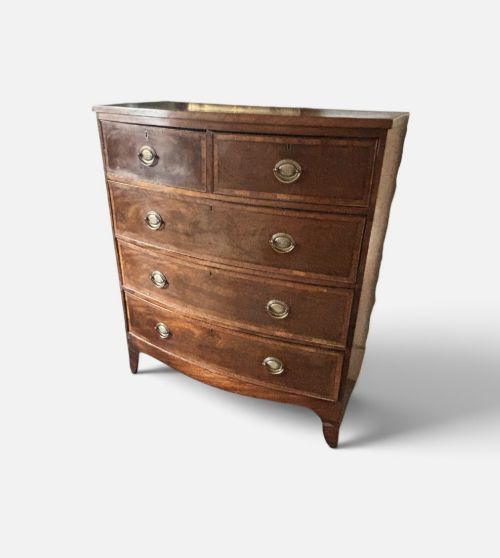
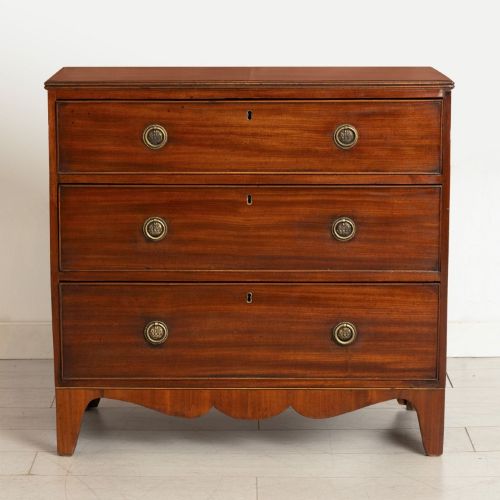
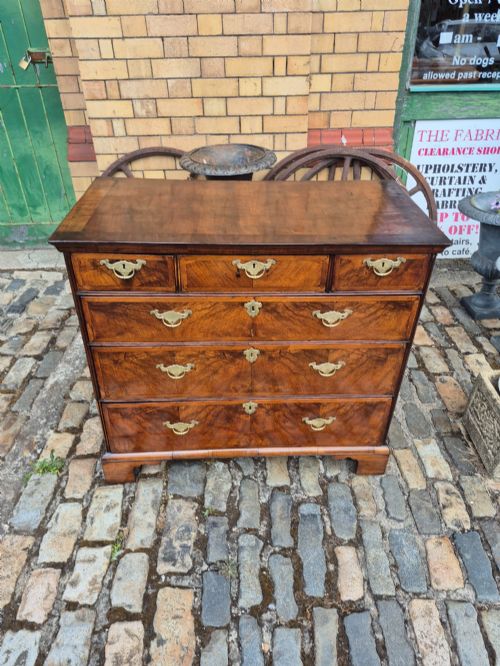
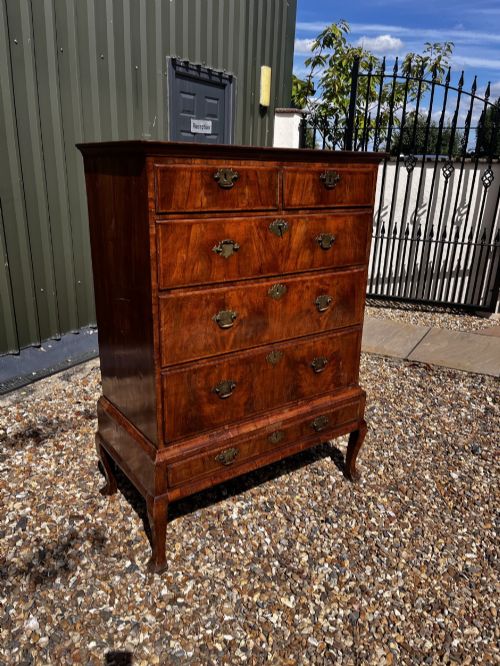

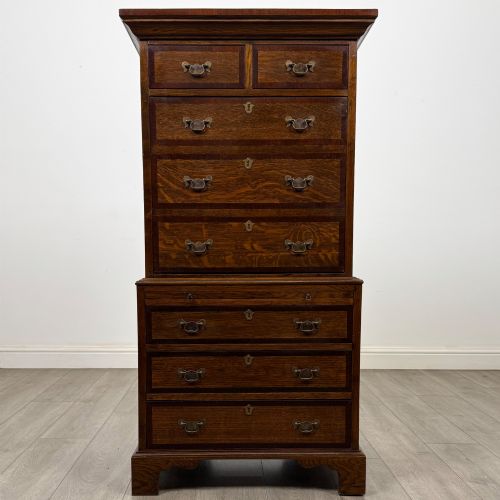
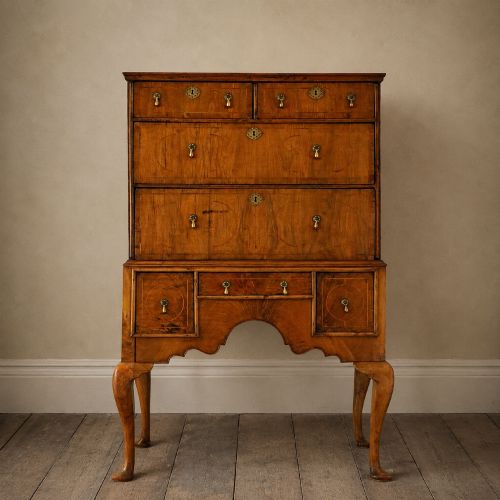
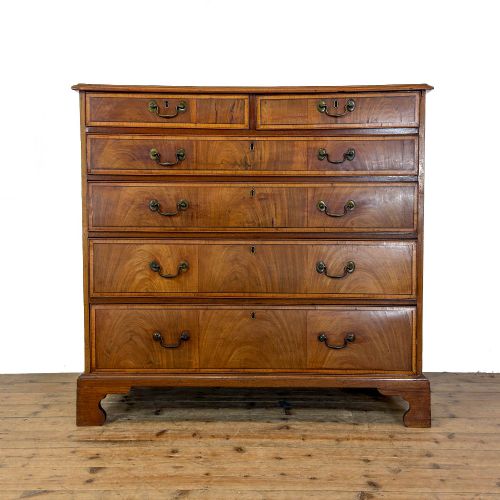
Crossbanded Chest of Drawers
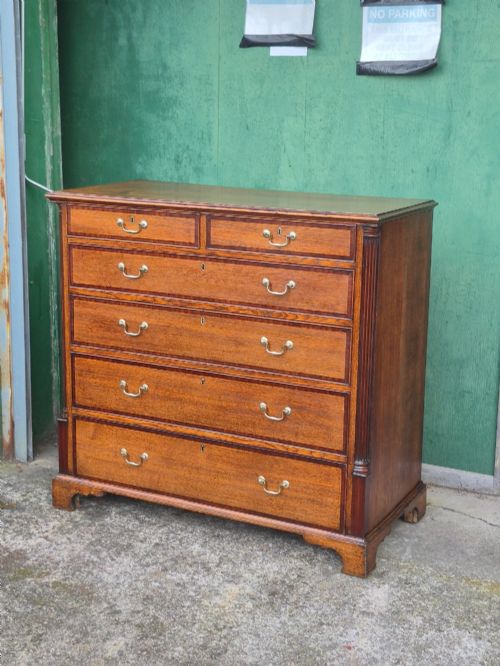
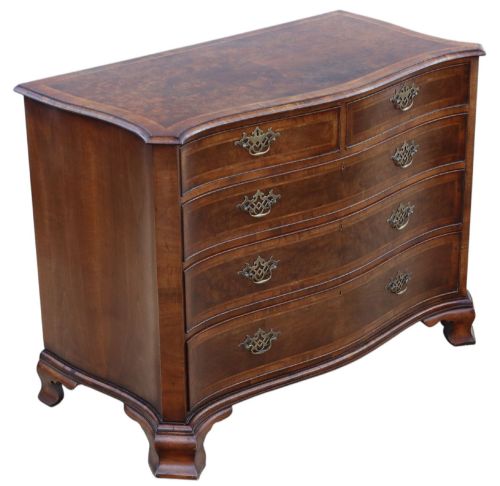
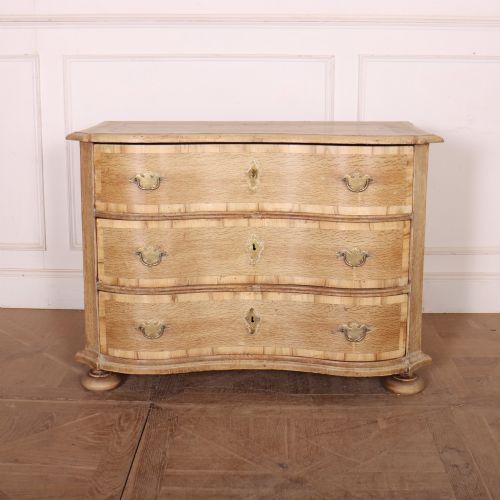
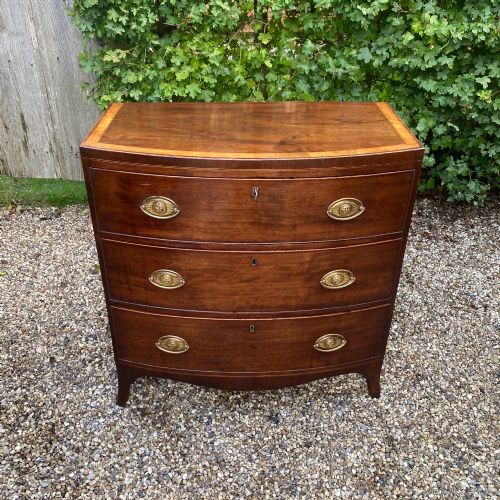
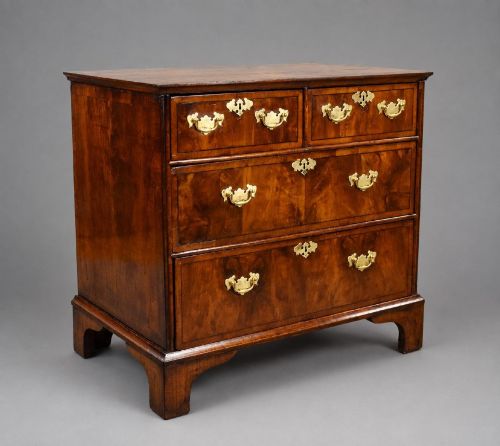
A crossbanded chest of drawers brings visible timber grain borders to a bedroom or living space.
Crossbanded Chest of Drawers
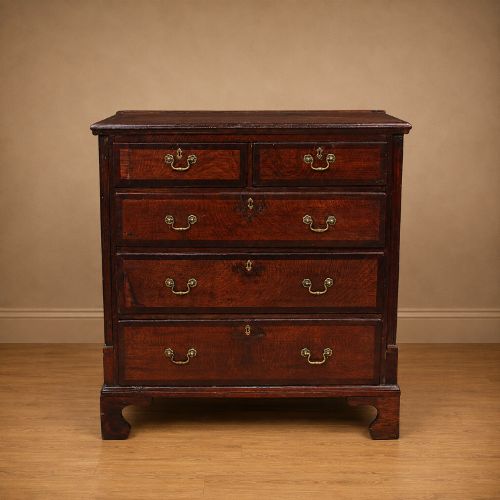
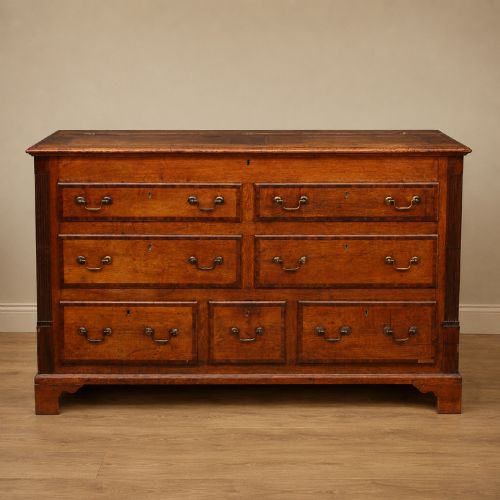
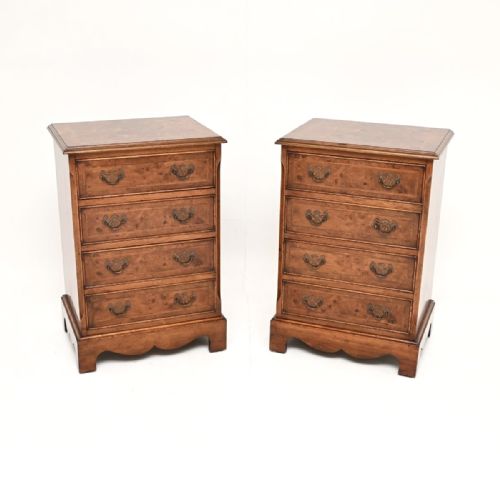
The form appears most frequently as a standard rectangular or bow-fronted chest, though variations include mule chests, chests on stands, and tallboys. Walnut, mahogany, and oak dominate the available selection, often paired with contrasting satinwood or rosewood borders.
How they were made
Cabinet makers constructed carcass frames from solid timbers such as oak, pine, or mahogany, applying fine veneers across the visible surfaces. Crossbanding required cutting thin strips of wood so the grain ran perpendicular to the main panel, framing the top and drawer edges.
Brass handles and escutcheons secured drawer fronts, while secondary woods like oak lined the interior drawer boxes. Surface finishes relied on traditional polishing techniques that deepened the natural colour and figure of the walnut or mahogany.
Some miniature furniture chests of drawers survive, offering full-scale craftsmanship in miniature proportions.
What varies in quality
The precision of the veneer work dictates the standing of individual items, particularly where crossbanded borders meet at sharp mitre joints. Timber selection also defines the tier, with burr walnut and figured mahogany commanding greater visual depth than plain grain.
Proportion and structural integrity separate standard examples from finer commissions, visible in the harmony of drawer graduations and the retention of original brass hardware. Regional country workshop pieces contrast with urban cabinet maker outputs through simpler carcase construction.
The Crossbanded Chest of Drawers Glossary
- Crossbanding
- A border technique where veneer strips are applied so the grain runs perpendicular to the surrounding wood.
- Bow front
- A convex curved drawer front configuration popular during the Georgian and Regency periods.
- Mule chest
- A storage chest fitted with one or more working drawers beneath the main lift-up compartment.
- Chest on stand
- A drawer carcase elevated on a separate frame with legs, often associated with early eighteenth-century walnut furniture.
- Escutcheon
- A protective metal plate surrounding a keyhole on a drawer or door front.
Crossbanded Chest of Drawers: Frequently Asked Questions
How do I date a crossbanded chest of drawers?
Dating relies on timber choices, construction methods, and hardware styles associated with specific periods like the Georgian era or Regency times. Secondary woods inside the drawers and the style of dovetailing offer further clues to the decade of origin.
Changes in handle design and foot configuration also help narrow down the manufacturing window. Comparing pieces against documented period examples clarifies their age.
Where should I place this chest?
These chests suit bedrooms, hallways, or living rooms where timber tones complement surrounding furniture. Their surface area provides space for lamps or decorative objects.
Placing them away from direct heat sources protects the fragile veneers and solid wood panels from splitting. Stable room humidity preserves the historic polish.
What is the difference between walnut and mahogany versions?
Walnut examples frequently date to the early eighteenth century or later revival periods, displaying rich figuring and warm brown tones. Mahogany pieces tend to appear from the mid-Georgian period onward, offering a denser and darker grain structure.
Both timbers often feature contrasting crossbanding in satinwood or rosewood. The choice depends entirely on the preferred colour palette of the room.
Are the brass handles usually original?
Many pieces retain their period brass drop handles or backplates, though replacements occurred during historical repairs. Examining the interior timber around the fixing holes reveals evidence of previous hardware.
Matching patination between the brass and the surrounding wood indicates long placement. Original fittings add historical integrity to the piece.