


Crimson Turkish Rug
These crimson turkish rug examples bring deep reds and rich Anatolian heritage into a room.
Crimson Turkish Rug
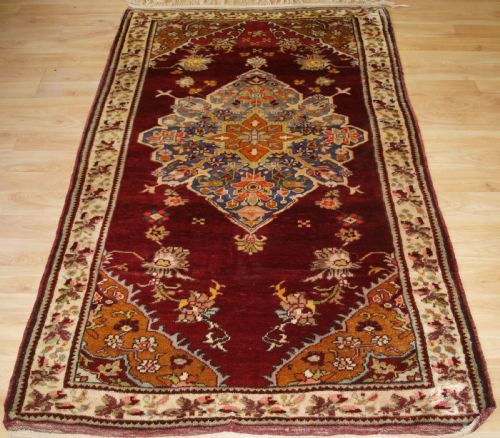
A crimson turkish rug brings together centuries of weaving traditions from Anatolia, spanning from the nineteenth century into the early twentieth century. When you search for a crimson turkish rug, you encounter floor coverings and decorative items born from nomadic, village, and town workshops across the region.
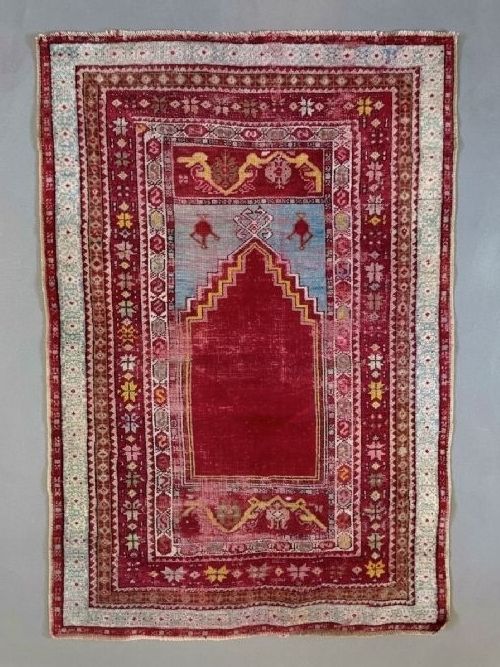
The pieces listed on this page encompass a variety of forms beyond standard floor coverings, including prayer rugs, flatwoven kilim cushions, saddlebags, and large carpets. Originating from centres such as Ushak, Kula, Konya, Bergama, and Kayseri, these textiles reflect distinct regional aesthetics.
Most items you will meet date from the mid-nineteenth century up to the 1920s, showing the enduring appeal of traditional Anatolian designs. Whether structured as a tribal nomadic piece or a refined town carpet, each item carries the visual language of its specific provenance.
How they were made
Weavers constructed these textiles primarily using wool, cotton, and occasionally silk or angora wool, hand-knotting or flatweaving the fibres on vertical or horizontal looms. Natural dyes provided the deep red and crimson tones that define the palette, derived from local plants and insects.
Foundation threads typically consist of sturdy wool or cotton, ensuring structural integrity for items intended for daily use such as rugs and saddlebags. Leather reinforcements also appear on specific utilitarian pieces like nomadic bags, adding durability to the edges.
Object types include rugs and carpets, cushions, saddlebags, and area rugs from various Anatolian traditions.
What varies in quality
Knot density and precision of the weave distinguish finer town carpets from coarser tribal pieces, though both hold distinct aesthetic value. The complexity of the design, such as intricate star motifs or detailed prayer mihrabs, reflects the weaver's skill.
The quality of the wool and the vibrancy of the dye retention play major roles in the overall impact of the textile. Softer wool, such as angora, and evenly saturated crimson tones indicate superior materials chosen by the maker.
The Crimson Turkish Rug Glossary
- Kilim
- A flatwoven carpet or rug produced in countries of the former Ottoman Empire. These pieces lack a pile and rely on tightly interwoven warp and weft threads to create geometric patterns.
- Prayer rug
- A small rug featuring a mihrab design at one end, which worshippers point towards Mecca. These items often display central niches flanked by symbolic motifs.
- Saddlebag
- A utilitarian nomadic container woven in pairs, known as a heybe. Makers utilised durable materials and sturdy construction to withstand constant travel.
- Oushak
- A style of carpet originating from the town of Ushak in western Anatolia. These pieces are celebrated for large-scale floral motifs and warm crimson and terracotta colourways.
Crimson Turkish Rug: Frequently Asked Questions
How do I clean a crimson turkish rug?
Gentle vacuuming without a rotating brush helps remove surface dust from antique wool and cotton textiles. Professional specialist cleaning remains essential for addressing deeper dirt without damaging natural dyes.
Avoid harsh chemical detergents and excessive moisture, which can weaken old fibres and cause crimson hues to bleed. Regular rotation ensures even wear across rooms with high foot traffic.
Are these rugs suitable for daily use?
Most nineteenth-century and early twentieth-century examples possess robust wool construction suited for residential placement. Placing a quality underlay beneath the textile prevents slipping and reduces friction against hard flooring.
Delicate flatweaves or silk pieces benefit from lower-traffic areas such as guest bedrooms or display walls. Proper placement preserves the structural integrity of older foundation threads.
How can I tell regional styles apart?
Anatolian regions developed distinct design vocabularies based on local weaving traditions and available materials. Ushak carpets favour expansive floral geometries, while Konya and Kula pieces frequently showcase architectural prayer designs.
Nomadic items from Yuruk or Bergama groups display bolder tribal symbols and thicker wool piles. Examining the knotting style and border patterns helps pinpoint the likely village or workshop origin.
What does pile height indicate?
Pile height relates to the amount of wear a carpet has experienced over its lifetime as well as its original regional purpose. Thicker piles provide warmth and cushioning, typical of colder mountainous districts in eastern Anatolia.
Lower piles reveal finer details in the underlying knotwork and often characterise sophisticated town workshop carpets. Even wear across the surface simply reflects decades of appreciative domestic service.