


Crimson Afghan Rug
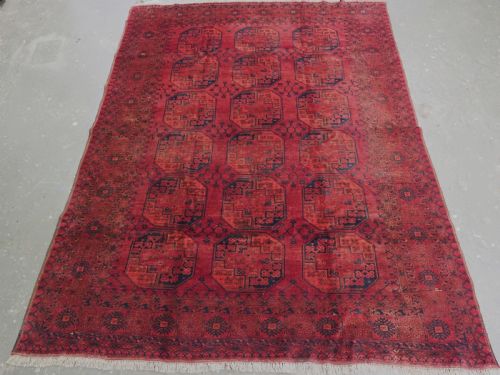
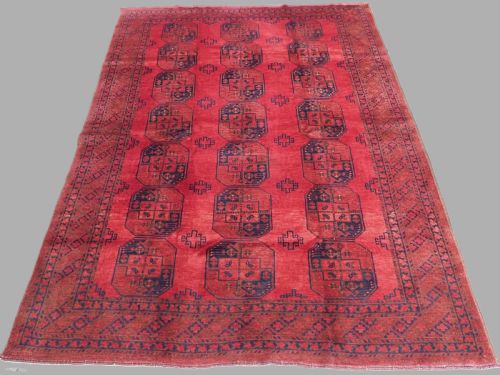
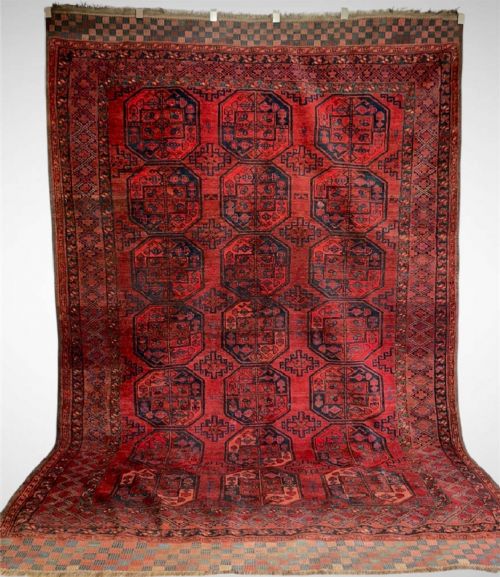
These crimson afghan rug examples deliver deep red tones and tribal patterns, offering lasting floor coverings for traditional rooms.
Crimson Afghan Rug
A crimson afghan rug brings rich red ground colours and traditional tribal motifs into a room. These floor coverings span several decades around the turn of the twentieth century, mostly dating from eighteen ninety up to nineteen thirty.
Buyers frequently encounter larger main carpets alongside smaller village formats and prayer rugs. Tribal weaving traditions such as Ersari Turkmen, Kizil Ayak, and Taimani Baluch shape the visual designs found across these pieces.
Materials and construction
Weavers utilised hand-spun wool and natural dyes to create thick pile surfaces with deep red and crimson tones. Cotton foundations frequently support the wool pile in these tribal carpets and village rugs.
Traditional hand-weaving techniques produce hard-wearing textiles designed for heavy daily use. The soft and glossy wool fibres reflect light across the traditional geometric patterns.
Double lanterns hang quietly inside the prayer niches of certain nineteenth-century carpets, keeping watch over centuries of footsteps.
Assessing quality
The density of the wool pile and the depth of the natural red dye determine the visual impact of each carpet. Finer village weaving and crisp execution of traditional gul motifs elevate certain examples above standard utility pieces.
The handling of the wool yields a softer handle and glossier finish in superior pieces. Structural integrity and preservation of the original format distinguish the finest examples.
The Crimson Afghan Rug Glossary
- Gul
- A primary octagonal medallion motif repeated across Turkmen and Afghan carpets. This ornamental design forms the visual centrepiece of many traditional tribal rugs.
- Main carpet
- A large format floor covering intended for the principal room of a dwelling. These substantial textiles display complex border systems and multiple rows of guls.
- Prayer rug
- A smaller format rug featuring a mihrab or niche design used for daily devotions. These pieces often incorporate lantern or mosque motifs within the field.
- Chuval
- A large tribal bag face produced by Turkmen weavers for storage purposes. These items share the knotting techniques and design vocabulary of full-sized carpets.
Crimson Afghan Rug: Frequently Asked Questions
How do I date a crimson afghan rug?
Dating relies on material analysis, natural dye characteristics, and structural evidence within the wool pile and foundation.
Most pieces date from the late nineteenth century through the early decades of the twentieth century, aligning with traditional tribal production methods.
Where were these rugs made?
These textiles originate from various tribal groups and villages across Afghanistan and the wider Central Asian region.
Specific sub-tribes and communities, including the Ersari and Kizil Ayak, produced distinct regional variations in design and palette.
Are these rugs suitable for heavy traffic?
The heavy-duty construction and durable wool pile make these carpets well-suited for everyday floor use.
Traditional hand-weaving techniques provide the resilience required for busy residential spaces.
What colours dominate these tribal rugs?
Deep red and crimson tones form the predominant ground colour across the entire group of listings.
Natural dyes yield rich variations of warm red complemented by secondary tones in the geometric borders and guls.