
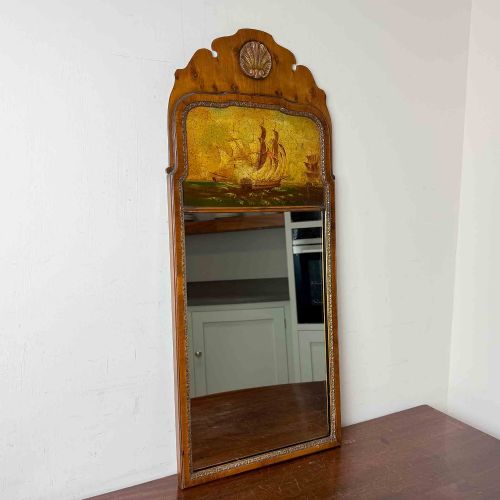
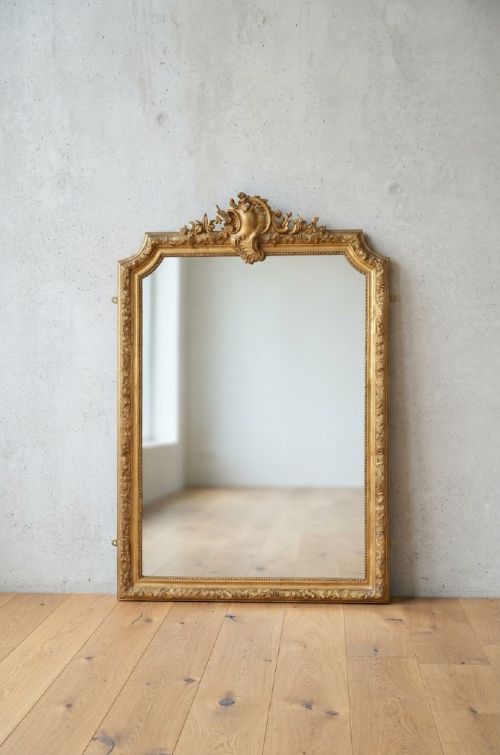
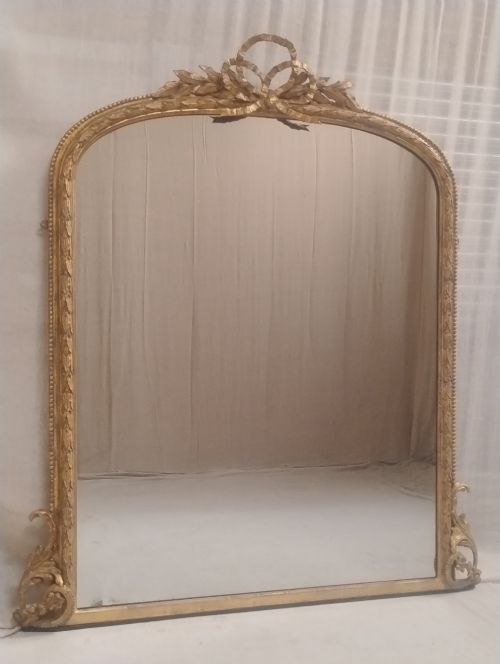
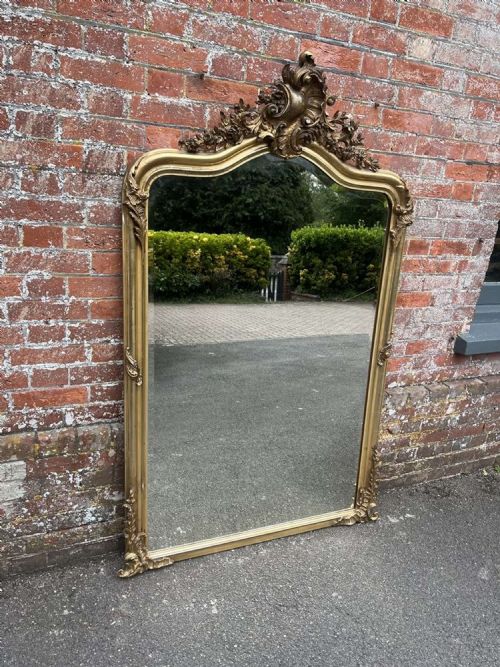
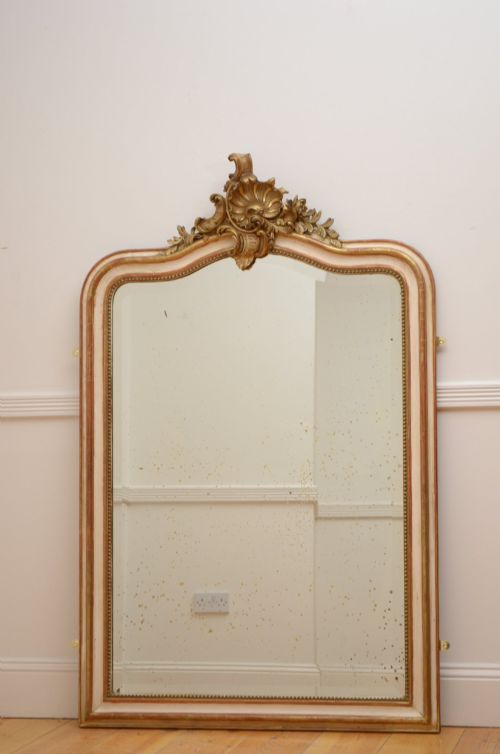
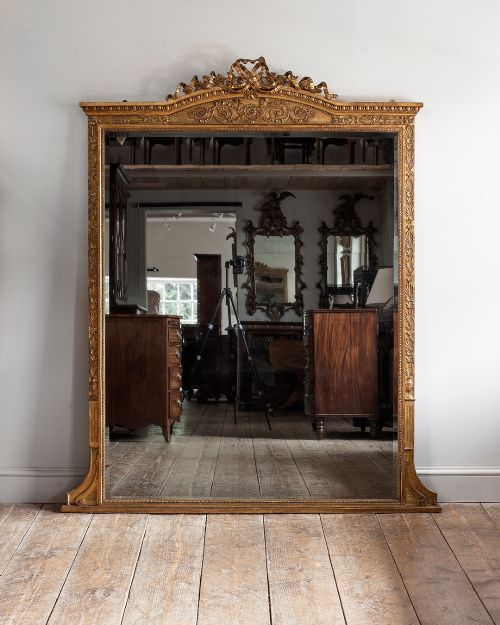
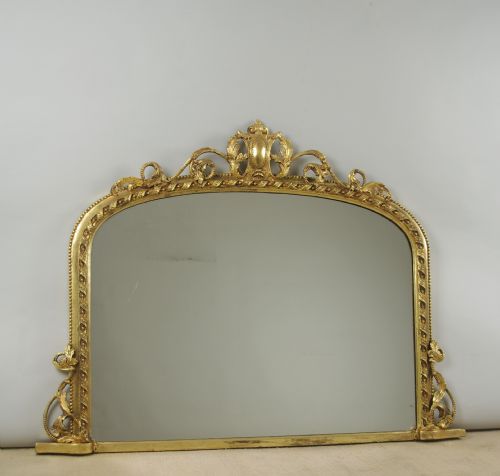
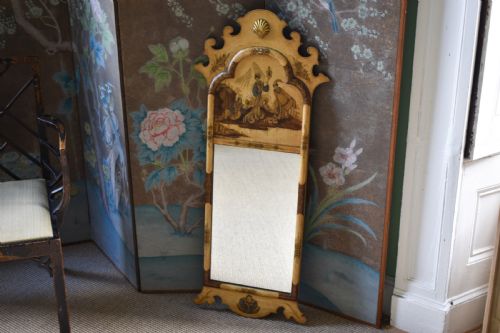
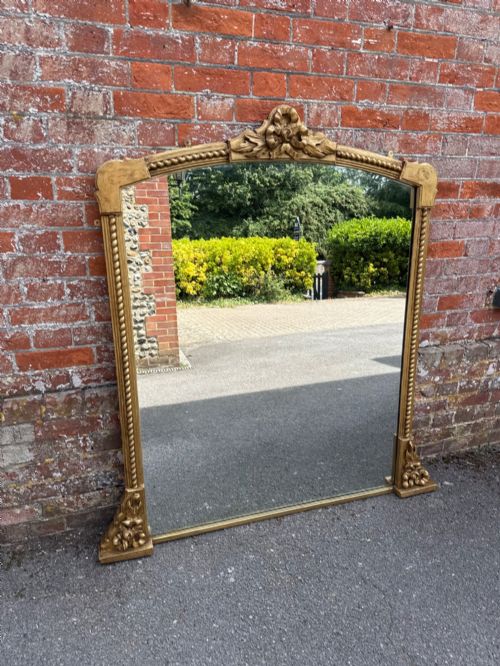
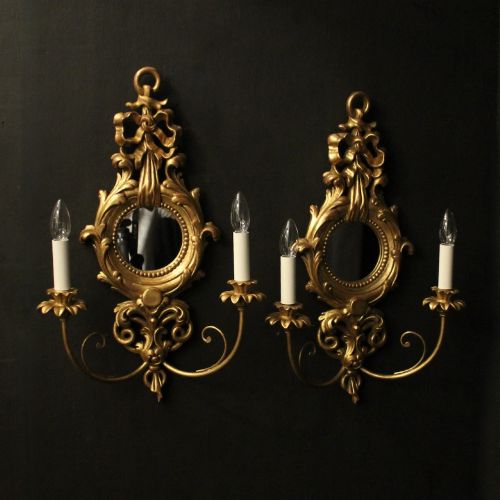
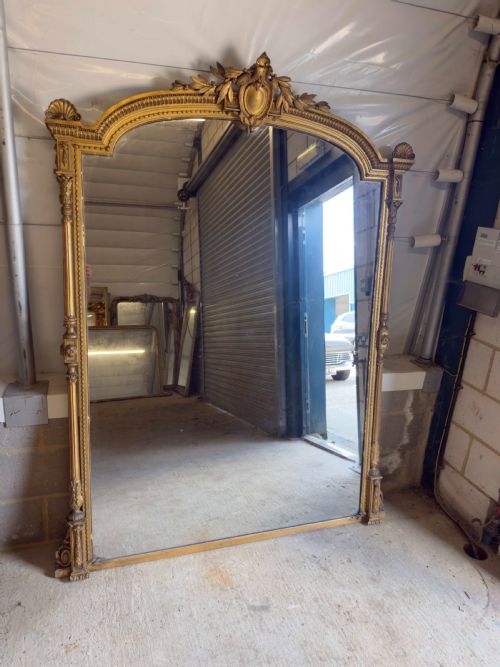
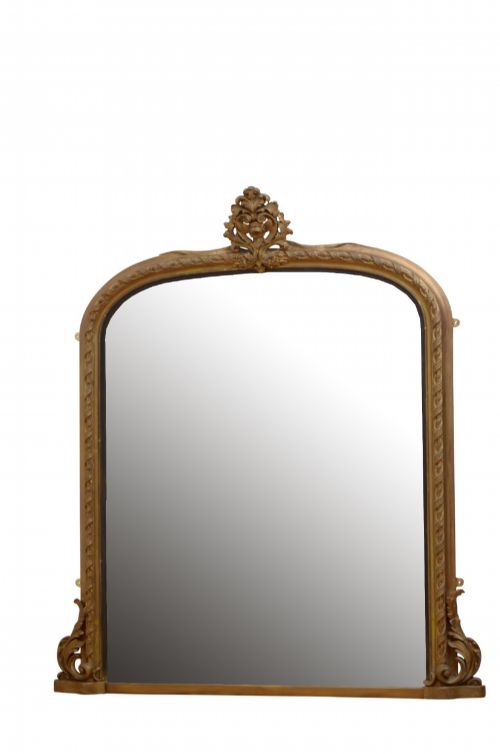
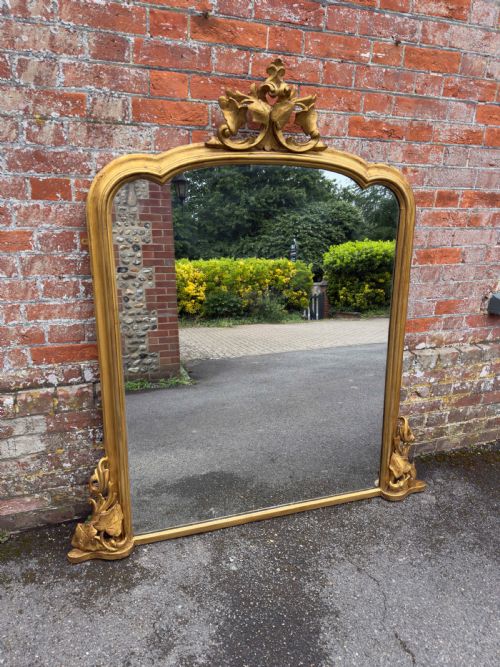
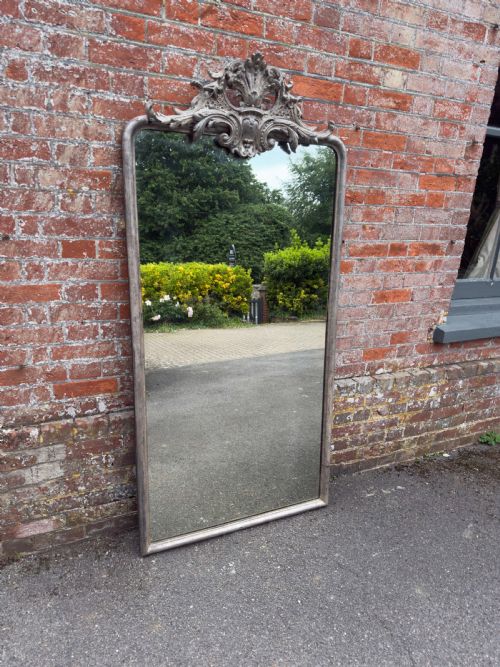

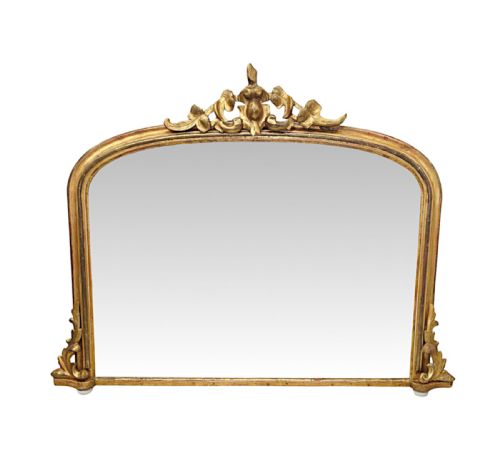
Crest Top Wall Mirror
These crest top wall mirror selections bring architectural presence and classical weight to a room through ornate framing.
What these pieces are
A crest top wall mirror forms a striking focal point with its elaborate decorative upper crown, drawing the eye upward and expanding the perceived space of a room. When exploring this search phrase, buyers encounter substantial wall mirrors and overmantel mirrors designed to command attention above a fireplace or along a principal wall.
The pieces appearing on this page span the nineteenth century and the nineteen-twenties, incorporating French Chateau, Napoleon III, Italian Baroque Revival, Louis XVI Style, and Victorian aesthetics. These historic forms combine grand proportions with intricate crestings, bringing traditional character into domestic interiors.
How they were made
The construction of these mirrors relies on solid wood foundations paired with applied composition and gesso mouldings to build up deep, sculptural relief work. Artisans then applied finishes of gold leaf or silver leaf over these surfaces to achieve a luminous, reflective metallic sheen.
Makers utilised traditional framing and silvering techniques suitable for large wall and overmantel mirrors, ensuring structural stability across expansive glass panels. The combination of carved wood, moulded gesso, and delicate leaf application demands precise craftsmanship to maintain crisp ornament.
Retail Price Guide 2026
Typical UK retail prices for crest top wall mirror, calculated from the Sellingantiques database of over a million retail prices indexed since 2003. This retail price guide relies exclusively on Sellingantiques data; no external sources or auction records are used, so the figures do not describe the wider market.
Object forms on this page include both standard wall mirrors and large overmantel mirrors in styles from Italian Baroque Revival to Victorian.
What varies in quality
Quality in these mirrors rests upon the depth, clarity, and execution of the carved and moulded cresting. Superior examples display sharp, hand-finished ornament where the gesso and leaf work retain crisp definition and harmonious proportions relative to the glass.
The integrity of the original gilt or silver leaf surface and the richness of the underlying composition details set exceptional decorative pieces apart. Secondary examples may show softer mouldings or heavy restorations that alter the intended visual impact of the upper crest.
The Crest Top Wall Mirror Glossary
- Giltwood
- Wood carved and coated with gold leaf or metallic powder to create a rich, luminous finish. This traditional material defines the most decorative surfaces of nineteenth-century frames.
- Gesso
- A plaster-like mixture applied to wood frames and carved or moulded to form intricate relief decoration before gilding. It provides the smooth base needed for crisp ornamental details.
- Overmantel mirror
- A large mirror specifically designed to hang above a mantelpiece or fireplace. These substantial pieces typically feature wide formats and prominent crests.
- Composition
- A moulded mixture of whiting, resin, glue, and linseed oil pressed into ornamental shapes for picture and mirror frames. It allowed makers to produce elaborate decorative motifs efficiently.
- Napoleon III
- A flamboyant nineteenth-century French style incorporating eclectic revivals of past royal aesthetics. Pieces from this period often display heavy ornamentation and theatrical gilt detailing.
Frequently Asked Questions
Where should I hang a crest top wall mirror?
These mirrors suit prominent locations such as above a drawing room fireplace, along a main hallway, or facing a window to maximise reflected light.
Their substantial height and decorative crest demand a wall with sufficient vertical clearance to let the upper ornament stand clear of mouldings.
How do I identify a nineteenth-century mirror?
Nineteenth-century examples typically employ traditional construction methods like pegged wood joints, hand-applied gesso, and genuine gold or silver leaf over composition mouldings.
Examining the backboards, frame assembly, and the character of the glass silvering helps confirm the period of manufacture.
Are these mirrors suitable for daily use?
These historical mirrors function well in everyday interiors when hung securely with hardware appropriate for their substantial weight.
Routine maintenance involves dusting the gilt surfaces gently with a dry cloth and cleaning the glass with care to protect the surrounding frame.
What styles are common in these mirrors?
The selection includes French Chateau, Victorian, Italian Baroque Revival, and Napoleon III designs, each bringing distinct architectural ornament.
These varied aesthetic movements share a common focus on elaborate cresting and gilded surfaces that draw the eye upward.