


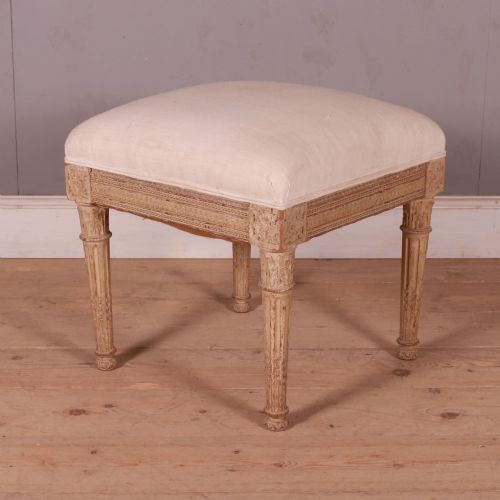
Cream Painted Dressing Stool
A cream painted dressing stool brings understated elegance to a bedroom, offering a practical seat with classical French or Swedish proportions.
Cream Painted Dressing Stool
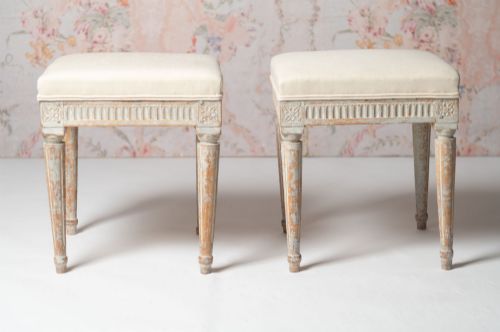
When you search for a cream painted dressing stool, you encounter low seats designed for bedrooms and dressing rooms, spanning the eighteenth century through to the interwar period. These pieces frequently draw upon continental design traditions, notably Swedish Gustavian and French Louis styles.
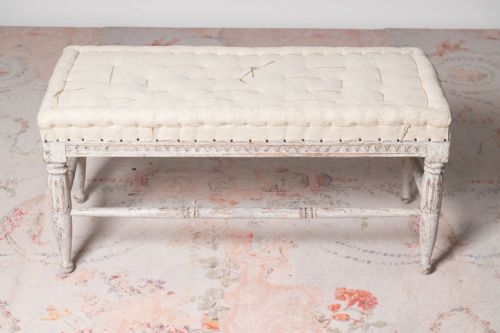
The most common examples on this page are single items or pairs originating from Sweden, France, and England. They range from compact circular boudoir seats to elongated benches and curved X-frame footstools.
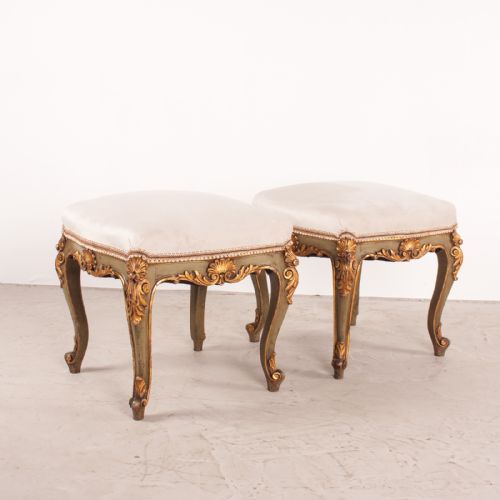
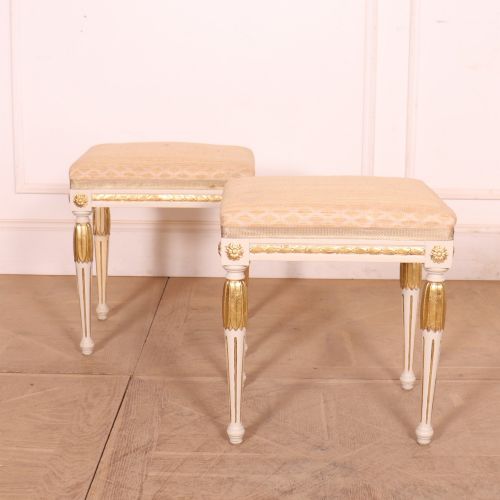
Makers and workshops across these regions favoured painted wood finishes, often complemented by gilt highlights or needlework upholstery. Their forms vary from restrained neoclassical lines to more exuberant continental rococo carving.
How they were made
Construction relies upon solid timber frames, frequently carved by hand from woods such as beech or pine before receiving layers of gesso and paint. Many examples employ traditional joinery techniques to ensure stability across delicate legs and rails.
Surface decoration often incorporates cream or off-white paint finishes, sometimes enriched with gold leaf details on carved flourishes. Upholstery methods involve webbing and stuffing applied to drop-in seats or fixed frames, finished in linen, fabric, or needlework.
Listings feature painted wood and carved timber combined with linen, fabric, and gold leaf across multiple periods.
What varies in quality
The standard of a cream painted dressing stool rests upon the crispness of the hand carving and the harmonious proportion of its frame. Pieces with deeply carved wooden details and well-balanced neoclassical or rococo profiles stand apart from simpler vernacular versions.
The integrity of the painted surface and the quality of the underlying gesso preparation also dictate the visual depth of the finish. Original or early paint layers that have aged gracefully possess a distinct character absent in modern refinishing.
Miles & Edwards
The Cream Painted Dressing Stool Glossary
- Gustavian
- A Swedish neoclassical design style characterised by restrained symmetry and light painted finishes, popular during the late eighteenth century and later revived.
- Louis XV Style
- A decorative aesthetic featuring asymmetrical curves, organic scrollwork, and naturalistic floral motifs originating in mid-eighteenth-century France.
- Curule
- An ancient Roman chair shape featuring intersecting concave legs forming an X-frame, adopted by later neoclassical furniture makers.
- Needlework
- Hand-stitched textile work utilising wool or silk yarn, frequently employed as durable and decorative upholstery for seat covers.
Cream Painted Dressing Stool: Frequently Asked Questions
Are these stools comfortable for daily use?
Most of these pieces are designed for dressing tables and short periods of sitting rather than long hours of lounging. Their compact dimensions suit bedroom spaces where large seating would overwhelm the room.
Upholstered drop-in pads provide adequate support, though older internal stuffing may feel firmer than modern foam cushioning.
How do I identify a Swedish Gustavian piece?
Gustavian pieces typically display pared-down neoclassical lines with fluted legs, subtle reeding, and pale monochrome paintwork. They avoid the heavier ornamentation found in some central European designs.
Swedish makers often favoured pine and birch, applying layered gesso and cream paint that wears down in a characteristic matte texture over time.
Can I place these in a modern interior?
The neutral cream palette and clean silhouettes of these stools allow them to blend easily with contemporary minimalist or transitional decor schemes. They function well as vanity seats, bedside perches, or low occasional accents.
Mixing period painted woodwork with modern textiles creates a balanced contrast that highlights the age of the timber.
What is the difference between French and Swedish styles?
French designs from the Louis periods generally lean towards fluid cabriole legs, ornate cartouche carvings, and more dramatic rococo curves. They project a sense of courtly elegance and decorative richness.
Swedish interpretations tend to be straighter, simpler, and more austere, reflecting a Scandinavian adaptation of continental fashions with an emphasis on light and utility.