


Antique Italian Stool
These antique italian stool examples bring distinct regional character to a room, ranging from walnut X-frames to gilded window seats.
Antique Italian Stool
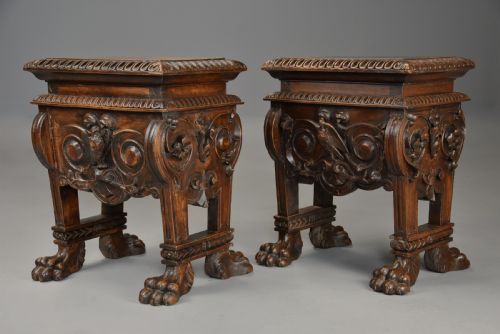
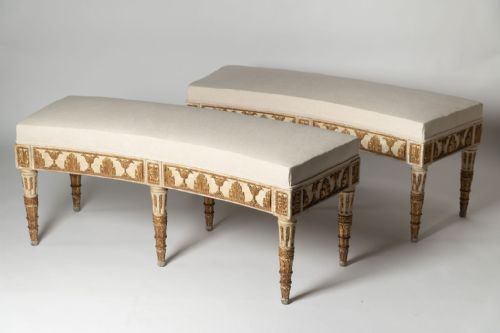
An antique italian stool covers a wide variety of seating forms, including long benches, window seats, footstools, and sgabello chairs. You will frequently encounter nineteenth-century walnut and giltwood examples alongside eighteenth-century carved walnut pairs.
The styles reflect rich decorative traditions, encompassing Italian Neoclassical, Renaissance Revival, Baroque Revival, and Venetian designs. Many pieces incorporate elaborate wood carving, gesso work, or painted finishes tailored for prominent interiors.
Makers and workshops utilised various forms from simple wooden frames to heavily padded fabric, linen, or leather upholstery. Certain pieces function as revolving music stools or cross-framed X-bench designs rooted in historical revival periods.
Assessing quality in the range
Depth and precision of the hand carving separate standard production pieces from master-carved items. Crisp leaf motifs, undercut foliage, and balanced proportions indicate superior workshop execution.
The integrity of the original giltwood, gesso, or wood finish dictates the overall character of the piece. Surviving period textiles and needlework upholstery also elevate the historical interest of the object.
One industrious master carver even left behind a signed window seat to ensure nobody forgets who shaped the walnut.
The Antique Italian Stool Glossary
- Giltwood
- Wood that has been coated with a thin layer of gold leaf. This finish appears frequently on neoclassical and baroque revival seating.
- Gesso
- A plaster-like mixture applied to wood surfaces as a base for gilding or painting. It allows carvers to achieve sharp ornamental detail.
- X-Framed
- A structural furniture design where intersecting diagonal supports form an X shape. This form draws on ancient curule seating traditions.
- Sgabello
- A light wooden chair or stool featuring a high back and solid trestle supports. These pieces typically display carved Renaissance details.
- Curule
- An ancient chair form featuring two curved legs that cross to form an X. Italian neoclassical makers adapted this shape for formal stools.
Antique Italian Stool: Frequently Asked Questions
What is an antique italian stool used for?
These pieces function as accent seating, window seats, footstools, or decorative furniture in hallways and living spaces. Their compact forms allow them to fit easily into smaller areas while adding historical presence.
Larger long stools and window seats provide functional seating at the foot of a bed or beneath tall windows. Music stools and sgabello chairs offer specific adjustable or upright seating utility.
How do I tell different periods apart?
Eighteenth-century examples often display restrained walnut carving influenced by earlier sixteenth-century styles. Nineteenth-century pieces frequently embrace revival aesthetics such as Renaissance, Baroque, or Neoclassical.
Victorian-era items tend to introduce specialised functions like revolving mechanisms alongside heavier grotto-style carving. Examining the wood type, finish, and decorative motifs helps clarify the likely decade of production.
How do I care for giltwood and painted wood?
Giltwood surfaces require gentle dusting with a soft, dry cloth to protect the delicate gold leaf layer. Avoid liquid cleaners or abrasive materials that can strip the underlying gesso.
Maintain stable indoor humidity levels to prevent the wood beneath from expanding or cracking. Keeping pieces away from direct sunlight protects both painted finishes and antique upholstery fabrics.
Are these pieces comfortable for daily use?
Upholstered variants featuring fabric, linen, or leather provide soft cushioning suitable for regular seating. Stools with padded needlework tops offer a traditional, supportive sit.
Unupholstered wooden stools and sgabello chairs serve better as decorative accent pieces or brief perts. Consider adding a custom cushion if you plan to use a wooden top stool for extended periods.