




Covered Porcelain Vegetable Dish
These covered porcelain vegetable dish pieces bring formal dining history to your table.
Covered Porcelain Vegetable Dish
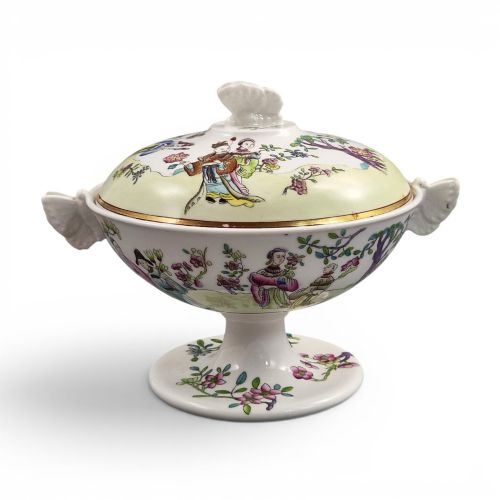
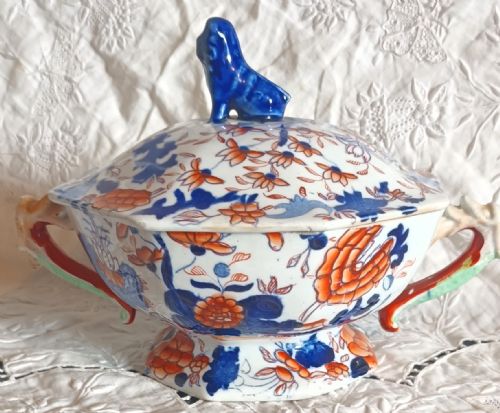
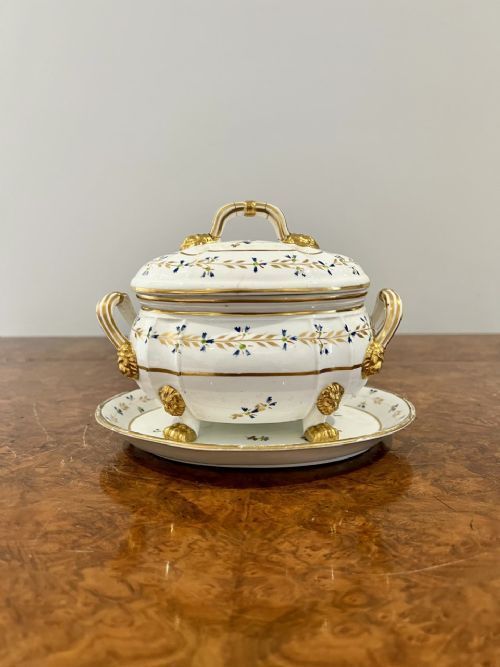
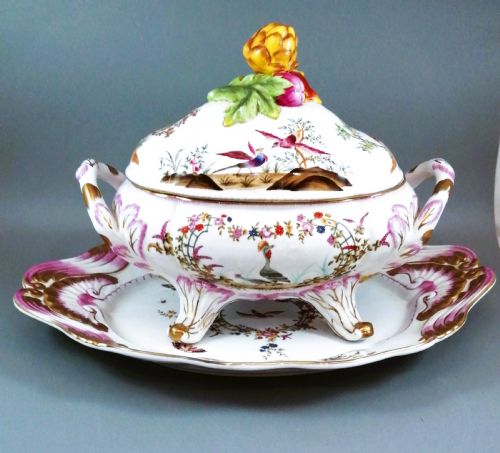
A covered porcelain vegetable dish serves vegetables and side dishes at formal dining tables, operating as a lidded vessel for keeping food warm before serving. These pieces encompass various forms including tureens, entrée dishes, and pedestal bowls complete with matching lids.
The pieces on this page span several centuries and regions, originating from 18th century Chinese export workshops, Georgian and Regency English factories, and later continental European makers. English ironstone and porcelain examples sit alongside Chinese blue and white wares and French porcelain vessels.
Regency and Georgian English factories dominate the selection, often produced by notable porcelain works such as Worcester, Crown Derby, and Mason's. Buyers frequently encounter ironstone versions alongside finer translucent porcelain items decorated with gilt handles, enamel colours, and hand-painted patterns.
How they were made
Potters shaped these vessels from ceramic and porcelain bodies, or dense ironstone for heavier utilitarian pieces, before applying decorative glazes. Artisans formed handles and finials separately and attached them by hand prior to firing in kilns.
Decoration relied on hand-painted enamel colours and gold leaf application or gilding, which required additional low-temperature kiln firings to bond the metallic and pigment details to the glazed surface. Chinese export pieces utilised underglaze blue painting techniques characteristic of the Qianlong period.
Some vegetable tureens take the literal shape of cabbages, ensuring your greens are served inside a likeness of themselves.
What varies in quality
Quality rests in the crispness of the porcelain moulding and the precision of the hand-painted enamel decoration or gilding applied to the surface. Earlier 18th century pieces demonstrate finer potting techniques and more intricate hand-applied details compared to later mass-produced items.
The presence of matching stands, ladles, and original lids elevates the integrity of the piece, as these components frequently separate or sustain damage over centuries of use. The reputation of the manufacturing factory, such as Flight Barr & Barr or Mason's, also dictates the standing of an individual item within the market.
Spode Felspar Porcelain·Mason's Ironstone·Crown Derby·Flight Barr & Barr·Edm'e Samson
The Covered Porcelain Vegetable Dish Glossary
- Tureen
- A deep covered bowl used for serving soups, sauces, or vegetables at the table. These vessels often rest on fixed or separate ceramic stands.
- Ironstone
- A heavy, durable type of ceramic patented in the 19th century that bridges the gap between earthenware and porcelain. It resists chipping while accommodating elaborate coloured decoration.
- Gilding
- The application of gold leaf or gold paint to ceramic surfaces, handles, and rims for decorative effect. This finish requires careful cleaning to prevent wearing away.
- Qianlong Period
- The era of Chinese history spanning from 1736 to 1795, known for refined blue and white porcelain production destined for export to European markets.
- Imari
- A decorative style featuring rich underglaze blue combined with iron red, green, and gilt highlights, adopted by various European porcelain factories during the 18th and 19th centuries.
Covered Porcelain Vegetable Dish: Frequently Asked Questions
What is a covered porcelain vegetable dish used for?
These lidded vessels held cooked vegetables, sauces, or soups and kept them warm during formal dining service before individual plating.
They sat centrally on the dining table as part of a larger dinner service suite alongside matching plates and platters.
How do I date a covered porcelain vegetable dish?
Dating relies on factory backstamps, stylistic markers such as Regency or Qianlong period motifs, and the specific composition of the ceramic body.
Ironstone versions typically point towards the 19th century, while lighter translucent porcelain often indicates earlier Georgian or Chinese export origins.
Can I use my covered porcelain vegetable dish?
While structurally sound for holding dry items or foods, antique porcelain and ironstone require careful hand washing to protect delicate gilding and enamels.
Thermal shock from dishwashers or microwaves can crack centuries-old ceramic bodies and damage surface decoration.
What is the difference between porcelain and ironstone?
Porcelain is a fired ceramic material known for its vitreous, translucent body and delicate appearance, common in fine dining services.
Ironstone is a heavier, opaque ceramic developed for durability, offering greater resistance to daily wear while mimicking porcelain shapes.