
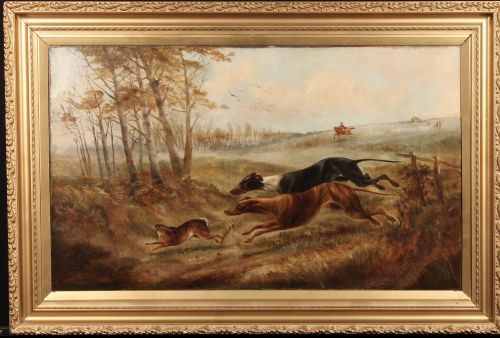
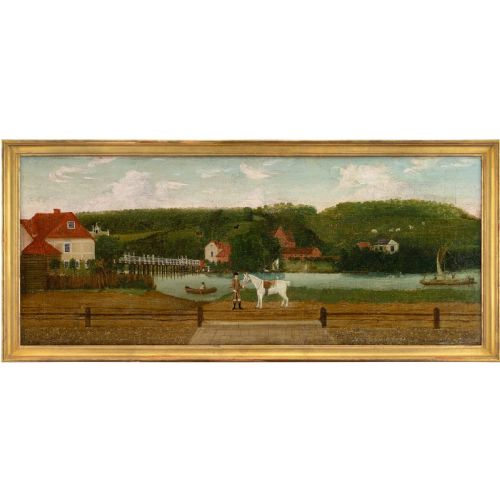
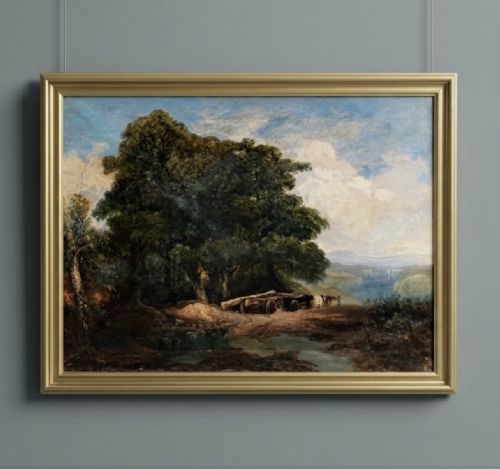



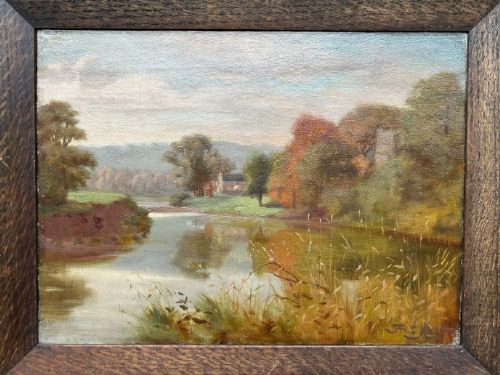
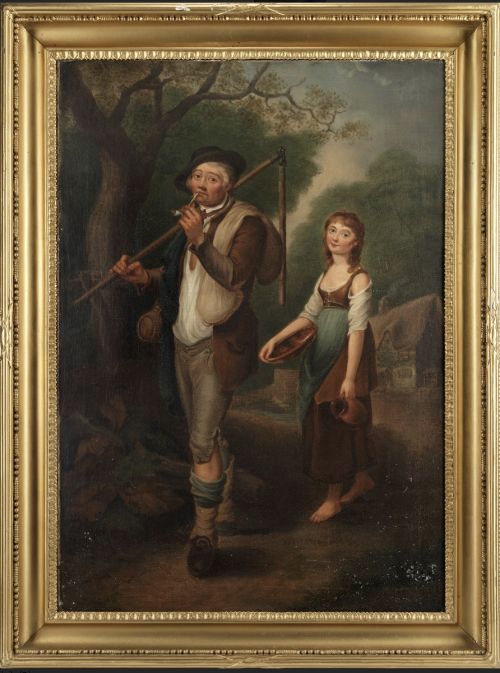
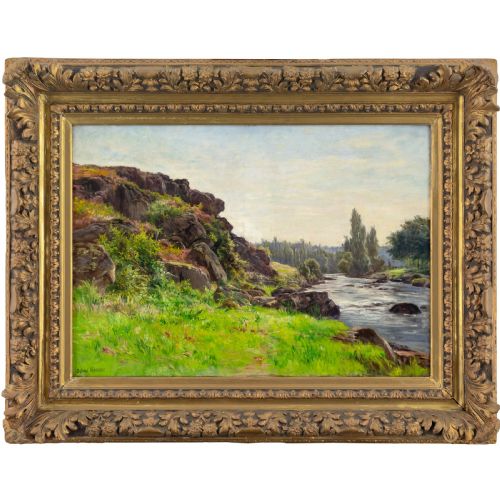
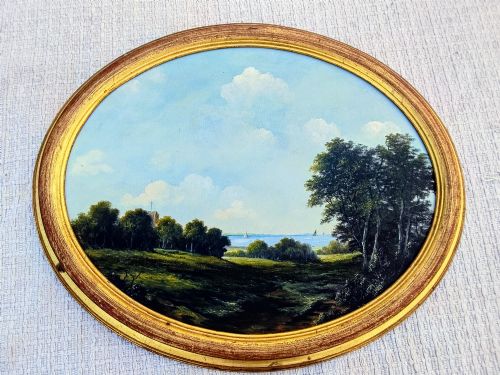
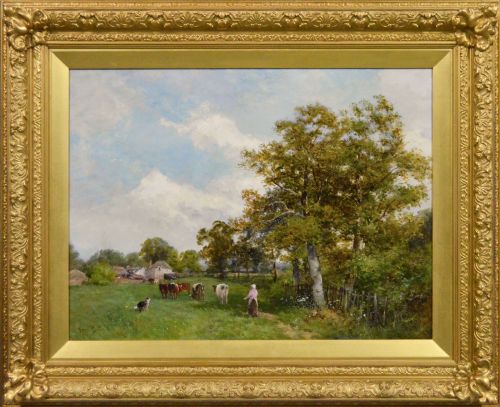
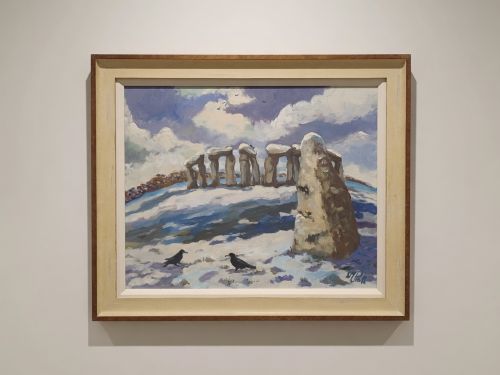
Countryside Oil on Canvas
When you buy a countryside oil on canvas, you bring home a painted pastoral scene captured on woven fabric by generations of observant artists.
Countryside Oil on Canvas
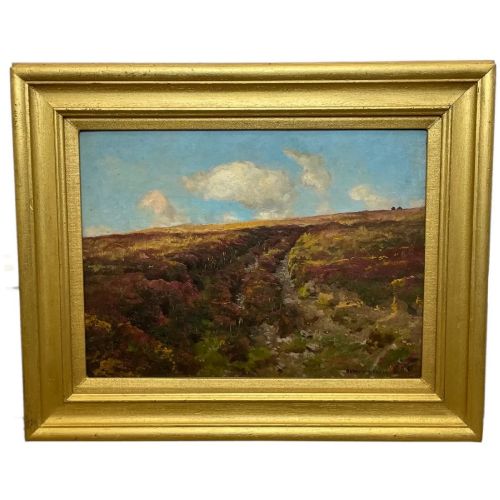
A countryside oil on canvas records rural views, agricultural life, and natural scenery through the medium of oil paint applied to stretched fabric. These works capture rivers, woodlands, cottages, and farmsteads across shifting seasons and times of day.
The selections available range from 19th-century Victorian pastoral scenes to early 20th-century British Impressionism and later mid-century landscape studies. Most pieces emerge from British and European schools, reflecting local topography and agrarian traditions.
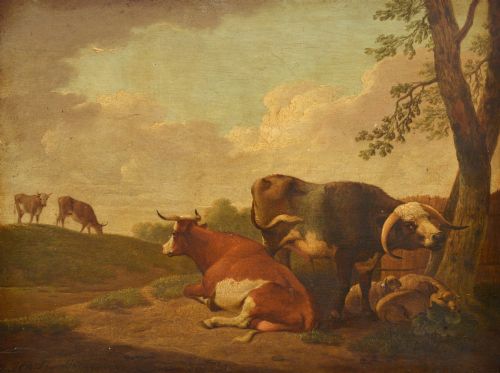
Buyers frequently encounter framed original fine art paintings bearing signatures from listed regional painters or historical British school compositions. Subjects stretch from quiet riverbanks and coastal estuaries to working horses and figures tending fields.
Materials and Technique
Painters applied slow-drying oil paint, formulated from ground pigments suspended in linseed or other vegetable oils, directly onto primed canvas stretched over wooden frames. This combination allowed artists to build rich layers of colour, delicate glazes, and tactile impasto textures.
Finished canvases were secured within wooden mouldings, often incorporating gilt wood frames that added structural support and visual definition to the composition. The interplay between the woven canvas support and the oil medium ensured long-term durability and depth of tone.
Materials recorded in current inventory include oil paint, canvas, wood, and gilt wood frames.
Judging Quality and Execution
Quality rests in the artist's handling of light, atmospheric perspective, and spatial depth within the rural setting. Superior works demonstrate confident brushwork and precise tonal control that convey movement in water, foliage, or cloud formations.
The handling of the canvas support, the integrity of the original paint layer, and the appropriateness of the framing contribute significantly to a piece's standing. Stronger examples reveal the artist's distinct hand and careful observation rather than formulaic studio production.
Richard Sebastian Bond·William H Myers·George Graham·Frederick Marriott·Arthur Wardle·Hendrik Willem Schweickhardt·Herbert Royle·Robert Morson Hughes·Thomas Barker of Bath·Gabriel Mathieu·David Bates·Lucy Pratt·Raymond Booth·Harald Foss·Eric Brown·Henri Ottmann·Richard Redgrave·Ernest Higgins Rigg·Peter Newcombe·Rene Levrel·Vernon DeBeauvoir Ward·Alexander Wellwood Rattray·John Horace Hooper·Owen Bowen·Charles Clair
The Countryside Oil on Canvas Glossary
- Canvas
- A heavy woven fabric, typically linen or cotton, used as the primary support surface for oil paintings.
- Impasto
- A technique where paint is laid onto a canvas in thick layers, standing visibly out from the surface.
- Gilt Wood
- Wood carved and coated with gold leaf or gold-coloured finish, frequently used in period picture frames.
- Barbizon Influence
- A stylistic approach rooted in the French Barbizon school, prioritising direct observation of nature and realistic rural landscapes.
- British Impressionism
- A late 19th and early 20th-century movement focused on capturing light and everyday subjects with loose brushstrokes.
Countryside Oil on Canvas: Frequently Asked Questions
How do I identify the period of an oil painting?
Examine the style of brushwork, the canvas preparation, and any framing clues. Artists often utilised techniques specific to Victorian realism or later impressionist movements that correspond to known working dates.
Signatures, exhibition labels on the reverse, and the type of wooden stretcher frame also offer reliable indicators of the era in which the work was created.
Where should I hang a countryside oil painting?
Display these works away from direct sunlight and excessive moisture to protect the oil pigments and the canvas substrate. Natural light in a principal living space or study enhances the subtle tones of rural landscapes.
Permanent placement should also consider stable indoor temperatures, avoiding exterior walls that experience significant thermal fluctuations.
Are these paintings original works?
The selections consist of original fine art paintings executed by hand on canvas. Each piece represents a unique artistic interpretation rather than a mechanical reproduction or print.
Brush textures, pigment layering, and the physical interaction of oil on woven fabric distinguish these authentic works from later copies.
What subjects are common in these landscapes?
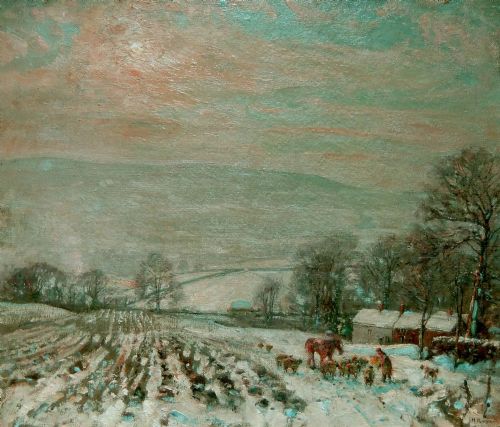
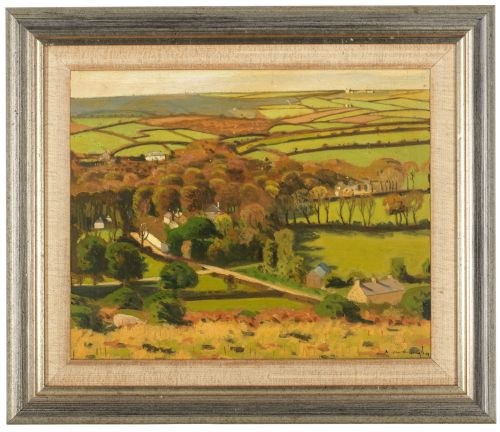
Common subjects include British rivers, agricultural fields with horses or cattle, woodland paths, and rural cottages. Artists frequently recorded seasonal changes, such as winter snow or autumn foliage in the countryside.
Coastal views, estuaries, and pastoral scenes featuring figures engaged in traditional labour also appear regularly across the collection.