




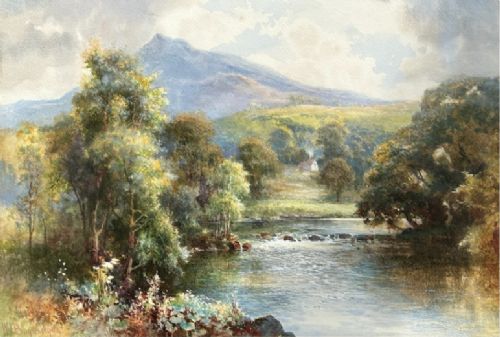
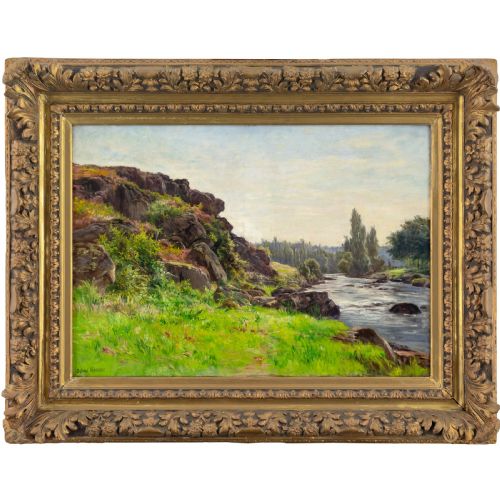
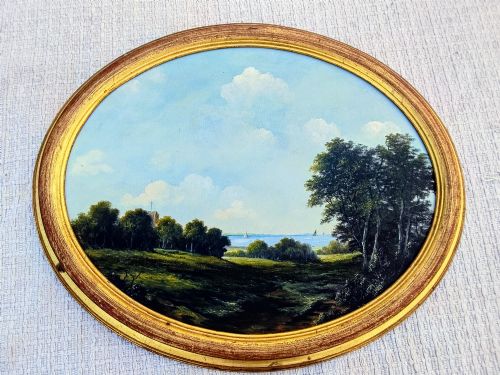

Countryside Landscape Painting
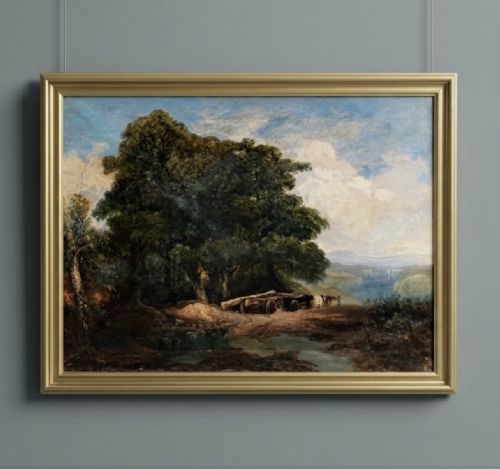
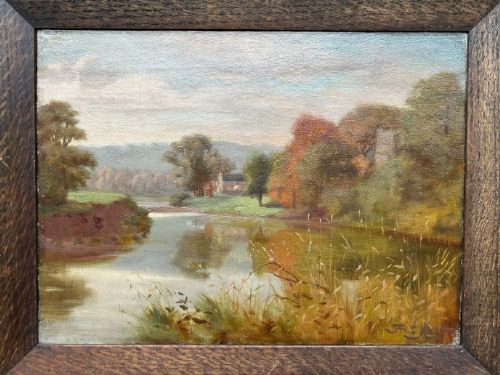
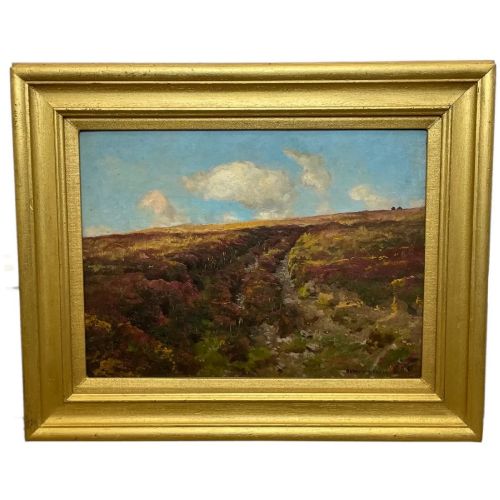
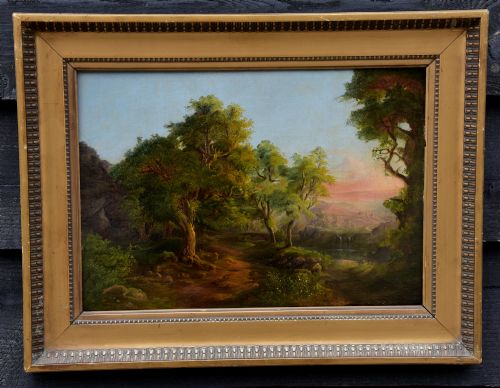
A countryside landscape painting records rural views, rivers and pastures from the eighteenth century onwards, offering a window into historical fields and woodlands.
Countryside Landscape Painting
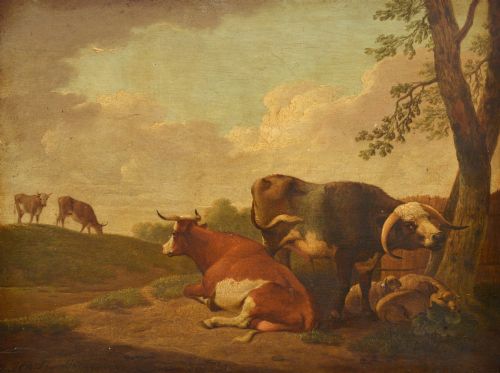
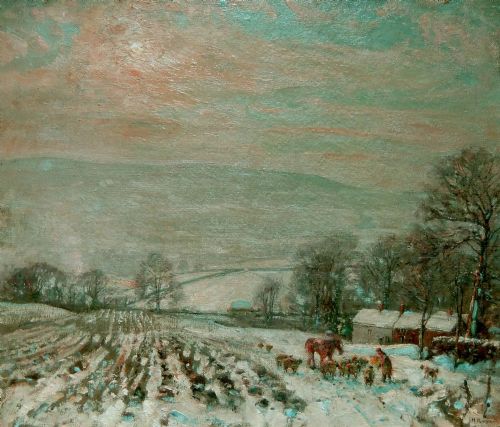
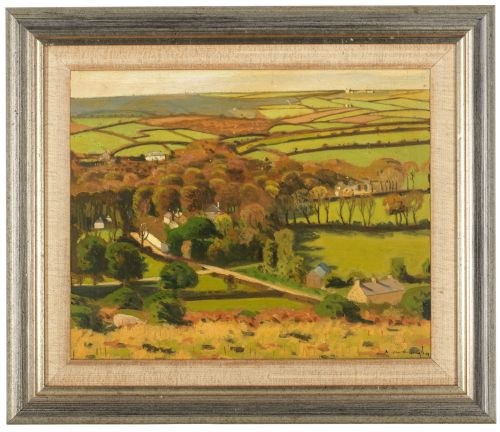
A countryside landscape painting captures rural scenes, agricultural life, and natural terrain across centuries of artistic production. These works range from expansive nineteenth-century canvases depicting pastoral farmsteads to intimate twentieth-century watercolours of riverbanks and woodland.
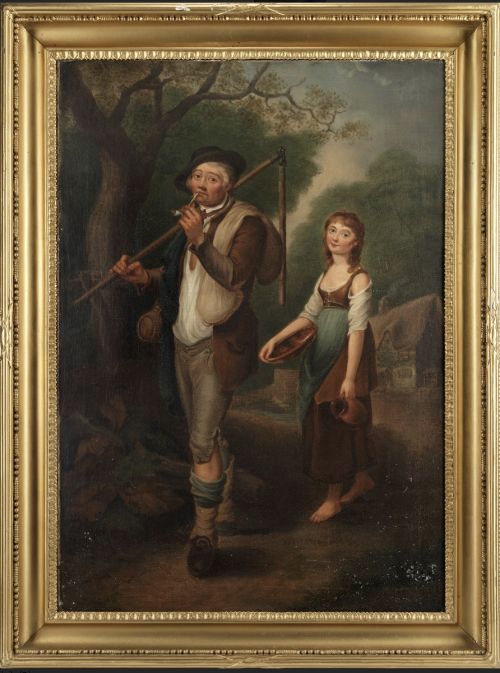
Most examples encountered on this page date from the Victorian era through the mid-twentieth century, created by both named artists and the broader British and European schools. Subjects frequently incorporate figures, livestock, cottages, and agricultural labour set against open fields or rolling hills.
Compositions vary from traditional academic studies to looser impressionistic interpretations, reflecting changing artistic movements. Collectors encounter works executed on canvas, wood panel, board, and paper.
Materials and Techniques
Artists primarily employed oil paint applied to stretched canvas, wooden panels, or rigid board, building up rich textures and deep tones. Watercolours on paper offer a lighter, more translucent alternative, capturing atmospheric effects with fluid washes.
Countryside Landscape Painting Retail Price Guide 2026
Typical asking prices for countryside landscape painting among the pieces listed under this phrase on Sellingantiques today, from the lower quarter to the upper quarter. They describe what is for sale here now, not the wider market.
The selection includes depictions of agricultural labour, livestock, coastal views, and woodlands across Britain and Europe.
Assessing Quality and Execution
Quality rests upon the artist's handling of light, depth, and proportion, where confident brushwork creates convincing atmospheric perspective and structural integrity. Stronger compositions demonstrate careful balance between natural elements and human figures or livestock within the scene.
Condition remains influential, with preference given to works retaining their original pigments, stable grounds, and unlined canvases. The relationship between the painting and its period frame further contributes to the overall integrity of the piece.
Richard Sebastian Bond·William H Myers·Frederick Marriott·Arthur Wardle·William Joseph Shayer Senior·Hendrik Willem Schweickhardt·Herbert Royle·Robert Morson Hughes·Thomas Barker of Bath·William Joseph Boyes·Gabriel Mathieu·David Bates·Muriel Metcalfe·Lucy Pratt·Raymond Booth·Harald Foss·Frederick Walker·Eric Brown·Henri Ottmann·Richard Redgrave·Ernest Higgins Rigg·Peter Newcombe·George Oyston·Rene Levrel·Russell Sidney Reeves
The Countryside Landscape Painting Glossary
- Oil on canvas
- Pigment bound in drying oil applied to a woven fabric support stretched over a wooden frame. This combination allows for rich colour blending and textured impasto work.
- Watercolour
- A paint consisting of colour suspended in a water-soluble vehicle, typically applied to paper. It relies on the white of the paper to show through translucent washes.
- Impressionism
- An artistic style characterised by relatively small, thin, yet visible brush strokes and an emphasis on accurate depiction of light. It emerged in the late nineteenth century to capture momentary visual impressions.
- Provenance
- The chronology of the ownership of a work of art. Documented history aids in establishing authenticity and tracing the journey of a painting through time.
- Gesso
- A paint mixture consisting of a binder mixed with chalk, gypsum, or pigment used to prepare surfaces for painting or framing. It provides a smooth base for subsequent gilding or colour.
Countryside Landscape Painting: Frequently Asked Questions
How do I date a landscape painting?
Dating relies on stylistic clues, clothing worn by figures depicted, framing techniques, and signatures or inscriptions on the reverse. Examining the preparation of the canvas or panel also helps narrow down the period of creation.
Comparison with documented works by the same school or artist provides further chronological context. Exhibition labels and written provenance offer definitive markers for specific decades.
What is the difference between oil and watercolour landscapes?
Oil paintings utilise pigment suspended in drying oil on canvas or wood, offering rich textures, deep opacity, and the ability to rework areas over time. Watercolours use water-soluble pigments on paper, producing lighter, translucent effects that rely on paper luminosity.
Oils were traditionally favoured for substantial interior display, while watercolours were often created outdoors or kept in portfolios. Both mediums present distinct aesthetic qualities favored by different collectors.
How should I care for an antique painting?
Protect antique artworks from direct sunlight, high humidity, and rapid temperature fluctuations to prevent canvas slackening, paint cracking, or paper degradation. Displaying pieces away from heat sources preserves both the support and the historical frame.
Dust surfaces gently with a soft, dry brush without applying moisture or cleaning solutions. Professional conservation should be sought for any structural repairs or deep cleaning.
Are frames original to the paintings?
Many nineteenth and early twentieth-century paintings retain their period frames, which were often selected or made specifically for the artwork. Swept gilt frames and timber moulding complement the aesthetic of the period.
Over time, frames may have been replaced due to damage or stylistic preference. Identifying original framing involves checking for matching age wear and appropriate construction methods.