



Grey Sky Landscape Painting
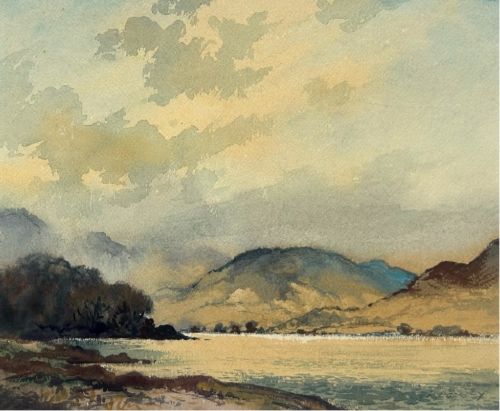
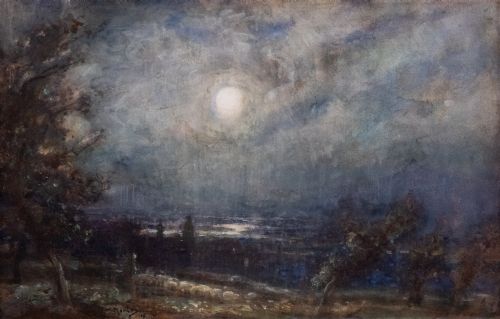
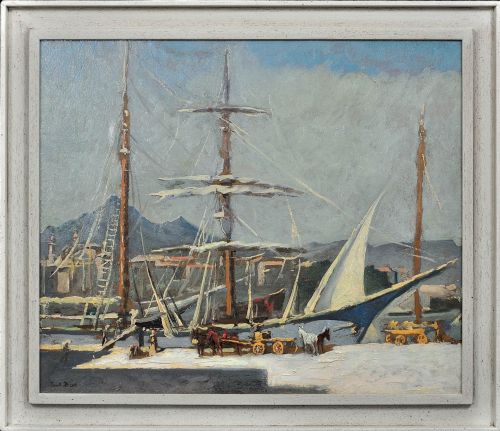
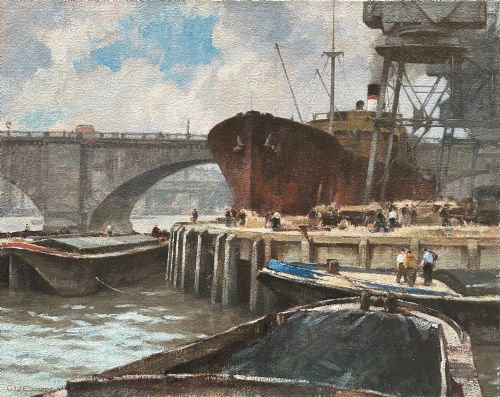
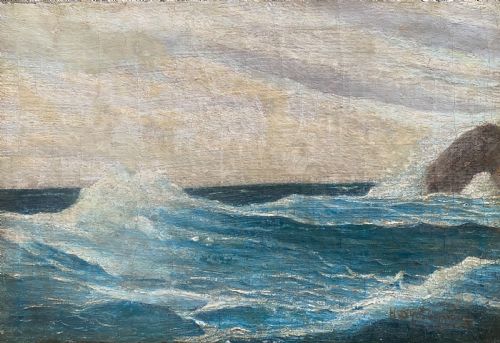
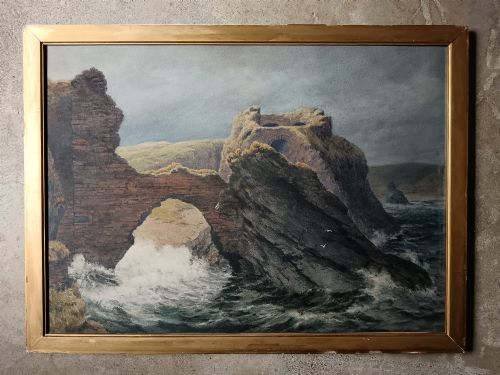
These grey sky landscape painting examples capture atmospheric coastal, river, and rural scenes through historic brushwork.
Grey Sky Landscape Painting
A grey sky landscape painting portrays open countryside, coastal havens, and river banks beneath overcast or moody meteorological conditions. These works span the nineteenth century through the mid twentieth century, encompassing Victorian and Edwardian periods as well as early modern approaches.
The pieces on this page appear as watercolours on paper or oil paints applied to canvas, panel, or board. Common visual subjects include northern estuaries, Scottish borders, Yorkshire moors, and maritime anchorages rendered with muted palettes.
How They Were Made
Artists built these compositions utilising oil paint on stretched canvas, wood panel, or oil on board, allowing for thick impasto or thin glazing to represent heavy cloud cover. Alternatively, watercolours on paper capture atmospheric moisture and shifting light through transparent washes.
Support materials range from traditional woven canvas and heavy paper sheets to wooden boards and panels. Frames of wood often accompany these paintings to protect the edges of the canvas or paper surface.
Grey Sky Landscape Painting Retail Price Guide 2026
Typical asking prices for grey sky landscape painting among the pieces listed under this phrase on Sellingantiques today, from the lower quarter to the upper quarter. They describe what is for sale here now, not the wider market.
Seagulls occasionally share the overcast horizon with nineteenth century shipping vessels.
What Varies in Quality
The strength of a grey sky landscape painting relies upon the artist's ability to render light and atmosphere with conviction. Confident brushwork and subtle tonal gradations within the clouds elevate a composition above formulaic depictions of weather.
Condition and preservation also differentiate individual works. Intact pigment layers on canvas and well preserved watercolour washes without excessive fading demonstrate superior historical care.
Robert Leslie Howey·John E Aitken·Thomas William Morley·Paul Bret·Cyril Walduck Edwards·Dubovsky·John Moxon·Charles William Adderton·Cuthbert Crossley·Herbert Royle·James Orrock·William Grant Murray·Robert Finley McIntyre·Ernest Higgins Rigg·Florence Hess·George Hamilton Constantine·A G Hayward·Paul Jones·Edmund Morris Wimperis·Thomas James Lloyd·William Miller Frazer·Kershaw Schofield·Fred Lawson·Paul Jean Clays·Owen Bowen
The Grey Sky Landscape Painting Glossary
- Watercolour
- A painting method where fine pigment is suspended in a water soluble vehicle on paper. This medium allows for luminous washes that suit atmospheric skies.
- Canvas
- A heavy woven fabric stretched across a wooden frame to form a stable support for oil paint. It provides texture that interacts with the applied pigments.
- Impasto
- Paint applied thickly to a surface so that the strokes of the brush or palette knife stand out visibly. Artists often utilise this technique to give texture to clouds and rough water.
- Estuary
- The tidal mouth of a large river where the tide meets the stream. These locations frequently provide the expansive horizons seen in coastal paintings.
Grey Sky Landscape Painting: Frequently Asked Questions
What periods do these paintings represent?
The works originate primarily from the nineteenth and twentieth centuries, spanning Victorian, Edwardian, and mid century periods. Styles range from academic realism to British impressionism and early modernism.
Dates associated with the pieces typically fall between the early eighteen hundreds and the nineteen fifties. This timeline reflects shifting artistic responses to rural and coastal scenery across Britain and Europe.
Which materials appear most frequently?
Paintings in this selection are executed mainly in oil paint or watercolour. Supports include stretched canvas, paper, wood panels, and mounting boards.
Watercolours capture delicate atmospheric effects on paper, whereas oil paints on canvas or board provide heavier texture and deeper tonal variation for stormy skies and dark waters.
Where were these landscape scenes painted?
Subjects include English lakes, Yorkshire moors, Scottish borders, and coastal havens around Britain, alongside occasional continental European harbours. Artists frequently worked out of doors to capture authentic local weather.
Topographical references in titles point to specific rivers, estuaries, and bridges that defined regional landscape traditions during the Victorian and Edwardian eras.
How should I frame and display a watercolour?
Watercolours require framing behind glass with acid free mounts to protect the paper from humidity and ultraviolet light. Direct sunlight should be avoided to prevent the pigments from fading.
Displaying these works in rooms with stable temperature and humidity levels ensures the paper and historic water soluble pigments remain secure over time.