
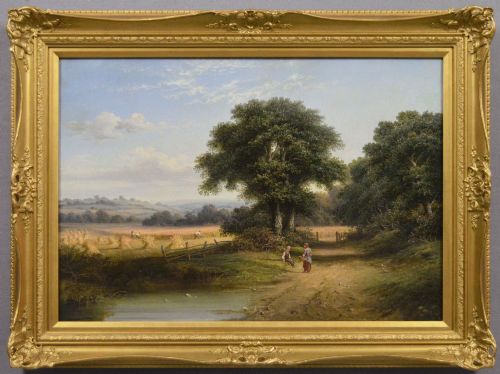
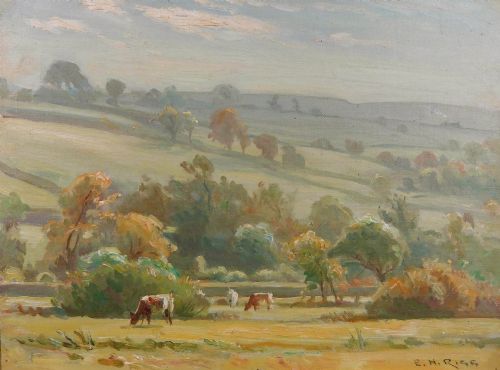


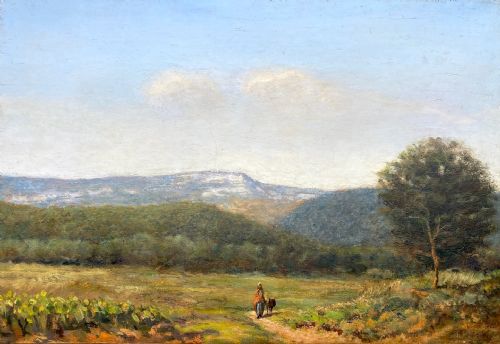


Green Field Oil Painting
A green field oil painting brings pastoral light and working countryside directly onto the wall, captured in pigment by brush.
Green Field Oil Painting
When you search for a green field oil painting, you are looking at pastoral landscapes rendered in oil on canvas, often depicting harvest scenes, grazing cattle, and quiet country paths. The pieces on this page span from the nineteenth century through the Edwardian period and mid-century, reaching into works created later than nineteen sixty.
The subjects focus heavily on the British and European countryside, showing hay fields, riverbanks, and agricultural life under varied seasonal light. You will encounter framed canvases representing British Impressionism, Victorian pastoral scenes, and Scottish Impressionism alongside anonymous nineteenth-century works.
Materials and methods
These works are painted using oil paint applied to canvas, wood, or timber supports, capturing texture and depth across the surface. Many retain their original frames, including giltwood and ebonised surrounds that complement the palette of the composition.
Artists built up the pigment through layered brushwork characteristic of Impressionist and pastoral traditions, recording natural light and shade in the open air. The physical support typically consists of woven canvas stretched over wooden frames or applied directly to wooden panels.
Green Field Oil Painting Retail Price Guide 2026
Typical asking prices for green field oil painting among the pieces listed under this phrase on Sellingantiques today, from the lower quarter to the upper quarter. They describe what is for sale here now, not the wider market.
Materials recorded across the paintings include oil on canvas, oil paint, timber, wood, and giltwood frames.
Distinctions in quality
The strength of a composition lies in how convincingly the artist handles natural light, atmospheric distance, and the textures of grass, foliage, and soil. Finer examples demonstrate confident brushwork and a coherent palette that anchors the viewer in the specific landscape.
Framing also plays a role, as period giltwood or ebonised surrounds that match the age of the canvas contribute to the overall integrity of the piece. Works by named painters with documented exhibition histories or regional associations generally command closer attention from collectors.
Walter Heath Williams·Ernest Higgins Rigg·William Greaves·William Grant Murray·James William Booth·Henry H Parker·Herbert Royle·Frederick J Knowles·W E Atkinson·Alastair Flatterly·Thomas E Francis·Dean Wolstenholme
The Green Field Oil Painting Glossary
- Canvas
- A heavy woven fabric used as a surface for oil painting. It is typically stretched tightly across a wooden frame before work begins.
- Giltwood
- Wood carved and covered with a thin layer of gold leaf or gilt composition. It is frequently found on traditional picture frames.
- Impressionism
- An artistic style focusing on accurate depiction of light in its changing qualities. It emerged in the nineteenth century and influenced British and Scottish painters.
- Pastoral
- A genre of art depicting rural life and idyllic country scenes. These often feature fields, farm animals, and agricultural workers.
Green Field Oil Painting: Frequently Asked Questions
What subjects do these paintings show?
The works depict rural scenes including harvest fields, riverbanks, and cattle grazing in the countryside. Many capture specific regions such as Wharfedale or the South of France.
Agricultural labour and pastoral calm form the primary subjects across the nineteenth and twentieth-century examples on this page.
How should I hang an oil painting?
Hang the canvas on a stable interior wall away from direct sunlight and damp conditions to protect the pigment and canvas. Ensure the weight is supported securely by appropriate picture hooks matched to the wall type.
Keep the painting clear of direct heat sources like radiators to prevent the canvas and wooden stretcher frames from warping over time.
How do I identify the period of a canvas?
Examine the stretcher frames, canvas weave, and the style of the framing materials for clues to the age of the piece. Nineteenth-century works often feature hand-carved giltwood frames, while mid-century pieces may show simpler ebonised surrounds.
Signatures, dates inscribed on the reverse, and the artist's active working years also help date the painting accurately.
Are these paintings supplied with frames?
Most listings include the frame described in the title, such as giltwood or ebonised wooden surrounds. These frames are often contemporary to the painting or date from the same period.
Check individual descriptions to confirm whether the specific frame shown in the photographs is included with the artwork.