
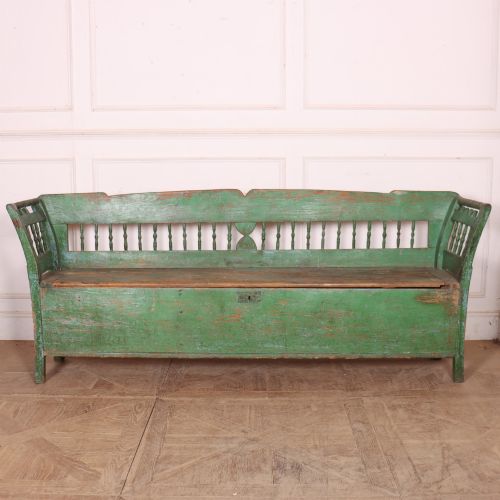
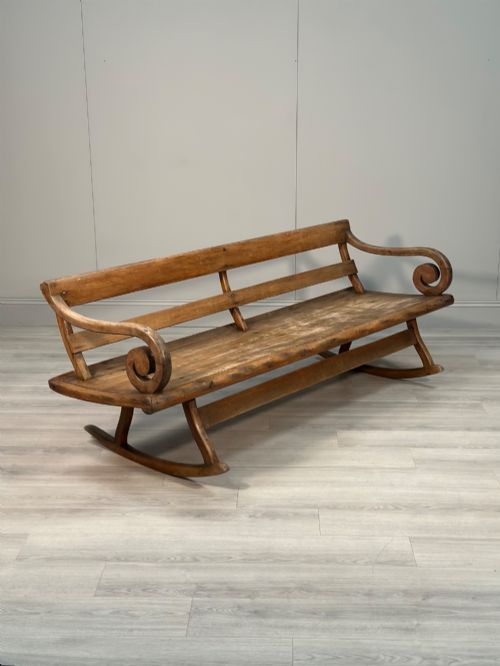
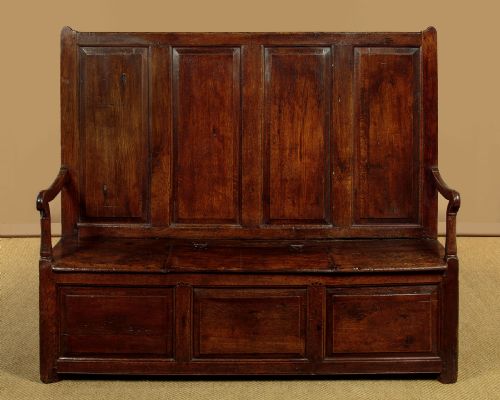
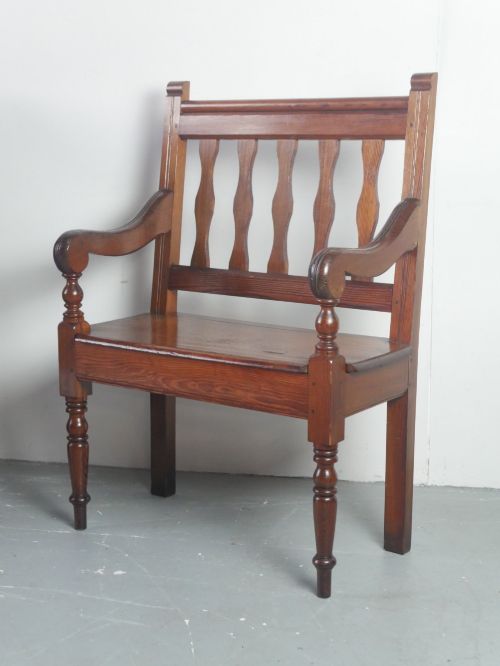
Country Wooden Settle
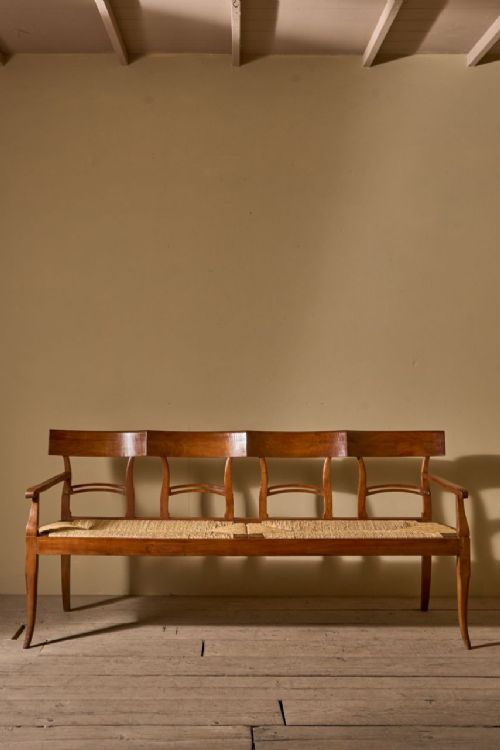
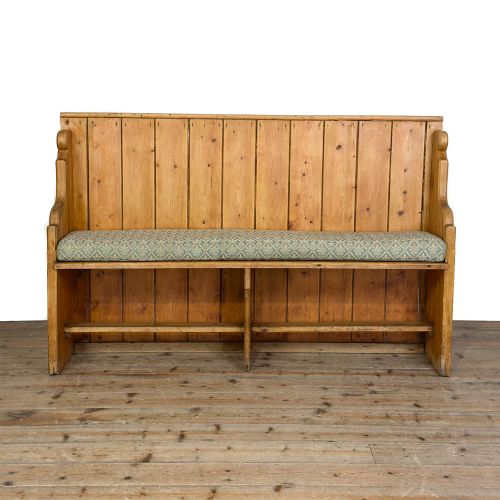
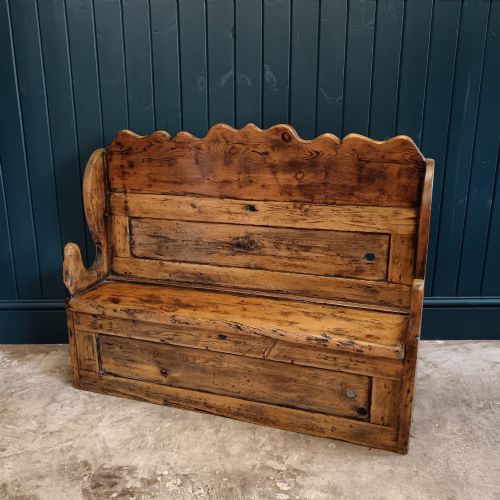
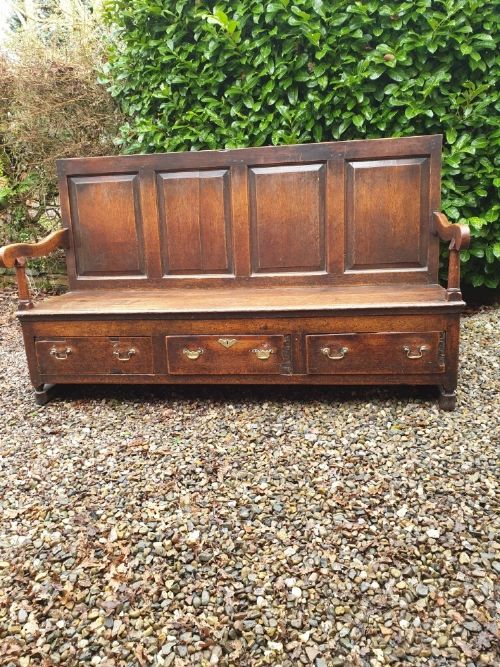
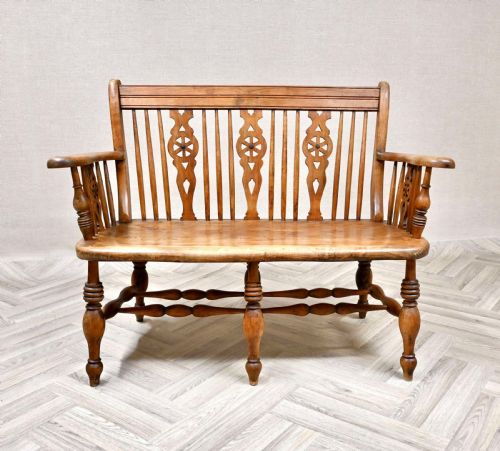
A country wooden settle brings solid vernacular presence and high-backed warmth to a hallway or kitchen.
Country Wooden Settle
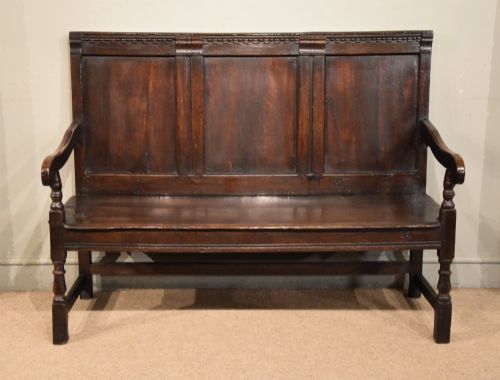
A country wooden settle provides rigid, high-backed seating designed to shield occupants from draughts in domestic interiors and vernacular spaces.
The pieces appearing here span from the seventeenth century through the Victorian era, utilising forms ranging from simple panel-backs to enclosed box settles with integrated storage.
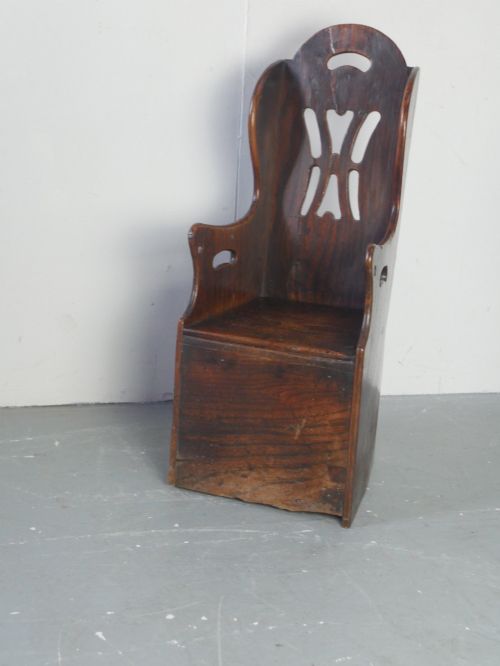
Buyers will encounter regional variations including English, Welsh, Irish, and continental European examples, alongside related lambing chairs and hall benches.
Materials and construction methods
Local timbers dictate the build, with oak forming the structural backbone of earlier pieces while pine, elm, cherrywood, and fruitwood appear frequently across later vernacular work.
Joinery relies on traditional pegged mortise and tenon joints, panelled construction, and solid board assembly designed to withstand hard daily use.
Surfaces show various historic finishes including waxed patinas, scrubbed pine, and original or later painted schemes.
Periods represented span from the seventeenth century through the Georgian and Victorian eras up to the end of the nineteenth century.
Assessing quality in vernacular seating
Integrity of timber and originality of components separate standard workshop output from exceptional survivals, particularly where box storage lids and panelled backs remain intact.
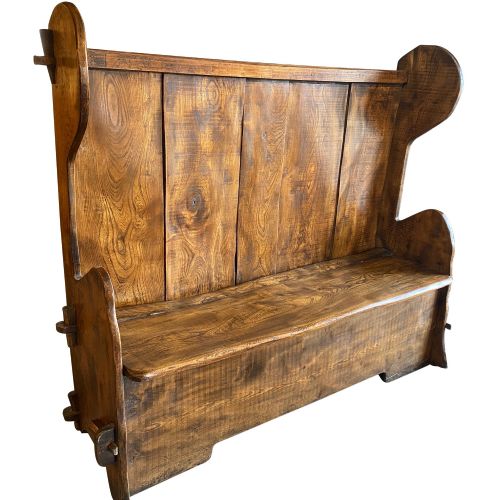
Proportion and scale influence desirability, as smaller or neat dimensions prove harder to find than large, imposing hall benches.
Surface depth and untreated patination tell the story of age, distinguishing pieces that retain their original character from those heavily restored.
The Country Wooden Settle Glossary
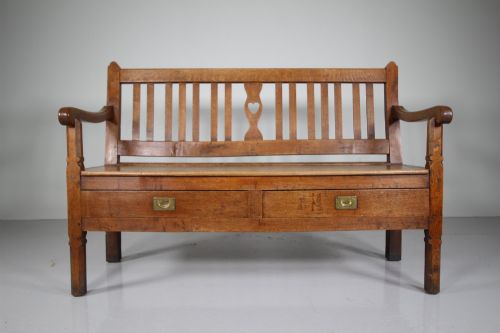
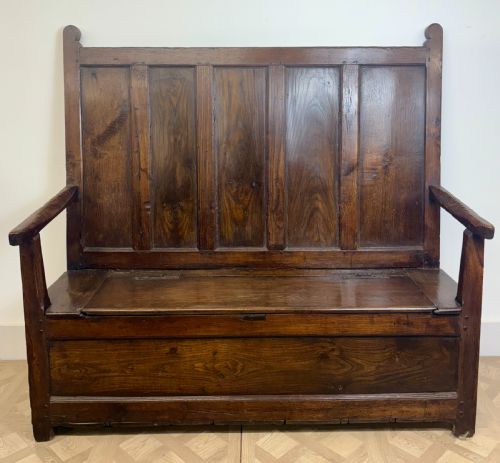
- Box settle
- A bench featuring an enclosed compartment beneath the seat, often accessed via a hinged lid for household storage. This design kept hearth fuel and textiles dry.
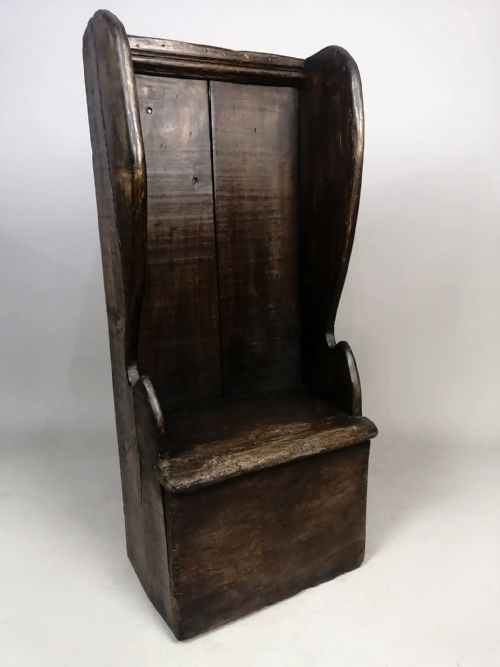
- Lambing chair
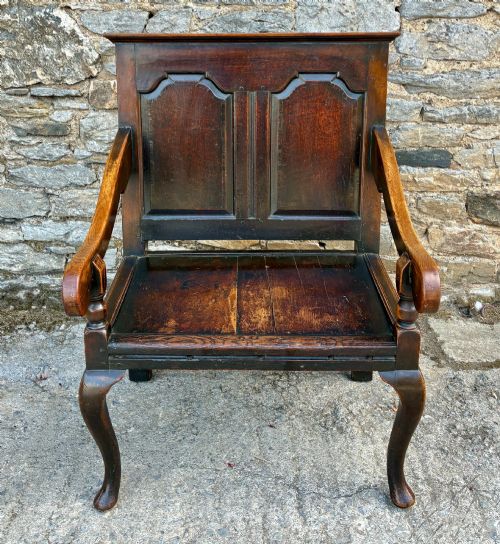
- An enclosed high-backed armchair, frequently fitted with a solid panel or wing on one side to block cold air. These pieces often incorporate small side drawers or cubbies.
- Panel-back
- A construction method utilising wooden stiles and rails framing inset thin panels to form the backrest. This technique accommodates seasonal wood movement.
- Vernacular
- Everyday furniture made by local carpenters using regional materials rather than following metropolitan court styles. These pieces prioritize practical utility over ornament.
- Patina
- The surface sheen and colour developed by wood over decades of handling, polishing, and exposure to light. Genuine patination is valued for its depth and warmth.
Country Wooden Settle: Frequently Asked Questions
Where should I place a settle?
These benches suit large hallways, boot rooms, or farmhouse kitchens where their high backs create a defined seating area.
Ensure adequate wall clearance for the high backrest before positioning the piece.
How do I care for old pine?
Maintain waxed pine surfaces using traditional beeswax applied sparingly with a soft cloth to nourish the timber.
Keep wooden furniture away from direct heat sources and radiators to prevent splitting.
What is a box settle used for?
The integrated chest beneath the seat served historically to store blankets, dry goods, or hearth essentials out of the way.
Today the compartment provides concealed storage for everyday household items.
How old is my settle?
Dating relies on examining construction joints, tool marks, timber species, and the wear patterns on the seatboards.
Early examples utilise heavy oak framing with pegged joints, while nineteenth-century pieces often feature simpler pine construction.