

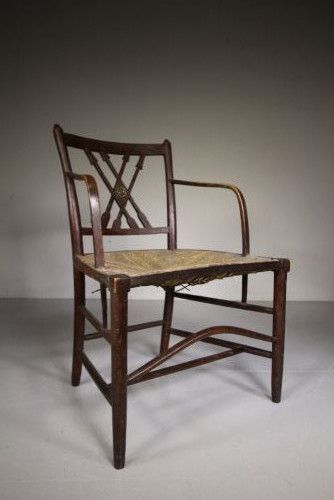
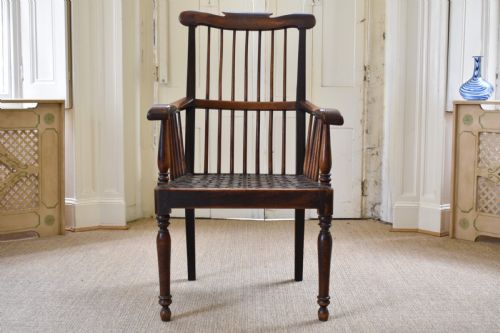


Country Vernacular Open Armchair
A country vernacular open armchair offers straightforward regional character, built by local hands from sturdy native woods like oak, elm, and ash.
Country Vernacular Open Armchair
A country vernacular open armchair represents domestic seating rooted in specific regions rather than metropolitan workshops. These pieces reflect the traditional joinery and turning methods of local makers across England, Wales, Scotland, and the Netherlands.
The selections available here lean heavily toward sturdy provincial forms, including Welsh oak armchairs, ladderbacks, and distinctive regional variants. Buyers often encounter generous proportions, panelled backs, and open arm designs suited to everyday household use.
Materials and Construction
Makers relied on native timbers such as oak, elm, ash, and laburnum, often combining woods within a single frame depending on structural needs. Seat construction frequently incorporated rush or straw alongside solid timber panels.
Joinery techniques relied on pegged mortise and tenon joints, spindle turning, and steam bending to shape arm rails and uprights. These unpretentious methods prioritized durability and local resourcefulness over courtly refinement.
Country Vernacular Open Armchair Retail Price Guide 2026
Typical asking prices for country vernacular open armchair among the pieces listed under this phrase on Sellingantiques today, from the lower quarter to the upper quarter. They describe what is for sale here now, not the wider market.
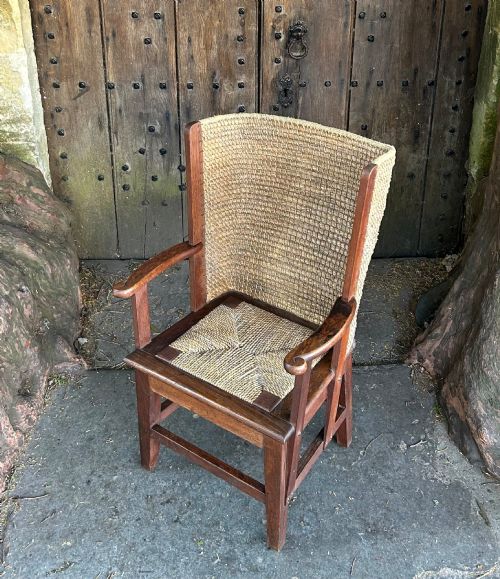
High-backed Orkney chairs evolved to shield sitters from harsh North Atlantic draughts blowing across stone floors.
Assessing Quality and Character
Quality rests in the integrity of the timber, the balance of the proportions, and the honesty of the regional form. Armchairs featuring richly grained laburnum, elm, or well-figured oak stand apart from simpler utility seating.
The depth of local character distinguishes exceptional pieces, from carved details on Welsh panels to the distinct regional silhouette of an Orkney chair. Original surface patination accumulated over generations completes the assessment of a strong example.
The Country Vernacular Open Armchair Glossary
- Vernacular
- Objects made by local craftsmen using traditional regional methods rather than following metropolitan academic designs. These pieces embody the practical needs and stylistic preferences of a specific locality.
- Ladderback
- A chair back constructed with multiple horizontal wooden slats between the upright posts. This traditional form offers lightweight strength and straightforward construction.
- Rush
- Dried marsh grass twisted into cords and woven to form resilient chair seats. It provides a comfortable, slightly yielding surface for everyday sitting.
- Panelled
- A construction method where solid wooden boards are fitted within a grooved frame to prevent warping. This technique frequently appears on the backs of early regional armchairs.
Country Vernacular Open Armchair: Frequently Asked Questions
What is a vernacular armchair?
A vernacular armchair is a piece of regional seating made by local carpenters without following official metropolitan pattern books.
These chairs use native woods and traditional local methods, resulting in forms that reflect the specific area where they were built.
How do I care for rush seats?
Rush seats require a stable indoor humidity to prevent the dried grass from becoming brittle or damp.
Cleaning should be done gently with a dry brush, avoiding excess water that can rot the woven plant material.
Where were these chairs made?
These chairs originated in rural workshops across England, Wales, Scotland, and continental regions like the Netherlands.
Makers utilised whatever strong native timber grew nearby, such as oak, ash, elm, and laburnum.
How can I tell the age?
Age is judged through the construction marks, tool traces, timber shrinkage, and the accumulated surface patination.
Earlier pieces from the eighteenth century typically feature pegged joinery and hand-turned spindles distinct from later Victorian production.