
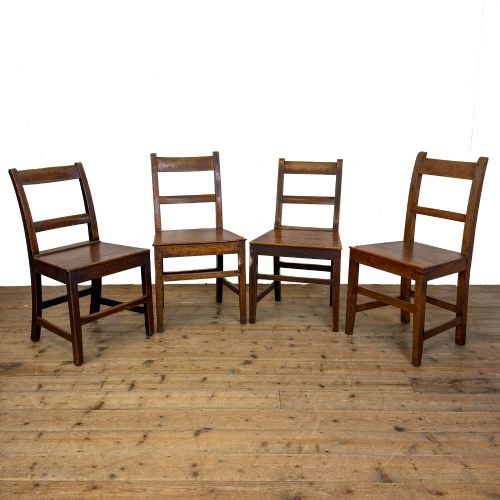
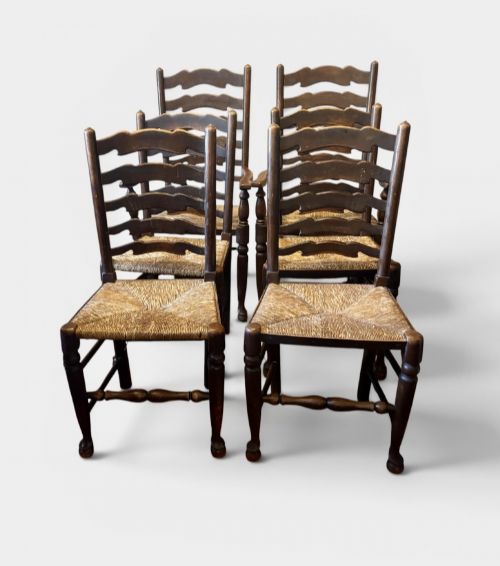


Brown Wooden Ladderback Chair
A brown wooden ladderback chair brings simple country utility and sturdy timber construction into a room.
Brown Wooden Ladderback Chair
A brown wooden ladderback chair is a domestic seat defined by horizontal slats across the backrest, commonly found in vernacular forms across Britain and Europe. Buyers seeking this phrase usually encounter sturdy farmhouse styles shaped by regional traditions.
The selections span dining chairs, armchairs, and rocking chairs originating from periods such as the eighteenth and nineteenth centuries. Elm, oak, ash, and beech form the structural framework for these rustic designs.
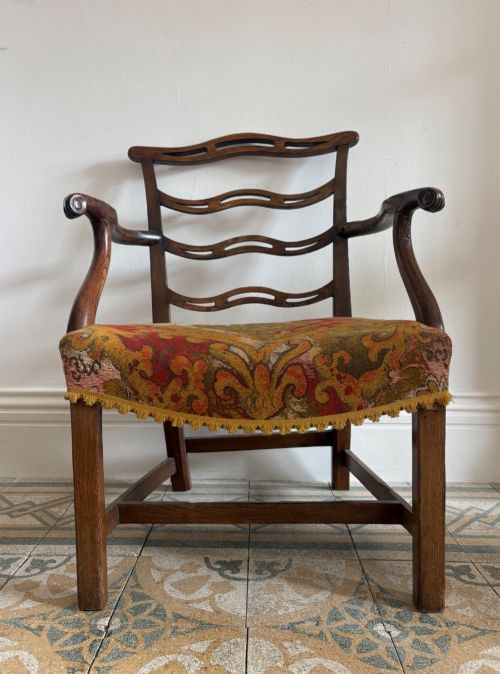
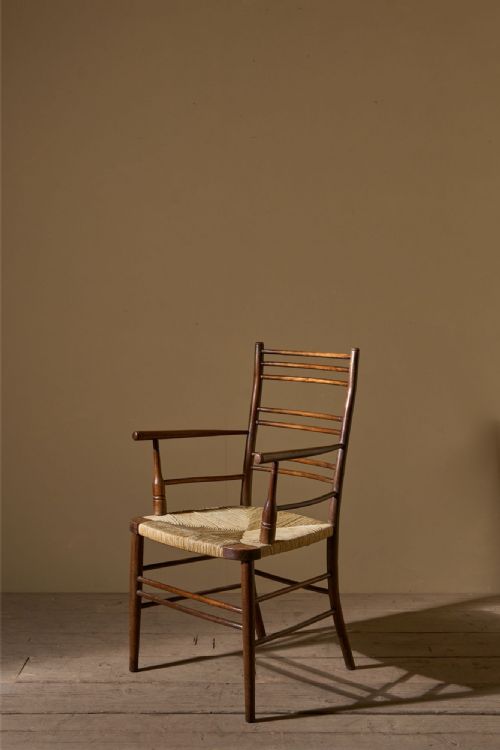
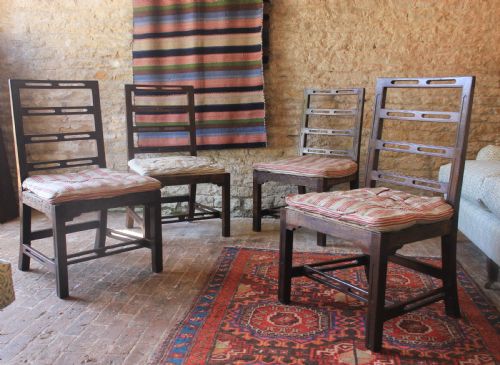
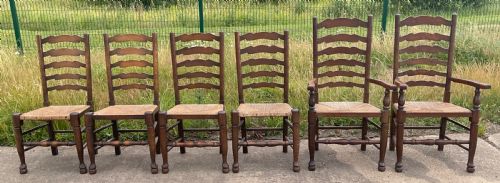
Many examples incorporate woven rush seats, while others use tapestry, fabric, or plain wooden boards. Originating from English, Welsh, Irish, and French workshops, these utilitarian seats suit modern dining spaces and kitchens.
How they were made
Traditional makers built these chairs using native hardwoods including oak, elm, ash, and beech for the frames and spindles. Turned uprights and curved horizontal slats required precise joinery and shaving techniques.
Seats were frequently woven from natural rush to create a resilient, textured platform for daily sitting. Some variants utilised solid timber boards or dropped-in tapestry upholstery secured to the wooden rails.
Listings feature oak, elm, ash, beech, and mahogany alongside woven rush and fabric seats across the eighteenth and nineteenth centuries.
What varies in quality
The integrity of the timber frame and the tightness of the joints distinguish superior examples from heavily repaired pieces. Original turned elements and well-preserved rush weaving elevate the standing of a seat.
Proportion and regional character also dictate distinction, as vernacular pieces with balanced proportions and honest patination hold greater appeal for collectors.
The Brown Wooden Ladderback Chair Glossary
- Ladderback
- A chair back constructed with horizontal wooden rails resembling the rungs of a ladder. These slats are tenoned into the rear upright posts.
- Rush seat
- A seating surface woven from dried marsh grass or rushes wound around a wooden frame. This technique creates a durable, pliable matting.
- Carver
- An armchair, usually designed to match a set of smaller side chairs for use at the head of a dining table. They frequently feature supportive armrests.
- Vernacular
- Objects built by regional craftsmen following local traditions rather than high-style academic designs. These pieces emphasise functional utility and local materials.
Brown Wooden Ladderback Chair: Frequently Asked Questions
Are these chairs suitable for daily dining use?
These wooden chairs were originally built for heavy daily use in kitchens and farmhouses, making them durable for contemporary dining rooms.
Their robust timber frames and woven rush or solid wood seats handle regular sitting well when maintained properly.
How do I identify an eighteenth century piece?
Early pieces often display hand-turned uprights with subtle irregularities and deep patination accumulated over generations of use.
Construction details like pegged joints and locally sourced woods such as ash or elm also point towards earlier rural craftsmanship.
What is a rush seat made from?
Rush seats utilise natural marsh grasses twisted into cords and tightly woven around the internal frame rails of the chair.
This traditional method provides a strong, flexible base that accommodates the sitter while remaining breathable.
Can I mix different chairs around a table?
Mixing country chairs of similar periods and woods creates a harlequin set that reflects traditional domestic accumulation.
Matching heights and shared materials like oak, elm, or ash help unify disparate seating arrangements.