


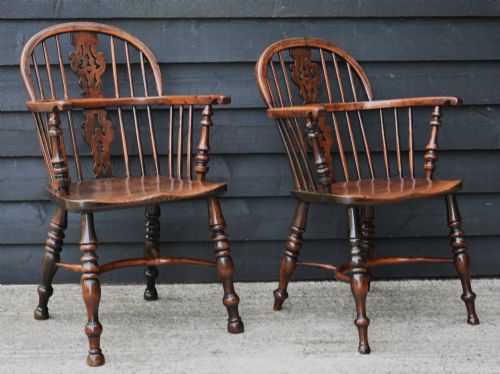
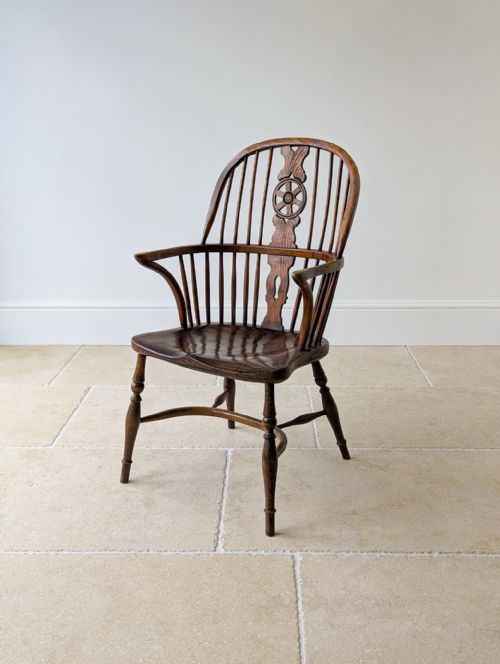
Elm Country Carver Chair
An elm country carver chair brings tactile vernacular warmth to an interior through honest timber construction and time-worn grain.
Elm Country Carver Chair
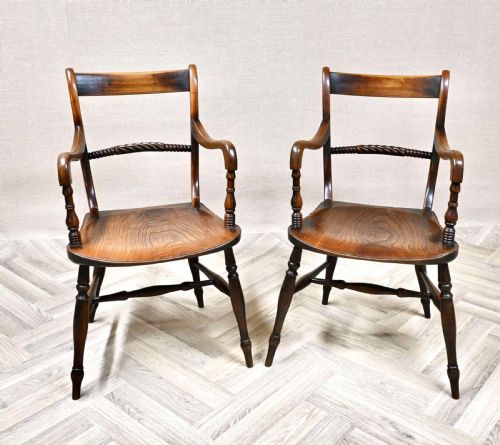
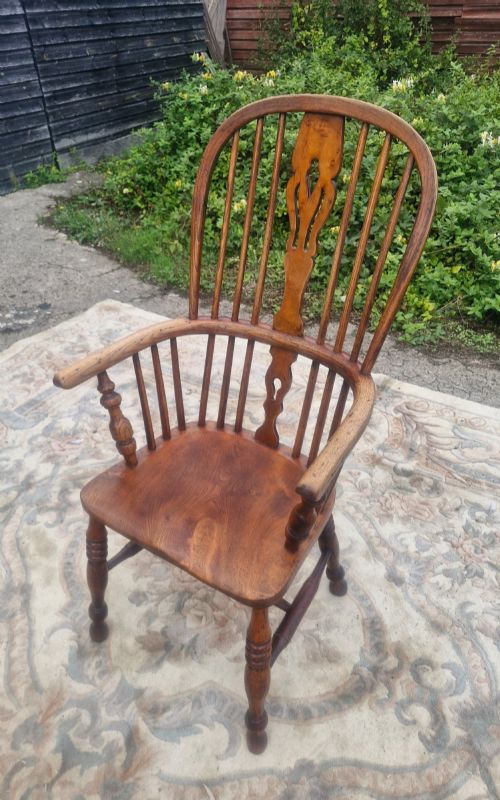
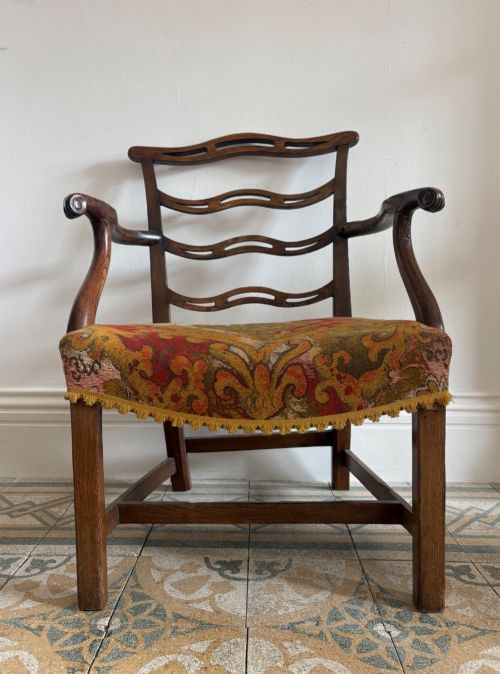
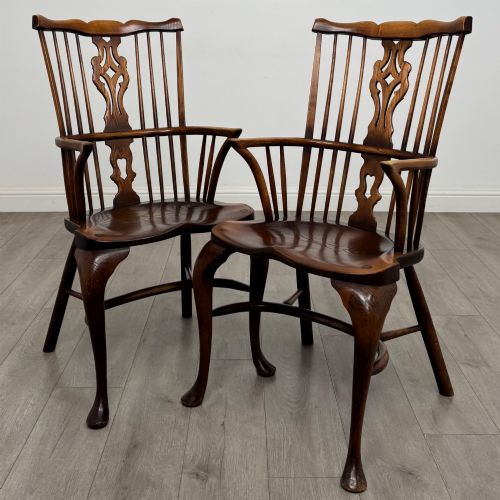
An elm country carver chair represents the robust seating traditions developed across English rural workshops from the Georgian period into the twentieth century. These armchairs served practical functions in farmhouses, kitchens, and vernacular interiors, frequently combining a sturdy elm seat with supporting timbers like ash, beech, or yew.
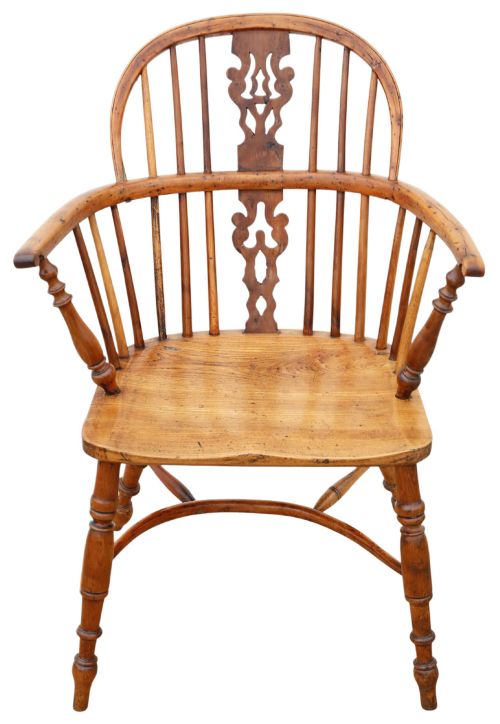
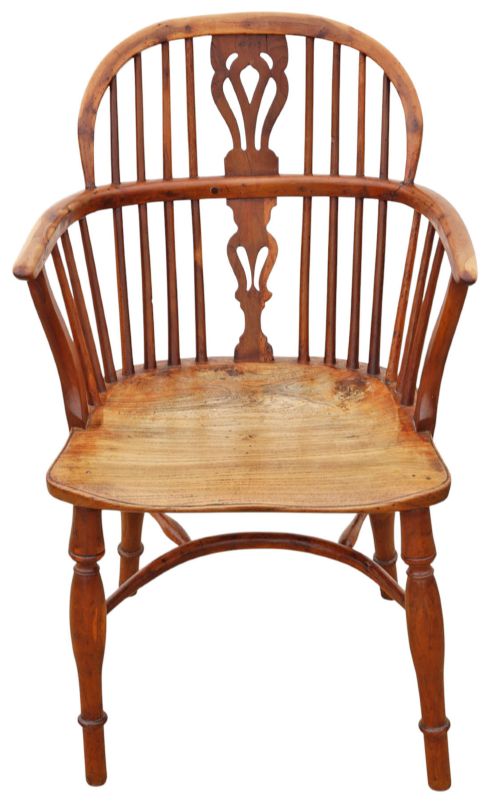
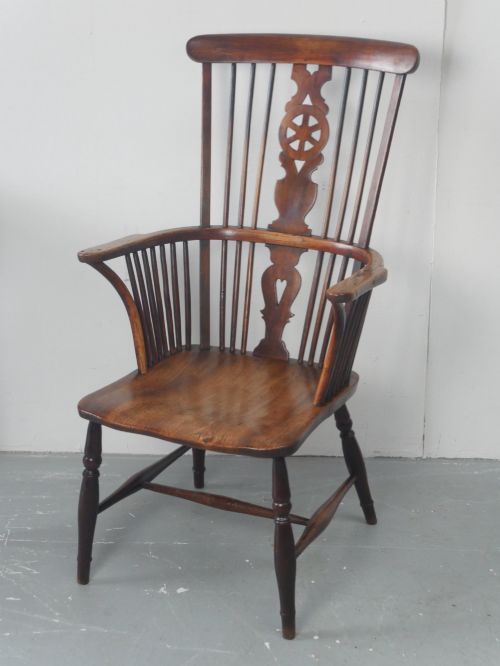
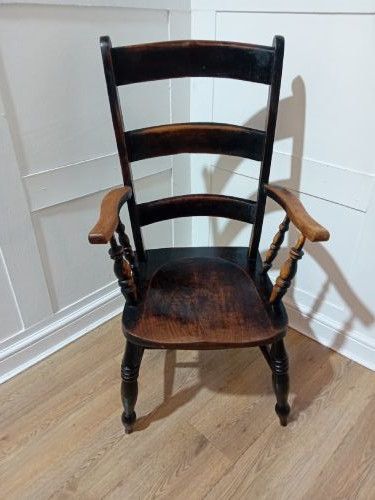
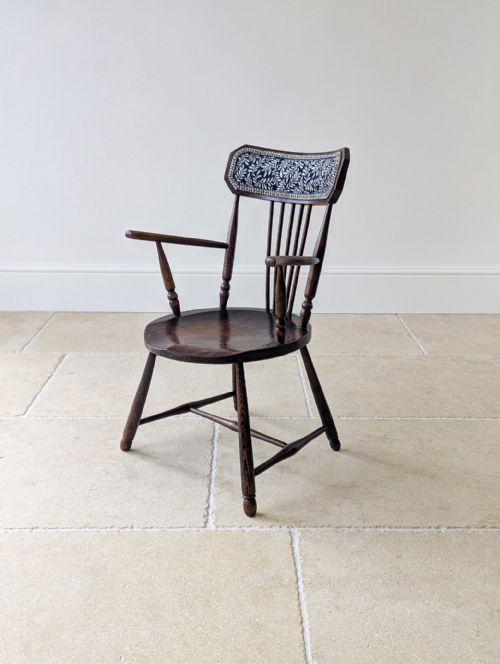
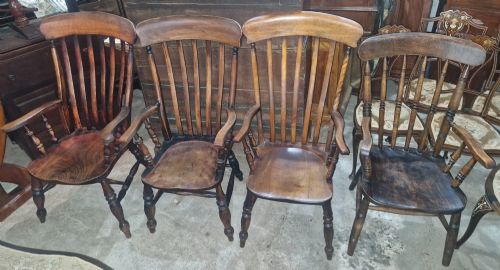
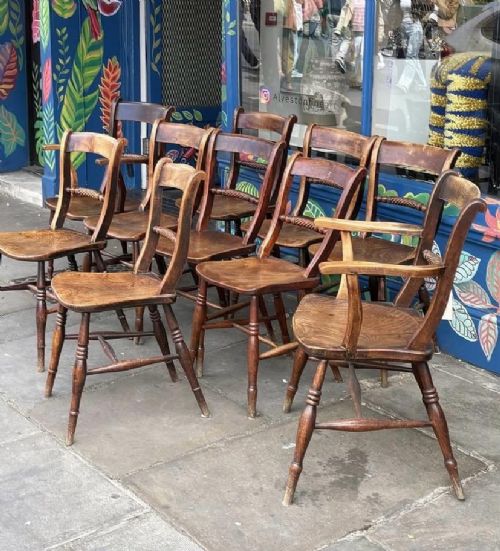
The versions most commonly met on this page span the nineteenth and eighteenth centuries, taking the form of traditional Windsor armchairs, ladderbacks, and spindle backs. Regional variants appear frequently, including Thames Valley, Lincolnshire, and Nottinghamshire designs that display local turning and framing habits.
How They Were Made
Makers utilised solid elm for saddle-shaped seats due to its interlocking grain, which resists splitting when shaped and drilled. Spindles, legs, and stretchers typically relied on straight-grained ash or beech shaped on a pole lathe or turned to precise diameters.
Construction relied on pegged mortise and tenon joints rather than metal fasteners, allowing the green and seasoned woods to move naturally together over generations. Seats were frequently paired with rush seating or left as smooth solid wood planks shaped for daily use.
Listings feature woods including elm, ash, beech, yew, oak, fruitwood, and laburnum alongside rush seating.
What Varies in Quality
The distinction between standard utility seating and finer examples rests in the sculptural depth of the elm seat and the balance of the turning. Superior pieces show thoughtful proportion in the arm bow, slender tapering spindles, and retention of original surface patination rather than over-restored finishes.
Structural integrity depends on the tightness of the original joints and the degree of replacement timber in the undercarriage. Examples retaining matching sets or distinct regional vernacular markers command greater interest among collectors.
The Elm Country Carver Chair Glossary
- Carver
- An armchair designed with open sides to accommodate bulkier clothing, usually matching a set of smaller dining chairs. It stands at the head of a table or serves as an occasional fireside seat.
- Windsor
- A chair built with a solid wooden saddle seat into which the legs, back spindles, and bow are driven directly. Regional subtypes often reveal distinct comb-back or hoop-back profiles.
- Crinoline stretcher
- A bentwood reinforcing brace shaped like a hoop that connects the legs of a chair near the floor. This construction adds lateral stability to the underframe.
- Vernacular
- An object made by local craftsmen following traditional regional patterns rather than strict academic design rules. These pieces prioritize utility and local material availability.
- Rush seat
- A seating surface woven from dried marsh reeds twisted into cords and threaded around a wooden frame. It provides a flexible and supportive platform for daily sitting.
Elm Country Carver Chair: Frequently Asked Questions
What is an elm country carver chair?
An elm country carver chair is a traditional wooden armchair featuring a solid elm seat and open arms for daily use in domestic interiors.
These seats include regional windsor designs, ladderbacks, and spindle backs made across English rural workshops over several centuries.
How were these chairs used?
These chairs served primarily as functional seating around farmhouse kitchen tables and by the hearth in rural homes.
Carver chairs were traditionally reserved for the head of the household or guests due to the added comfort of the armrests.
How do I clean an antique elm chair?
Cleaning requires only a soft cloth to remove dust, avoiding harsh modern chemical polishes that can damage the antique finish.
Applying occasional microcrystalline wax helps protect the dry timber and maintains the natural lustre of the aged wood.
How can I tell the period of a chair?
Dating relies on observing tool marks, the style of the arm bow, and the method of joining the legs to the seat.
Earlier eighteenth-century pieces often display hand-carved details and broader proportions compared to later nineteenth-century factory-influenced production.