


Traditional Rush Seated Armchair
When you want a traditional rush seated armchair, you are looking at centuries of vernacular craftsmanship built for everyday vernacular comfort.
Traditional Rush Seated Armchair
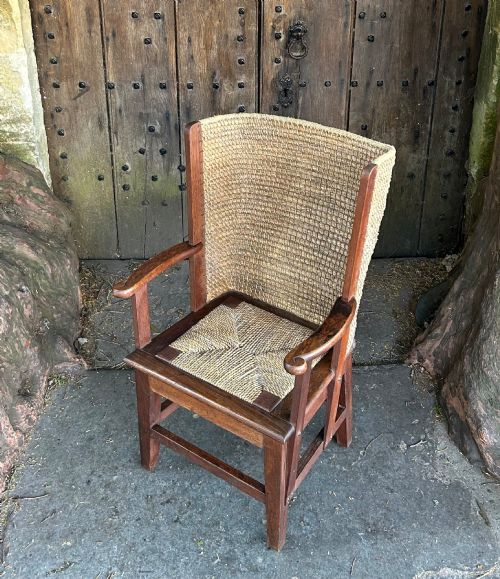
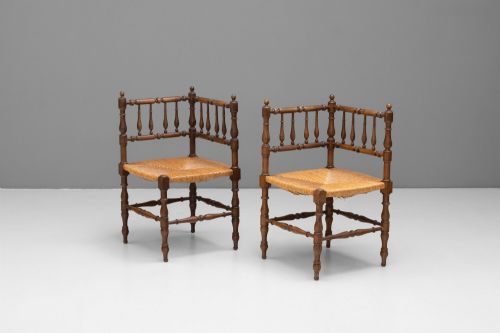
A traditional rush seated armchair represents the intersection of rural utility and regional vernacular design, spanning the eighteenth, nineteenth, and early twentieth centuries. These pieces appear in forms such as standard armchairs, rocking chairs, corner chairs, and high chairs.
Regional variations dominate this category, with examples originating from English districts like Lancashire and Cheshire, as well as Scottish and Victorian country workshops. Makers built them primarily for domestic utility, resulting in sturdy seating forms that survive from Georgian and Arts and Crafts contexts.
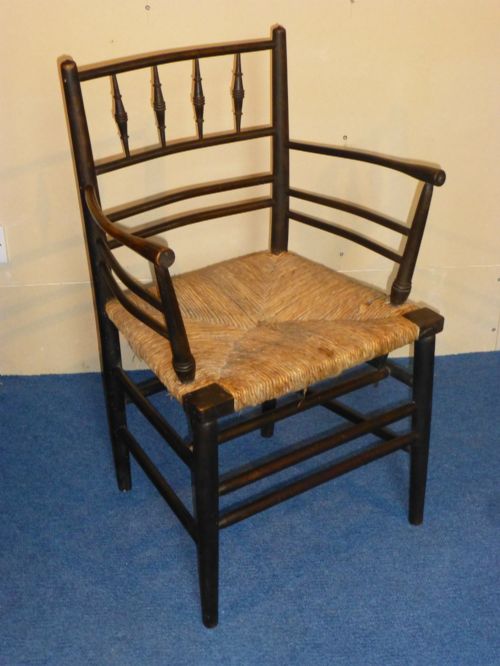
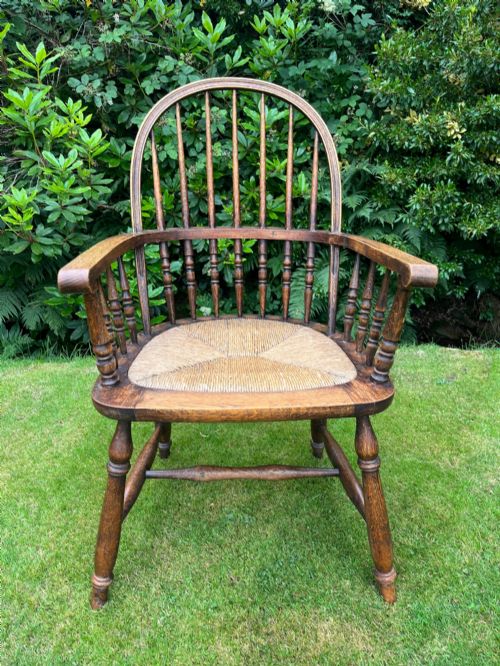
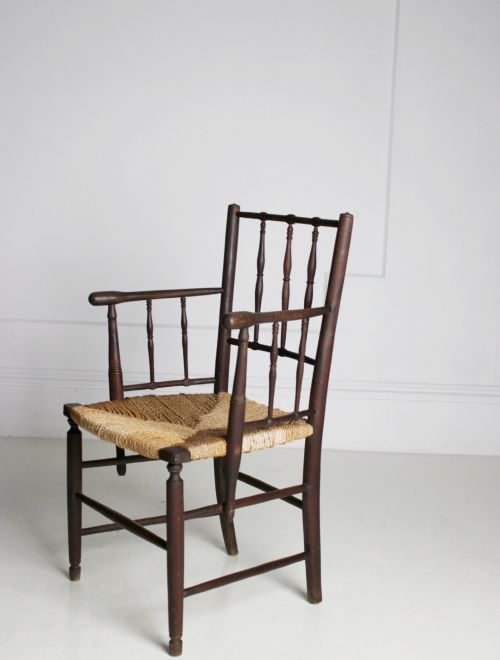
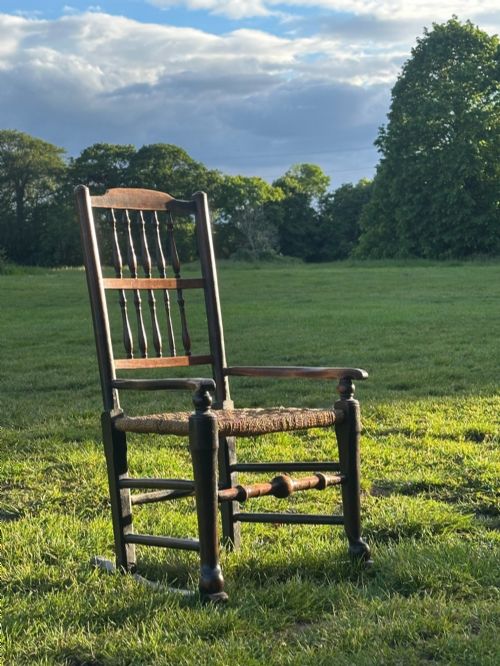
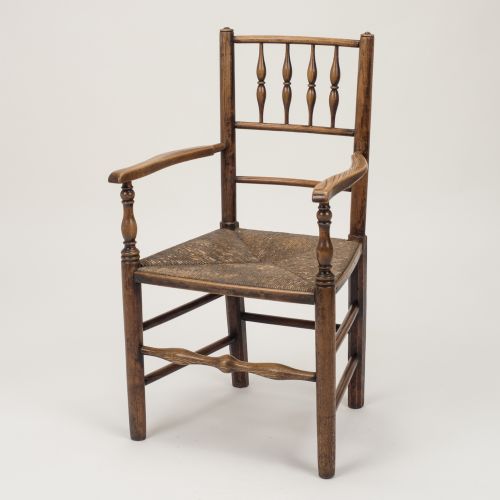
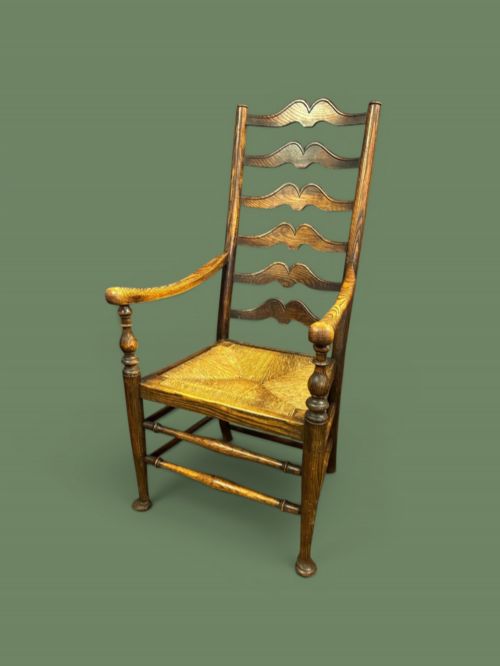
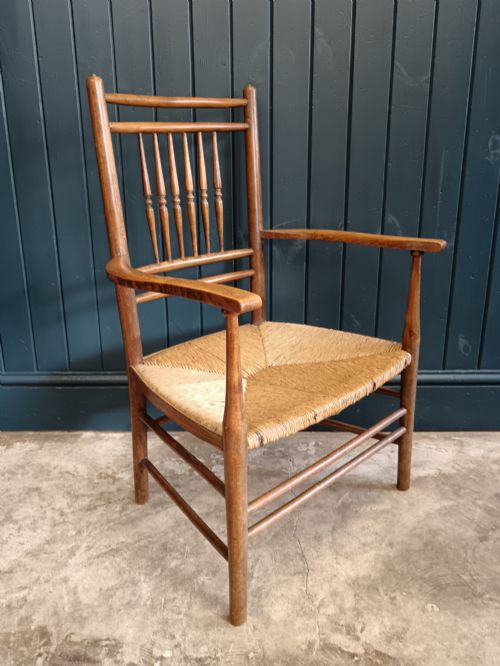
The buyer meets variations ranging from vernacular ladderbacks and spindlebacks to sophisticated designer commissions associated with the Arts and Crafts movement. These seating options combine straightforward timber frames with woven organic cordage.
Materials and construction
Craftsmen built the frames of these chairs using native hardwoods such as ash, elm, oak, beech, fruitwood, and mahogany, sometimes applying paint or ebonising to the finished timber. Regional turners shaped spindles and legs on a lathe before assembling the components with mortise and tenon joints.
The seats themselves utilise twisted marsh rush, woven tightly around a wooden frame to create a resilient, textured surface. Workshops sourced this plant material locally, preparing and twisting the strands by hand prior to the intricate weaving process.
Some chairs spent decades tucked away in crofters' cottages before finding a second life in modern dining rooms.
Quality variations
The skill of the initial turning and the proportional harmony of the ladder or spindle back separate standard utility items from finer workshop pieces. Superior examples exhibit well-balanced framing, crisp turning details, and tight, uniform rush weaving that maintains structural integrity.
Provenance and attribution elevate certain pieces, particularly those linked to known designers or prominent Arts and Crafts firms, alongside chairs retaining original painted or ebonised surfaces. The integrity of the timber frame, combined with the longevity of the natural rush seating, dictates the overall standard.
Philip Webb·Philip Clissett·E W Godwin·Dicon Nance·Liberty & Co
The Traditional Rush Seated Armchair Glossary
- Rush
- Dried marsh grass twisted into cord and woven to form flexible, durable chair seats. This material provides a traditional seating surface found across rural English and Scottish furniture.
- Ladderback
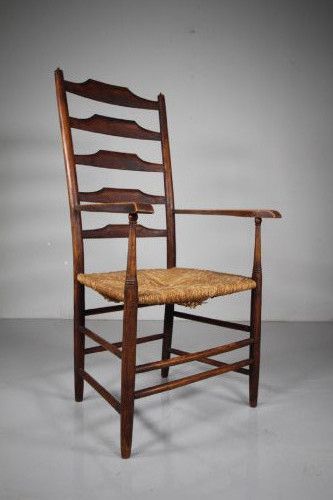
- A chair back constructed with horizontal wooden slats positioned between two upright posts. This design appears frequently in country vernacular and Arts and Crafts seating.
- Spindleback
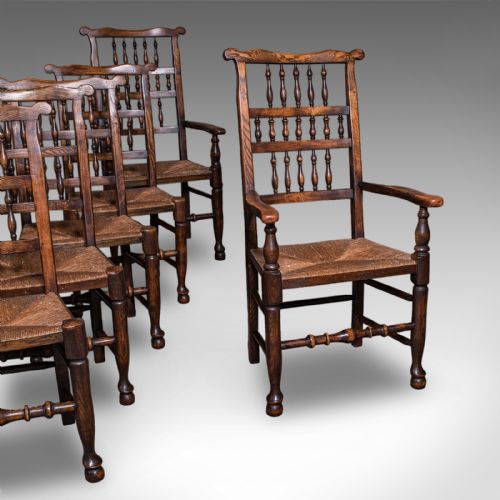
- A chair featuring a series of thin, turned wooden uprights supporting the backrest. Makers turned these components on a lathe to create lightweight yet sturdy supports.
- Carver
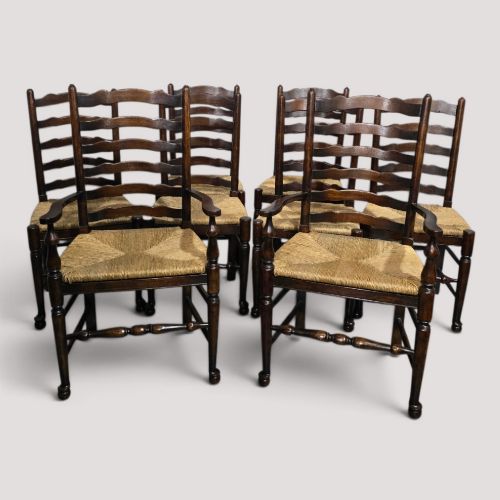
- An armchair designed to match a set of dining chairs, traditionally placed at the head of a table. These seats share the stylistic motifs of the smaller side chairs in the set.
Traditional Rush Seated Armchair: Frequently Asked Questions
What is a rush seated armchair?
A rush seated armchair is a wooden seat featuring a woven marsh grass base, typically produced in regional workshops during the eighteenth and nineteenth centuries.
These chairs served as practical household furniture, combining turned wooden frames with flexible organic seating materials.
How do I care for a rush seat?
Keep rush seated chairs away from excessive moisture and direct sunlight to prevent the organic cord from drying out or rotting.
Dust the woven surface regularly with a soft brush and avoid sitting on the furniture with sharp objects that might snap the strands.
Are these chairs comfortable for daily use?
The woven rush material offers a surprisingly resilient and supportive surface that conforms slightly to the sitter over time.
Many buyers use them as fireside chairs or desk seating, though adding a loose cushion can increase comfort for extended sitting.
How do I identify the period of a country armchair?
Examine the turning styles, wood species, and construction techniques, as older pieces often display hand-split timbers and distinct regional lathe work.
Nineteenth-century adaptations often incorporate lighter woods like beech and feature more standardised spindle turning compared to earlier Georgian examples.