

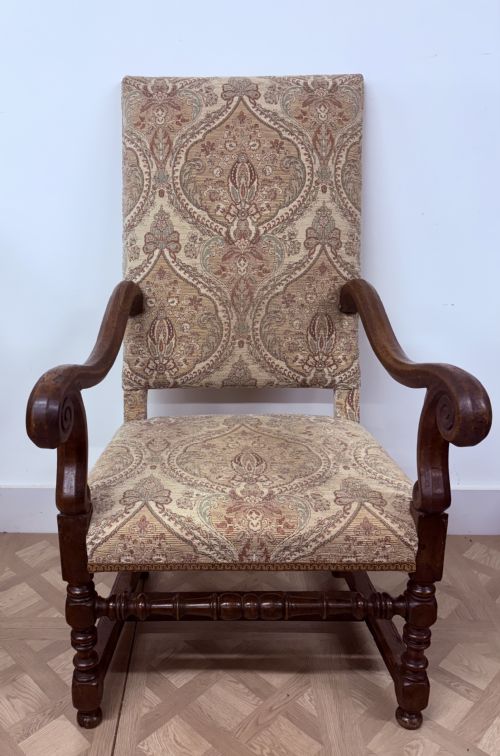
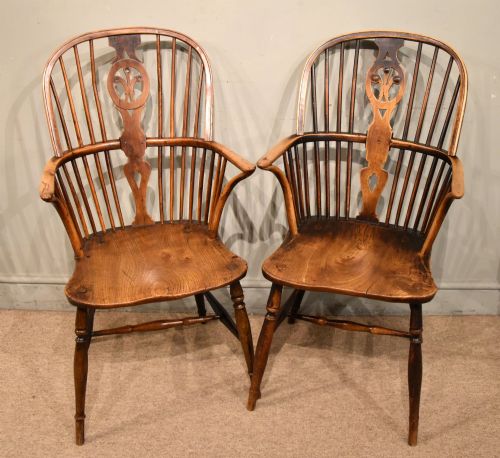
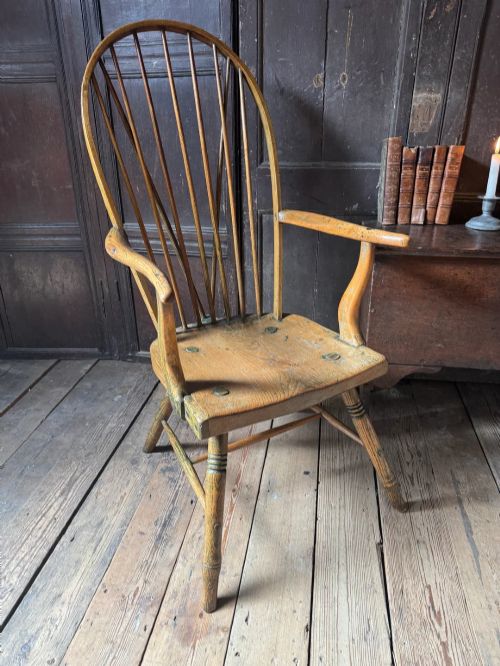
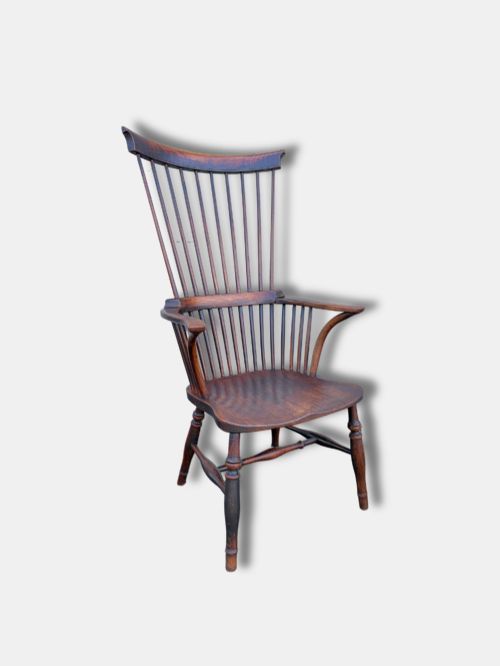
High Back Country Armchair
A high back country armchair offers solid vernacular seating, combining traditional timber construction with generous proportions.
High Back Country Armchair
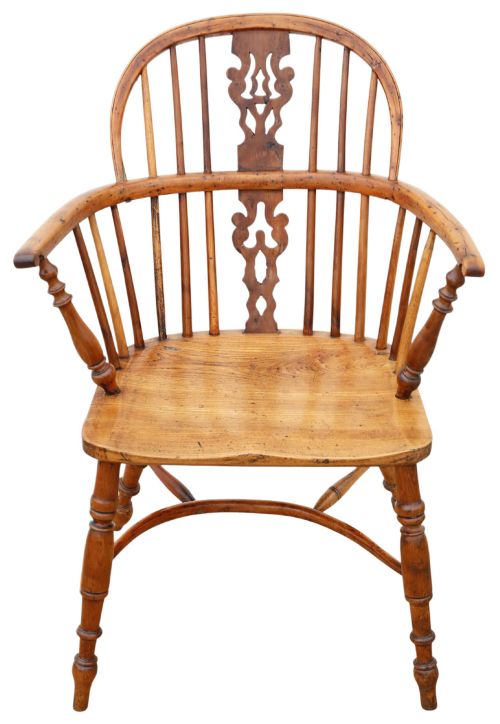
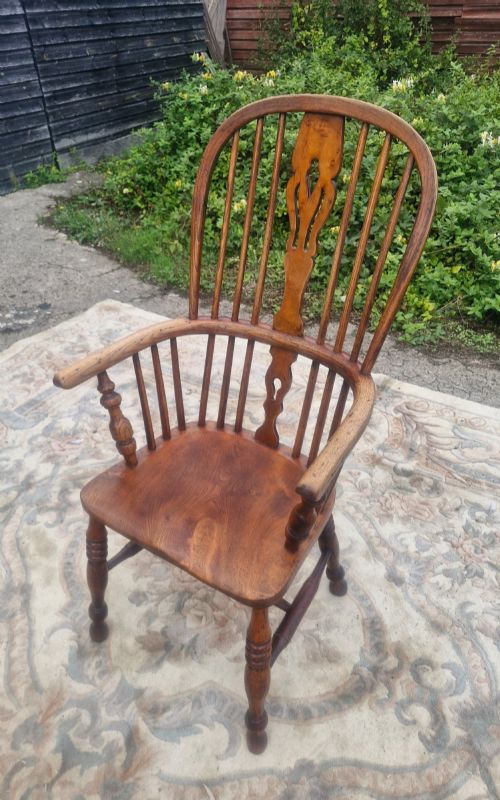
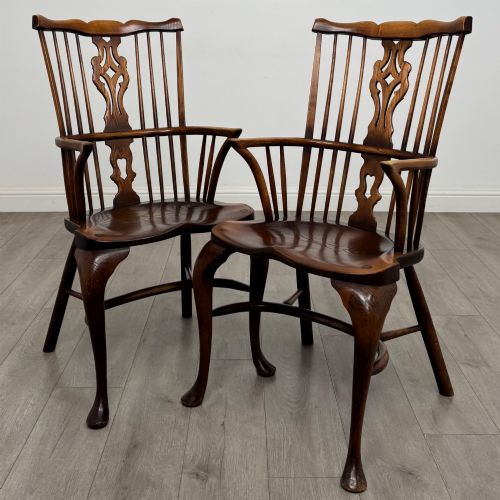
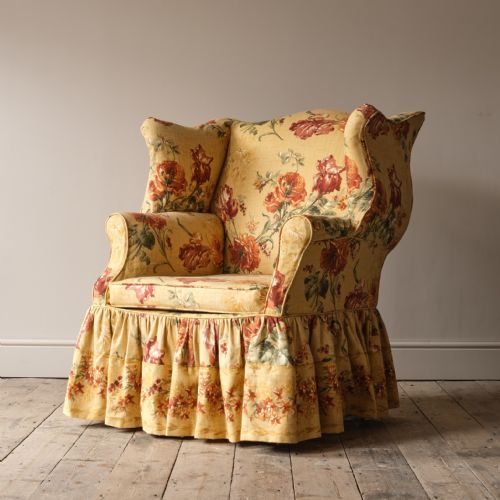
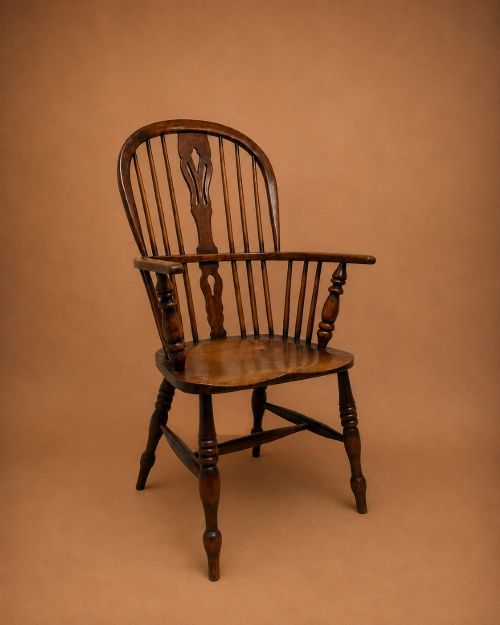
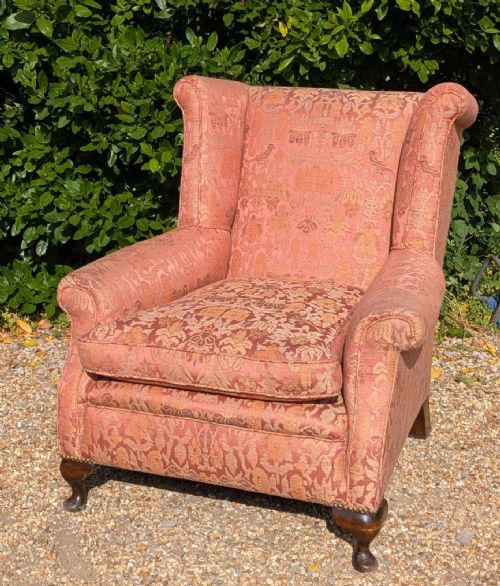
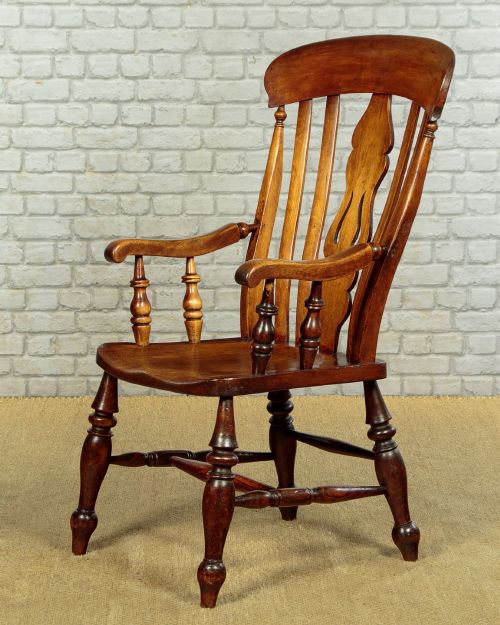
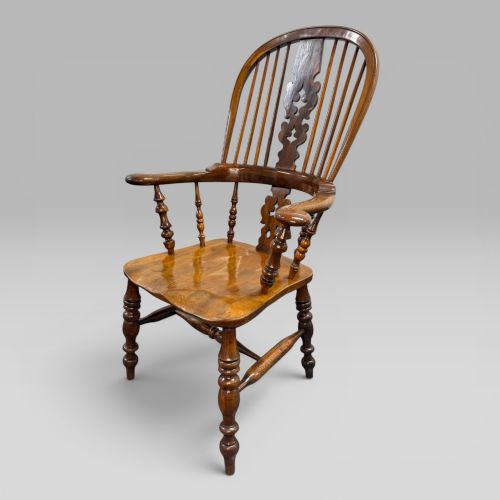
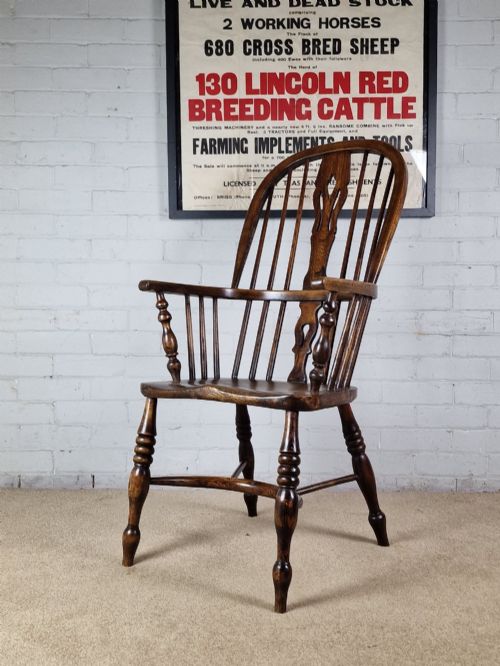
When you search for a high back country armchair, you meet robust vernacular seating designed for domestic comfort in farmhouses, kitchens and country houses. These pieces typically take the form of Windsor chairs, wingbacks, and lath-back fireside chairs originating from periods spanning the eighteenth, nineteenth, and early twentieth centuries.
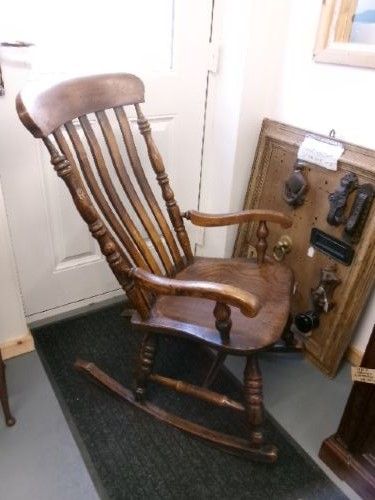
The most common versions found here are Windsor chairs featuring high hoop backs or comb backs, alongside kitchen armchairs and rocking chairs. They display regional English characteristics, with origins stretching from Buckinghamshire and Lincolnshire to the Thames Valley, Yorkshire, and the West Country.
Makers utilised local timbers to build sturdy seats for daily use, resulting in surviving examples that range from vernacular farmhouse seating to refined regional variations. Collectors encounter these chairs in single pieces, pairs, or larger sets suited to period interiors.
How they were made
Makers constructed these chairs primarily using mixed native timbers, pairing elm seats with ash, beech, yew, or oak for the spindles, bows, and legs. This combination of woods provided the necessary flexibility for steam-bent components and the rigid strength required for the main frame.
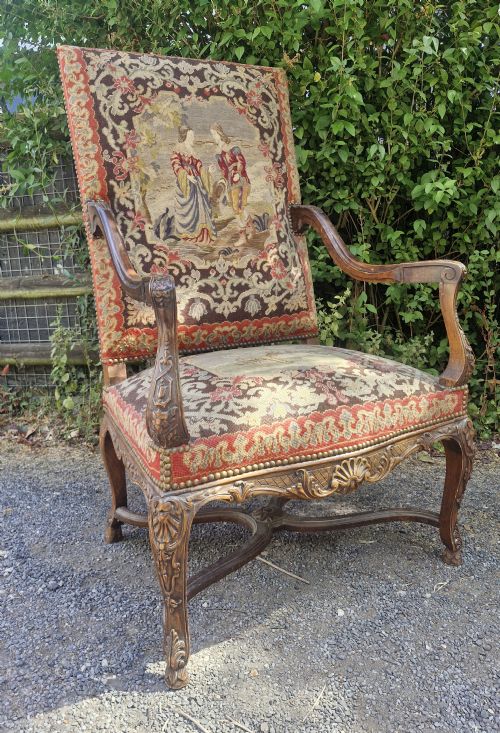
Makers turned legs and spindles on a lathe before assembling the components through socketed joints, securing spindles and crests directly into solid carved wooden seats. Some pieces incorporate upholstery over fabric, needlework, or brass details, though the defining structural technique relies on traditional stick and hoop construction.
Makers sometimes carved tiny heart-shaped handholds into the thick wooden seats of children's high Windsor chairs.
What varies in quality
The distinction between standard utility seating and finer examples lies in the choice and figuring of the timber, particularly where yew or well-grained elm was selected for the seat and back. Superior pieces display harmonious proportions in the sweep of the comb back or hoop, alongside balanced turning in the arm supports and legs.
Originality of surface finish and the retention of patination heavily influence the standing of an armchair, as does the integrity of the structural joints. Chairs that retain their original timber components without extensive replacements command greater attention from collectors.
Duncan McKellar of Fenwick
The High Back Country Armchair Glossary
- Windsor chair
- A wooden armchair constructed with a solid shaped seat into which the legs and back spindles are separately socketed. This method creates a sturdy, lightweight frame characteristic of English country furniture.
- Comb back
- A Windsor chair design where the central vertical spindles extend upward to support a horizontal top rail resembling a traditional hair comb. This style provides elevated back support.
- Hoop back
- A continuous curved wooden bow that forms the top rail and arms of a Windsor chair. Makers steam-bent a single piece of ash or elm to achieve this rounded profile.
- Vernacular furniture
- Items made by local craftsmen following regional traditions rather than formal architectural styles. These pieces prioritise practical utility and local materials.
- Lath back
- A chair design featuring flat wooden slats or laths set into the back rail instead of turned spindles. This variation often appears on nineteenth-century kitchen and fireside armchairs.
High Back Country Armchair: Frequently Asked Questions
Where were these armchairs made?
These armchairs were produced across various English regions, with distinct styles originating from areas such as Buckinghamshire, Lincolnshire, Yorkshire, and the Thames Valley.
Local craftsmen utilised the native woods available in their specific regions, creating recognisable local variations in the turnings and back designs.
How do I care for an old wooden armchair?
Keep the timber away from direct heat sources and sudden temperature changes to prevent the wood from drying out or splitting.
Apply a traditional beeswax polish occasionally to nourish the surface and maintain the natural patina accumulated over the centuries.
How can I tell the period of a Windsor chair?
Examining the construction methods, tool marks, and timber choices helps indicate the age, as eighteenth-century models often feature broader plank seats and subtle regional turning.
Comparing the profile of the comb or hoop back and the wear patterns on the seat provides further clues to the manufacturing date.