


Country Oak Writing Desk
A country oak writing desk offers honest utility and rustic warmth, bringing practical period charm to daily work.
Country Oak Writing Desk
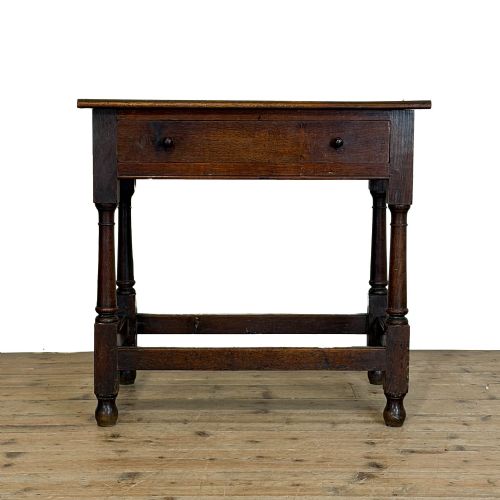
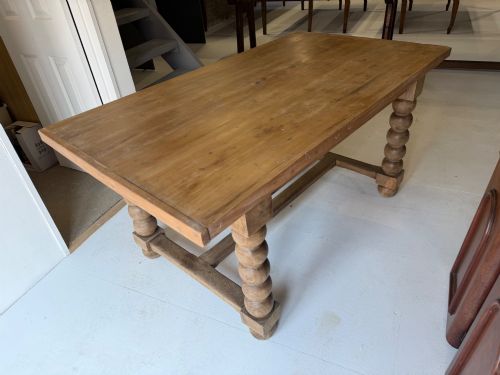
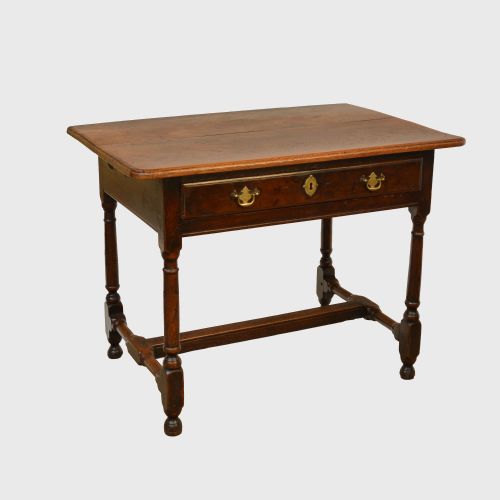
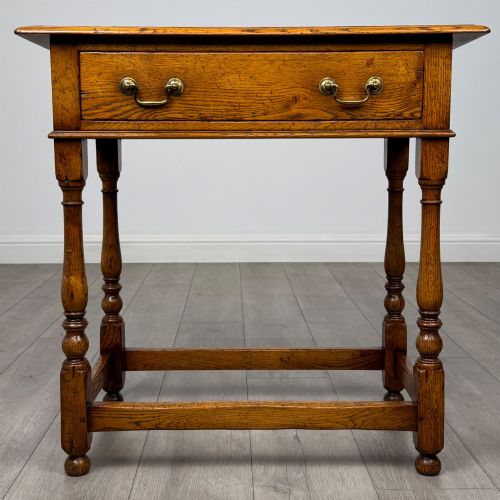
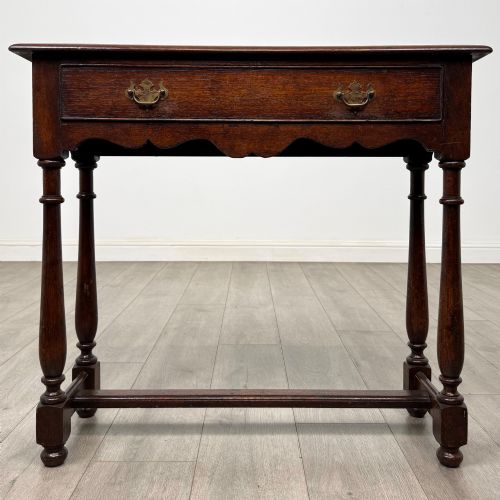
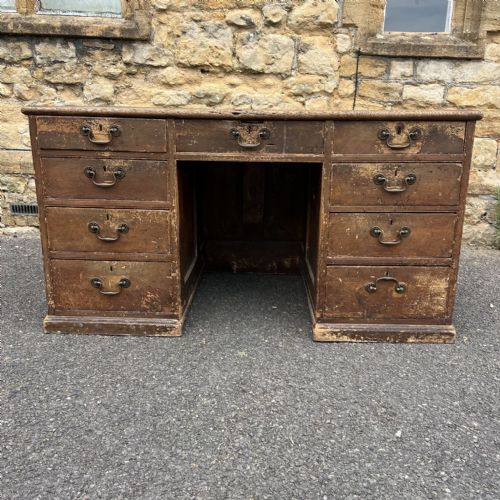
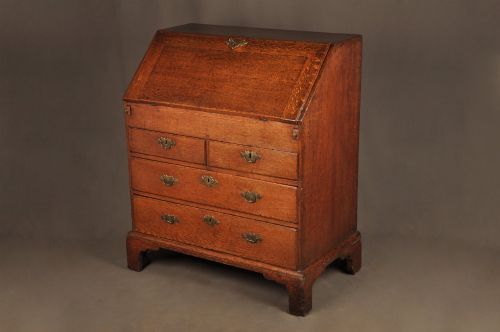
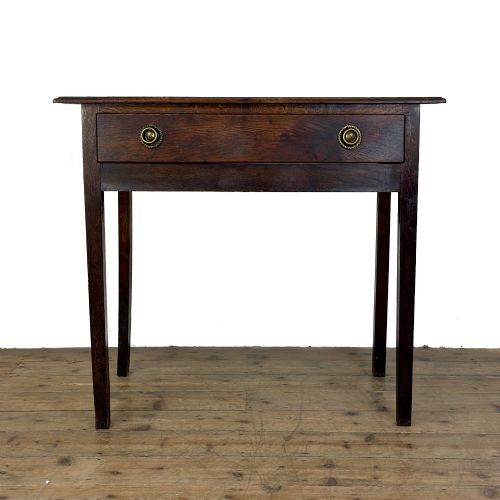
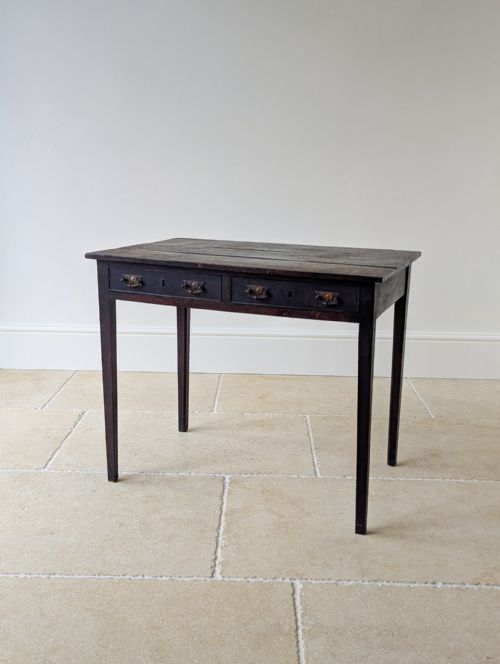
A country oak writing desk encompasses utilitarian forms built for domestic or estate administration, frequently appearing as lowboys, side tables, and fitted bureaux. These domestic pieces date principally from the seventeenth, eighteenth, and nineteenth centuries, reflecting regional English, Welsh, and continental provincial workshops.
The aesthetic relies on honest joinery and practical proportions rather than courtly ornament. Surfaces show the marks of daily use, distinguishing these domestic workspaces from formal metropolitan furniture.
Materials and construction
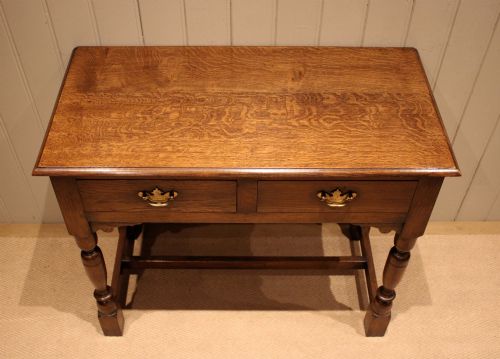
Makers utilised solid oak for framing and primary surfaces, selecting quarter-sawn timber to reveal distinct medullary rays and ensure structural stability. Secondary woods such as elm, beech, fruitwood, and pine frequently appear in drawer linings, secondary panels, and structural framing.
Traditional joinery defines the construction, relying on pegged mortise and tenon joints, hand-cut dovetails for drawer boxes, and hand-planed panels. Iron and brass hardware, including drop handles and escutcheons, secure drawers and fall-fronts.
Estate managers often stored ink spills and wax droplets inside internal compartments, leaving permanent ink stains that record centuries of administrative paperwork.
Assessing quality and proportion
The balance of proportions and the integrity of the timber dictate the standing of an individual piece. Better examples display careful selection of figured oak and harmonious dimensions rather than clumsy additions or unsympathetic timber replacements.
The preservation of original surface patination separates superior specimens from heavily stripped or over-cleaned alternatives. Retaining authentic structural elements, period brassware, and unaltered interior fittings elevates the stature of any desk.
The Country Oak Writing Desk Glossary
- Lowboy
- A small oak table fitted with one or more drawers, commonly utilised as a dressing table or writing desk in country houses.
- Bureau
- A desk featuring a sloping hinged fall-front that opens to reveal a fitted interior of small drawers and pigeonholes.
- Vernacular
- Furniture made by local country craftsmen for everyday domestic use, free from metropolitan stylistic constraints.
- Medullary rays
- Natural ribbon-like flecks visible in quarter-sawn oak that indicate traditional timber conversion methods.
- Quarter-sawn
- Timber cut radially from the centre of the log, producing boards with greater dimensional stability and distinct figuring.
Country Oak Writing Desk: Frequently Asked Questions
How were these desks used originally?
These desks served as administrative hubs for estate managers, households, and merchants who required a stable surface for writing letters and keeping ledgers. Smaller forms functioned in bedrooms or private parlours for personal correspondence.
Fitted interiors with small drawers and pigeonholes kept paper, ink, and sealing wax organised securely between writing sessions.
How do I fit one into a modern room?
A country oak writing desk works effectively as a compact home workstation or a decorative console table in living spaces and hallways. Its neutral timber tones and modest proportions allow it to anchor contemporary or traditional interior schemes alike.
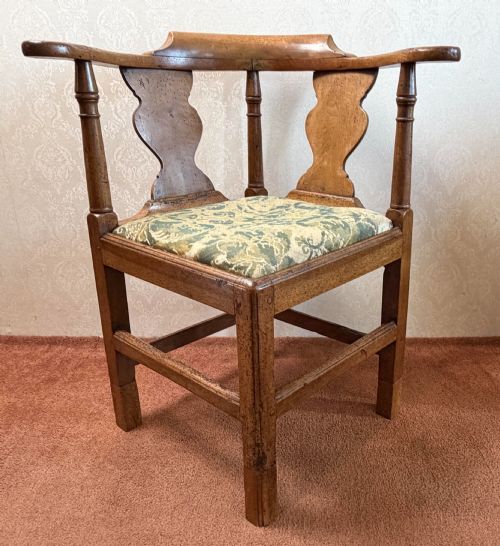
Pairing the desk with a simple wooden side chair or a small corner chair preserves the authentic provincial aesthetic without overwhelming the floor area.
How can I tell the period of the wood?
Period indicators include hand-cut joinery marks, irregular board widths, and the natural colouration known as patination accumulated through generations of use. Early pieces often feature pegged joints, hand-planed surfaces, and wrought iron or early brass hardware.
Later nineteenth-century examples tend towards standardised machine-sawn timber components and different drawer construction techniques.