




Brown Oak Writing Cabinet
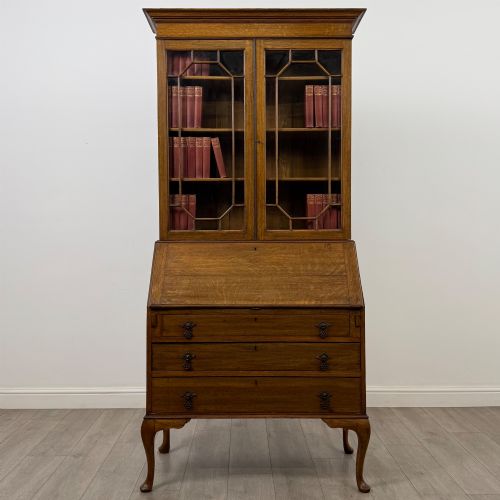
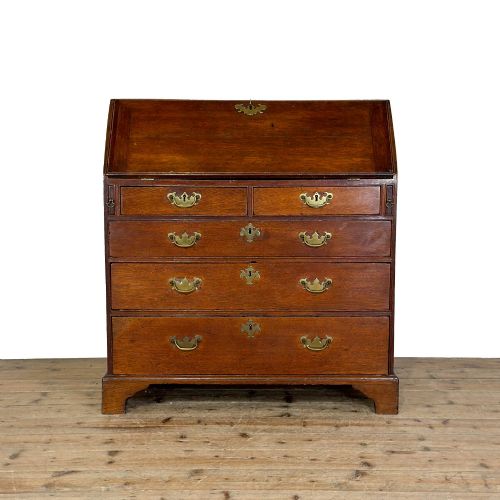
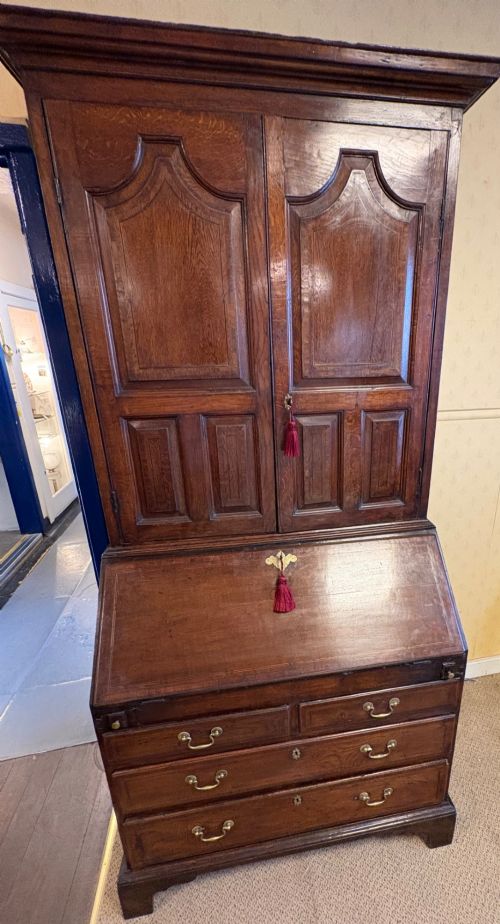
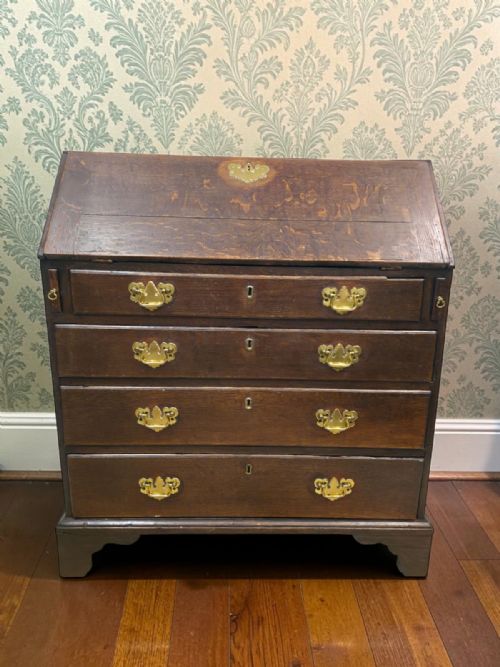
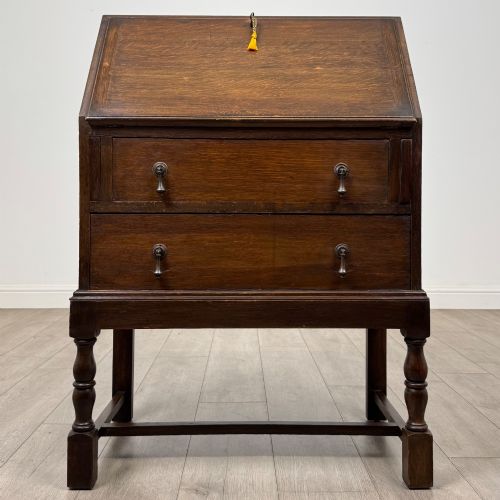
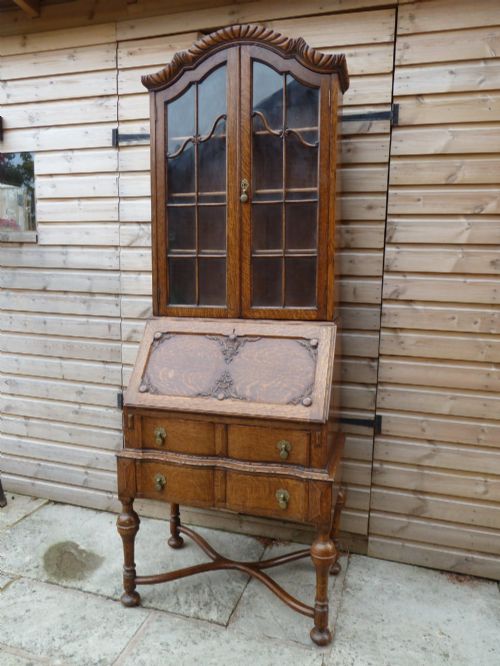
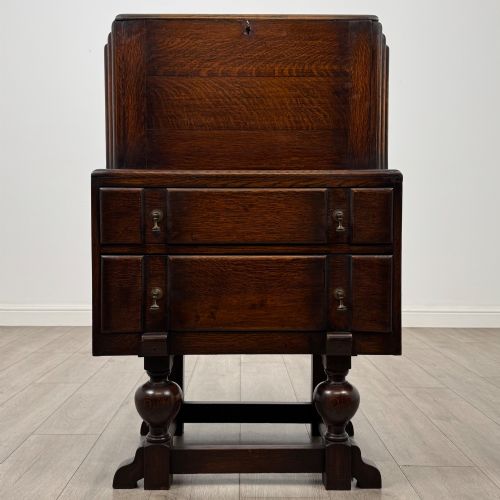
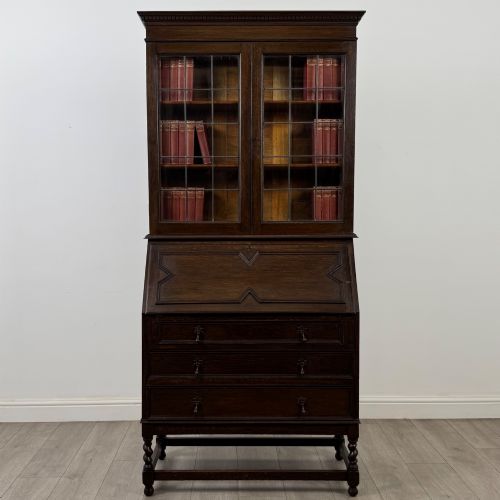
A brown oak writing cabinet brings together sturdy timber and fitted compartments for correspondence, offering a practical writing surface alongside enclosed storage.
Brown Oak Writing Cabinet
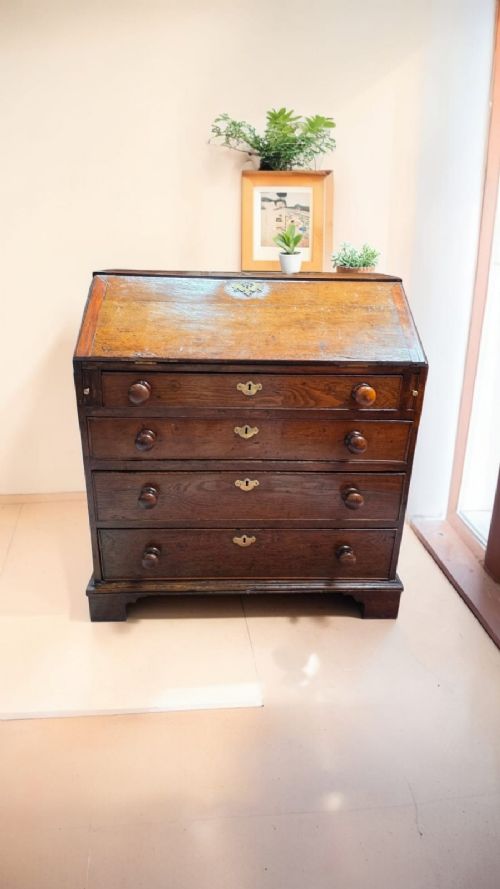
A brown oak writing cabinet encompasses a variety of forms including bureau bookcases, fall-front desks, and stationery cabinets designed for written correspondence and paper storage. These pieces span multiple eras, notably the 18th century, Victorian period, Edwardian years, and the 1920s.
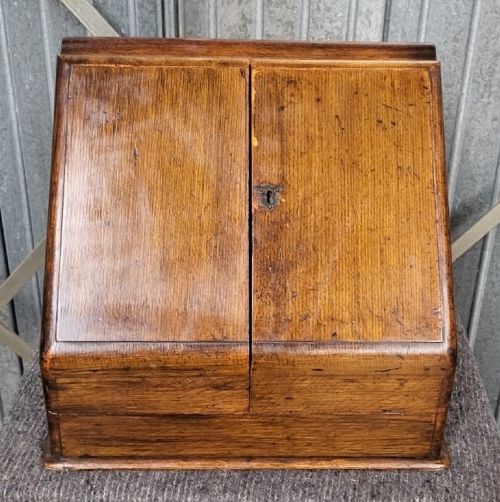
The most common examples encountered on this page are Edwardian and 1920s oak bureaus or bureau bookcases, alongside earlier Georgian and 18th-century vernacular designs. They range from compact slant-front boxes and table-top stationery holders to large architectural secretaire bookcases.
Makers and styles represented across the selection include Arts & Crafts interpretations, Jacobean Revivals, and George I corner forms. Secondary materials such as brass, glass, and leather frequently complement the solid or veneered oak construction.
What varies in quality
The standard of a brown oak writing cabinet rests largely on the choice of timber and the precision of the cabinetmaker's joinery. Select pieces display highly figured pollard oak or carefully matched veneers, whereas utilitarian items rely on simpler, plain-sawn boards.
Interior configuration heavily influences distinction, ranging from basic pigeonholes to stepped drawers with secret compartments and inlaid woodwork. The integration of original brass hardware, fitted glass, and intact leather writing surfaces further separates standard production from superior examples.
One exceptional desk includes a carved wooden mouse scurrying up the leg, the unmistakable signature of a Yorkshire craftsman.
Morris & Co·George W Jack·Robert Mouseman Thompson·Harris Lebus·Liberty of London
The Brown Oak Writing Cabinet Glossary
- Bureau bookcase
- A piece of furniture combining a sloping writing flap over drawers with an enclosed shelving unit above. These tall combinations provided both workspace and a library in a single footprint.
- Fall front
- A hinged writing flap that drops down to create a horizontal desk surface. When closed, it conceals internal pigeonholes and small drawers.
- Pollard oak
- Oak timber taken from trees that have been pollarded, producing a dense, highly mottled grain pattern. Cabinetmakers prized this wood for decorative veneers on high-status desks.
- Secretaire
- A specialised desk or cabinet designed for writing and storing letters. It typically incorporates a pull-out drawer or drop-front panel revealing a fitted interior.
Brown Oak Writing Cabinet: Frequently Asked Questions
What is a bureau bookcase?
A bureau bookcase is a dual-purpose piece featuring a lower desk section with a sloping writing flap and an upper cabinet enclosed by glass doors. This combination allows for both active correspondence and the storage of books.
Such items were popular in domestic settings throughout the 18th, 19th, and early 20th centuries, serving as the administrative centre of a room.
How do I identify a Georgian oak writing cabinet?
Georgian oak pieces, spanning the 18th century into the early 1800s, typically display sturdy proportions and hand-cut dovetail joints on the drawer construction. They often feature stepped interior compartments hidden behind a fall-front flap.
Stylistic cues from this era include bracket feet, fielded panels, and minimal carved ornamentation compared to later revival periods.
Where were stationery cabinets used?
Stationery cabinets sat upon desks or side tables in studies and drawing rooms to keep writing paper, envelopes, and ink organised. Victorian and Edwardian examples often included adjustable dates or internal partitions.
These tabletop accessories matched the larger bureau furniture in the room, utilising the same oak timber and brass mounts.
How should I care for an antique oak desk?
Keep wooden writing cabinets away from direct heat sources and strong sunlight to prevent the oak and any interior veneers from drying out. Dust regularly with a dry cloth and apply occasional wax polish to maintain the finish.
Leather writing inserts benefit from gentle cleaning without excessive moisture to preserve the material over time.