





Oak Glazed Display Desk
An oak glazed display desk provides a working surface alongside fitted shelving behind glass, combining practicality with architectural timberwork.
Oak Glazed Display Desk
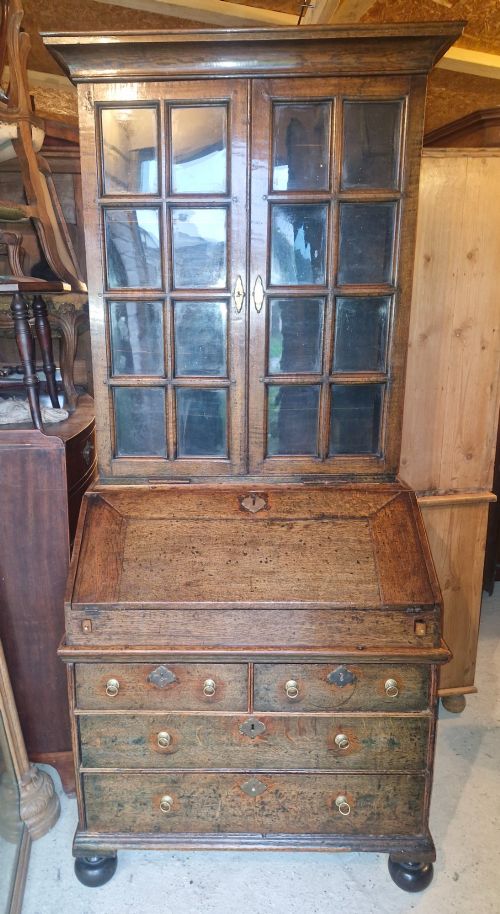
An oak glazed display desk typically takes the form of a bureau bookcase, cabinet desk, or secretaire bookcase, uniting a writing slope or pull-out drawer with a glazed upper cabinet. These pieces appear across multiple eras, ranging from eighteenth-century examples to later twentieth-century interpretations.
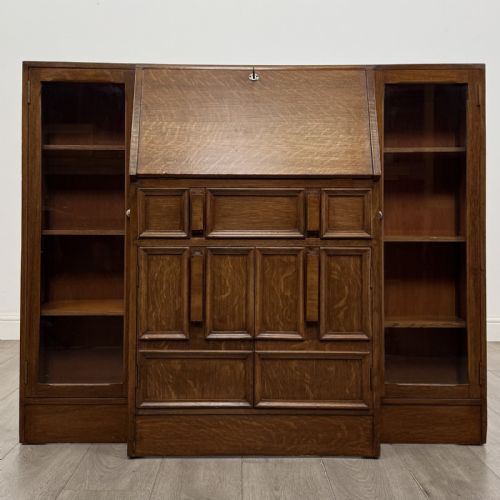
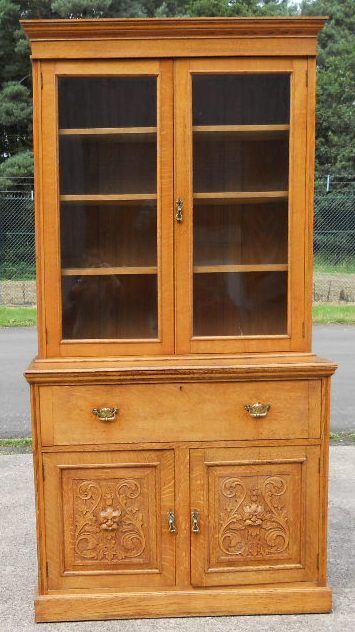
The most common formats on this page include Edwardian golden oak secretaire bookcases and larger Victorian library editions. Buyers also encounter Arts and Crafts variations and Art Deco side-by-side models, showing how makers adapted the form for domestic studies and home offices over successive generations.
Makers utilised heavy timbers and fitted interiors to create functional stations for correspondence and reading. The integration of display glass allowed owners to exhibit books and papers securely while maintaining a dedicated workspace.
How they were made
Carpenters constructed these pieces using solid oak, pollard oak, and golden oak, often incorporating brass hardware for handles and fittings. Glass panes were fitted into upper doors to protect books while offering a clear view of the interior shelves.
Makers added internal compartments, candle slides, and drop-front writing surfaces to enhance utility. Fabric linings occasionally appear behind shelving or within display sections, complementing the structural woodwork.
Oak Glazed Display Desk Retail Price Guide 2026
Typical asking prices for oak glazed display desk among the pieces listed under this phrase on Sellingantiques today, from the lower quarter to the upper quarter. They describe what is for sale here now, not the wider market.
Materials recorded across current items include solid oak, golden oak, pollard oak, brass hardware, fabric, and glass.
What varies in quality
The sophistication of the internal fittings and the selection of timber dictate the distinction between standard and superior pieces. Figures using pollard oak or golden oak display greater decorative ambition than plain dark variants.
Cabinetwork precision, from the integration of candle slides to the stability of the drop-front bureau mechanism, defines the construction standard. Pieces attributed to specific workshops demonstrate heightened refinement in carving and overall proportion.
Morris & Co·George W Jack
The Oak Glazed Display Desk Glossary
- Bureau bookcase
- A combination of a writing desk with a hinged flap and an upper shelving unit enclosed by doors.
- Secretaire bookcase
- A piece featuring a pull-out drawer with a drop-down front that conceals a fitted writing interior beneath a bookcase.
- Pollard oak
- Timber taken from trees that have been pollarded, producing a distinctive knotted and rippled grain pattern.
- Candle slide
- A pull-out wooden board mounted beneath the writing surface to hold a candlestick for illumination.
- Golden oak
- A warm, light-toned variety of oak timber favoured during the Edwardian and Arts and Crafts periods.
Oak Glazed Display Desk: Frequently Asked Questions
What is an oak glazed display desk?
An oak glazed display desk is a multi-functional piece of furniture that combines a writing surface or bureau with a glass-fronted bookcase. These items range from eighteenth-century constructions to twentieth-century workspace designs.
They serve both practical writing needs and display purposes, housing books and papers behind protective glass panels while providing a dedicated station for correspondence.
How were these desks used?
Historically, owners utilised these pieces for writing letters, managing household accounts, and storing library books. The inclusion of fitted interiors allowed for the organised storage of stationery and documents.
Writing surfaces often fold down or pull out to create a temporary desk, while the upper glass section keeps reference volumes visible yet dust-free.
How do I live with one?
Living with an oak glazed display desk involves balancing its substantial timber presence with room lighting and daily workspace requirements. Placing the piece away from direct heat sources protects the solid oak and fitted interior components.
The glass doors offer an opportunity to display books or collections while keeping the interior clean, and the drop-front acts as a functional desk when needed.
How can I tell the periods apart?
Periods are identified through stylistic cues and timber selection, such as the warm golden oak typical of Edwardian pieces or the geometric panels seen in Jacobean Revival examples. Arts and Crafts items often exhibit simplified, honest construction with functional brass fittings.
Victorian and eighteenth-century editions tend to display heavier proportions, traditional bracket feet, and distinct interior configurations that reflect the manufacturing standards of their respective eras.