

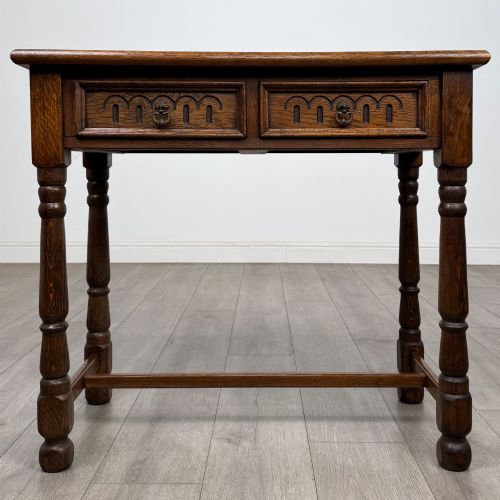
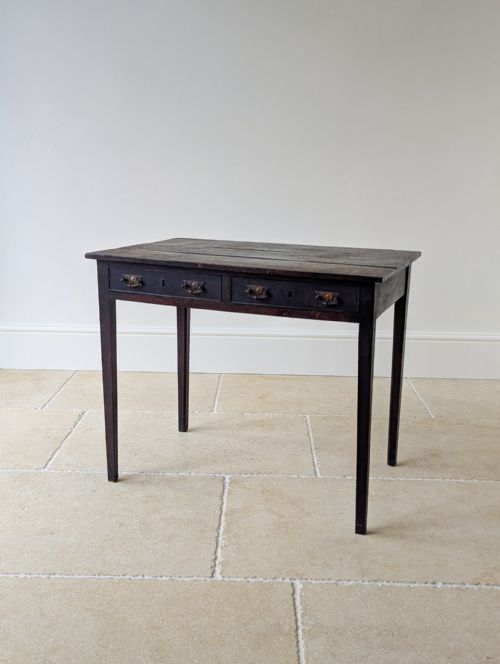

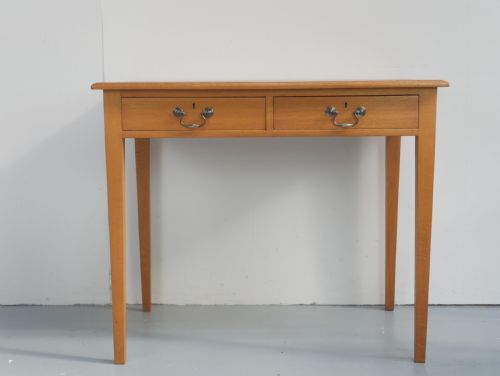


Two Drawer Oak Desk
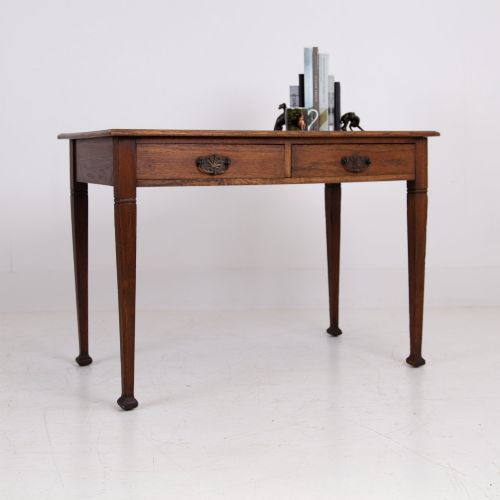
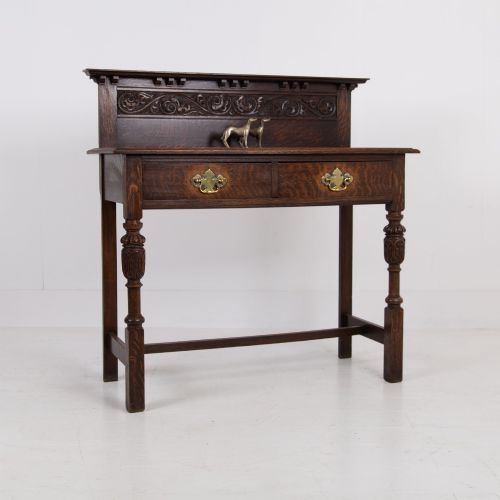
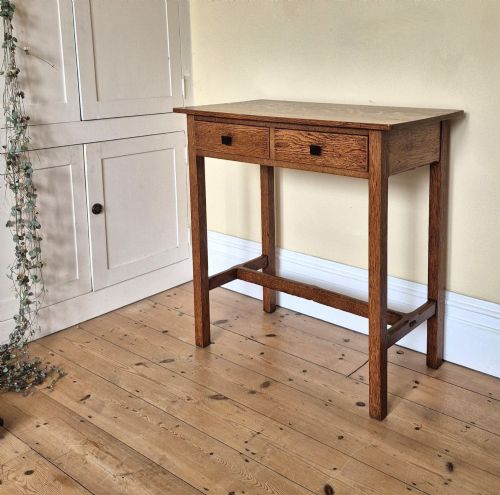
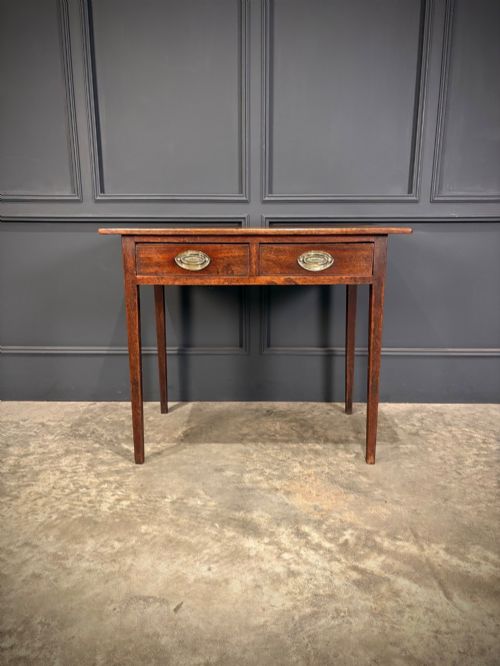
A two drawer oak desk offers sturdy domestic utility in timber that deepens in character over centuries.
Two Drawer Oak Desk
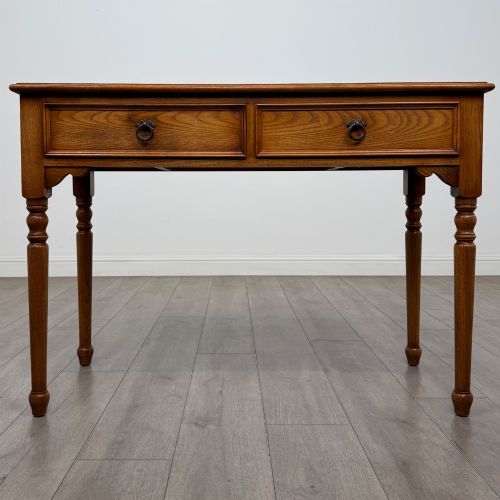
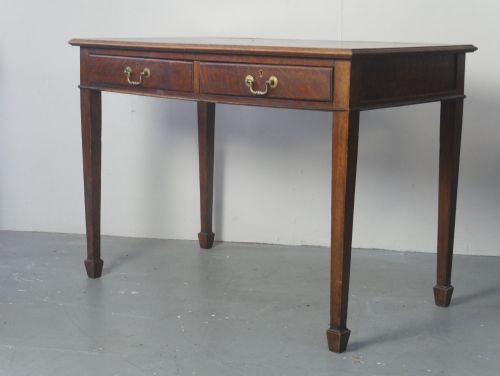
When you search for a two drawer oak desk, you encounter pieces spanning from the Georgian period through the Victorian era and into twentieth-century revivals. The form serves primarily as a writing table, side table, or compact bureau, designed for practical daily use in domestic and study spaces.
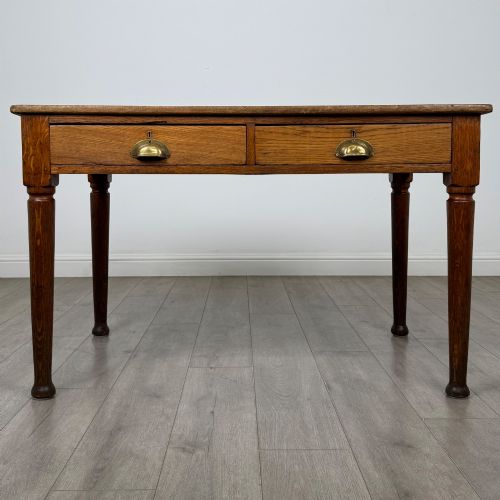
You are most likely to meet Edwardian and 1920s examples on this page, often built with simple lines or drawing upon English Country Revival and Arts & Crafts aesthetics. Earlier eighteenth-century and nineteenth-century variants also appear, showing heavier timbers and vernacular detailing.
The selection encompasses side tables adapted for writing, dedicated writing desks, and bureau bookcases with fitted interiors. Oak remains the constant denominator, occasionally paired with elm, pollard oak, or mahogany highlights.
How they were made
Carpenters constructed these desks using solid oak planks, frequently complemented by secondary timbers such as elm for drawer linings or structural supports. Joinery relied on traditional methods like dovetailing for drawers and mortise and tenon joints for frames.
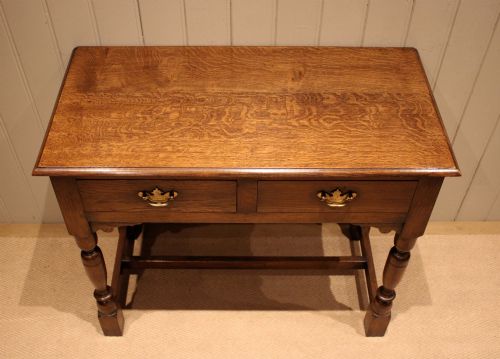
Hardware played a functional and decorative role, with brass drop handles, key escutcheons, and occasional leather writing inserts added to the working surfaces. Finishes ranged from waxed raw grain to polished surfaces that accentuated the natural medullary rays of the oak.
One persistent Edwardian model arrives equipped with three bun handle drawers and its original key, ensuring stationery stays secure.
What varies in quality
The distinction between standard utility pieces and finer examples rests on the selection of the timber and the refinement of the joinery. Quarter-sawn oak displaying pronounced figuring commands greater attention than plain, utility boards.
Proportion and execution define the upper tiers of the range, where crisp mouldings, hand-cut dovetails, and original brass hardware remain intact. Lesser examples show simpler construction methods intended strictly for utilitarian service.
Hubert Simpson of Kendal·Jenners·Gillows of Lancaster
The Two Drawer Oak Desk Glossary
- Medullary rays
- The natural ribbon-like flecks visible in quarter-sawn oak. These figures indicate radial cutting through the growth rings.
- Dovetail joint
- An interlocking wood joint used primarily in drawer construction. Hand-cut variations reveal an earlier date of manufacture.
- Bureau bookcase
- A writing cabinet featuring a fall-front desk combined with upper shelving. Interiors often contain small compartments for stationery.
- Pollard oak
- Timber taken from trees that were pollarded, creating dense and highly figured grain patterns. Cabinetmakers utilised this for decorative veneering.
Two Drawer Oak Desk: Frequently Asked Questions
How do I date an oak desk?
Examination of the construction methods, particularly the drawer dovetails and tool marks, provides the primary indication of age. Hardware styles and secondary timbers also help narrow the manufacturing period.
Earlier pieces from the eighteenth century display hand-sawn timber irregularities, whereas twentieth-century examples show more uniform mechanical processing.
Are these desks suitable for daily work?
Most surviving examples were built for domestic correspondence and administrative tasks, making them well-suited for modern laptop use or writing. Their compact proportions fit smaller home offices effectively.
Care should be taken with historical leather surfaces or polished tops by using appropriate desk pads to prevent marking.
What is the difference between a writing table and a bureau?
A writing table provides an open flat surface with drawers beneath, designed for immediate access to writing materials. A bureau incorporates a hinged fall-front that conceals a fitted interior of pigeonholes and small drawers when closed.
Both forms utilise the same underlying oak construction but serve different storage requirements.
How should I care for antique oak?
Maintaining oak furniture involves keeping pieces away from direct heat sources and sudden humidity changes to prevent timber splitting. Regular dusting with a dry cloth and occasional application of traditional beeswax preserves the finish.
Avoid silicone-based sprays, which can penetrate the grain and damage the historic patina.