




Country Oak Footstool
A country oak footstool brings honest provincial craft and robust timber into a room, serving as a low seat or a resting place for tired feet.
Country Oak Footstool
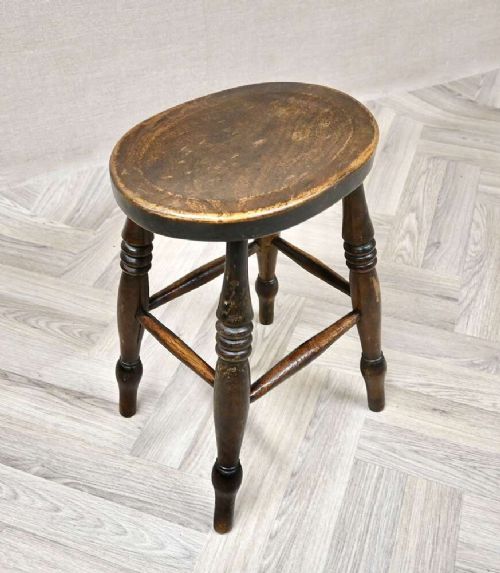
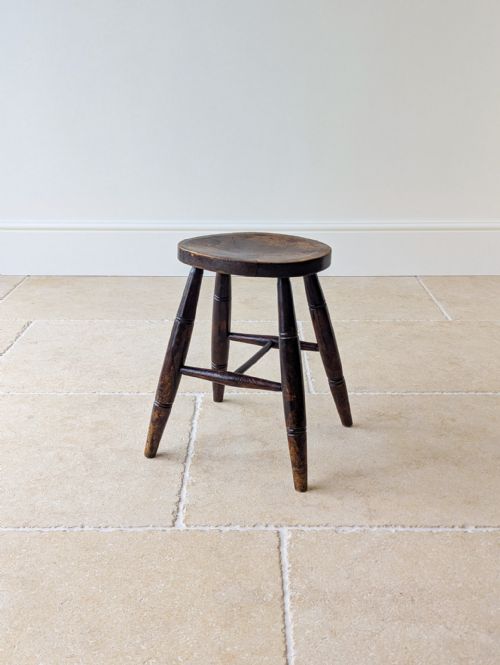
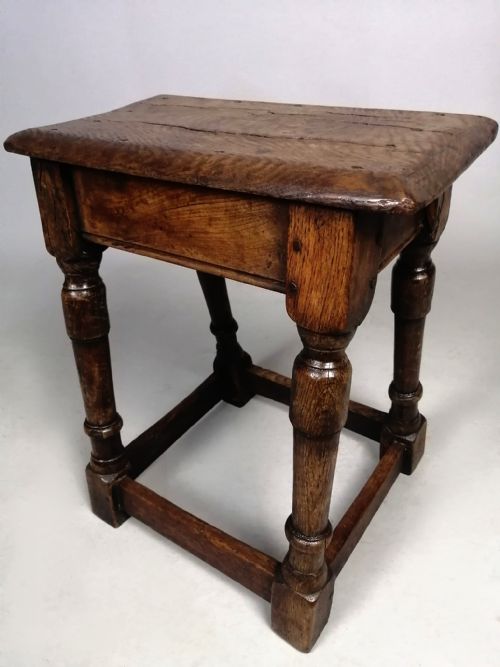
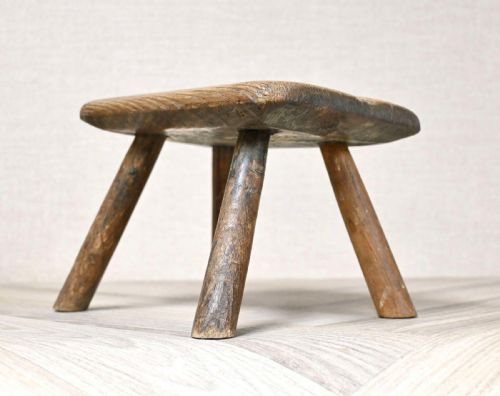
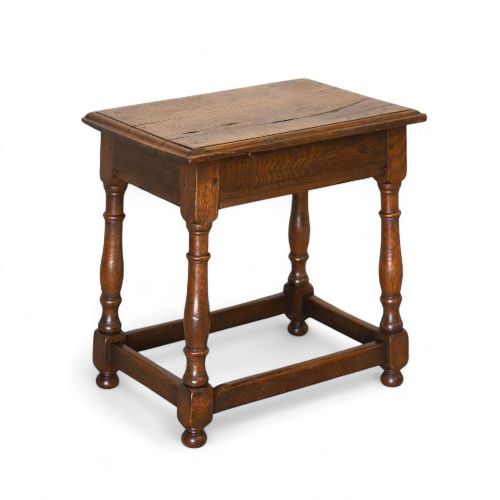
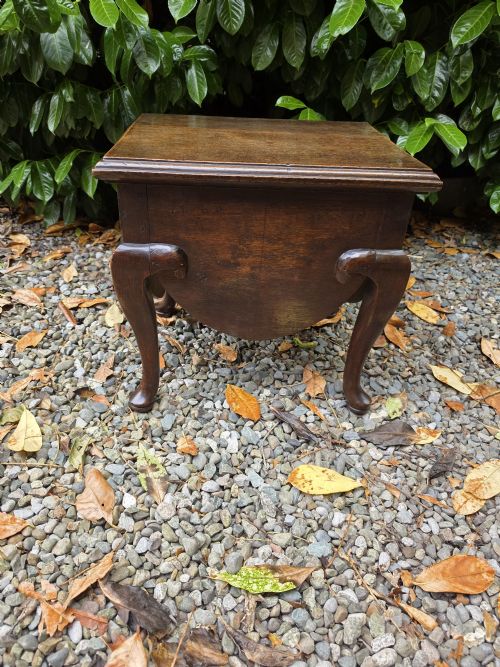
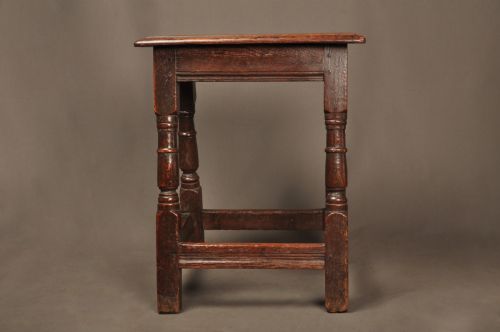
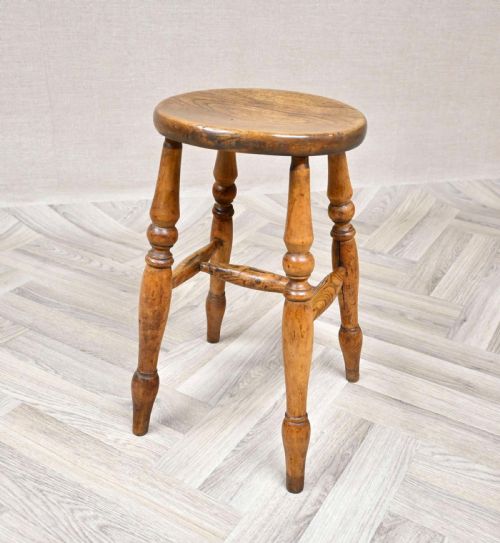
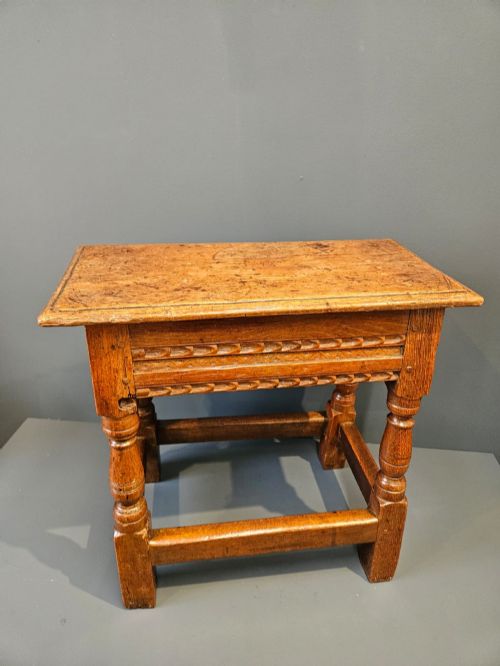
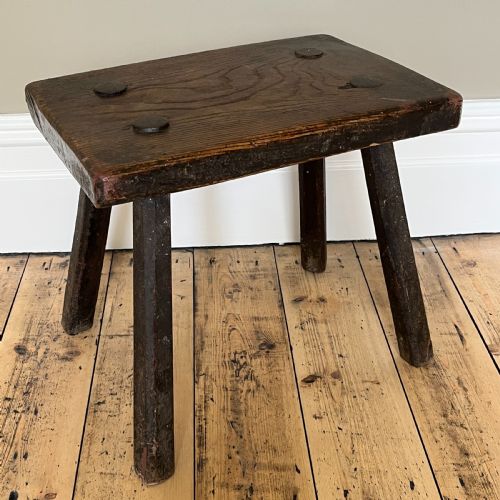
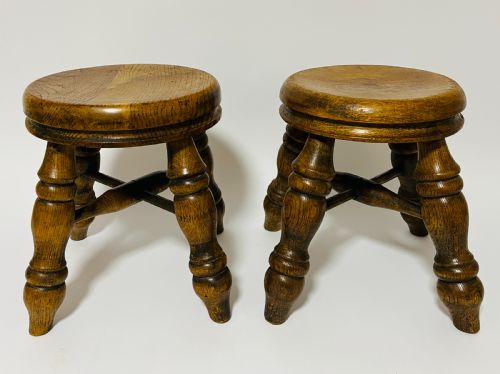
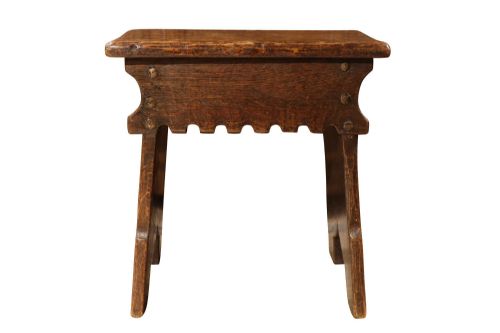
A country oak footstool is a low, unpretentious piece of vernacular seating shaped by provincial makers using local timbers. These items take many forms, including joint stools, Windsor variations, low hearth stools, and simple five-plank constructions.
The pieces appearing here span from the early eighteenth century through the Victorian era and into the early twentieth century. Buyers encounter provincial joint stools with peg-jointed frames alongside rustic Windsor designs and rush-seated variants.
Makers working in the countryside prioritised utility and sturdiness over courtly fashion, resulting in compact forms suited to hearthside use. These stools range from diminutive vernacular examples to long cane-framed footstools and low milking stools.
What varies in quality
Quality in a country oak footstool rests on the integrity of its timber and the honesty of its construction. Pieces fashioned from thick, solid oak with undisturbed peg joints hold greater structural honesty than heavily restored alternatives.
Proportion and surface patina distinguish a superior provincial piece from a routine workshop item. Well-sculpted seats, rich natural timber colour, and balanced turnings separate finer vernacular work from plain utility items.
Country Oak Footstool Retail Price Guide 2026
Typical asking prices for country oak footstool among the pieces listed under this phrase on Sellingantiques today, from the lower quarter to the upper quarter. They describe what is for sale here now, not the wider market.
Listings here feature oak, elm, beech, and hardwood, alongside rush and cane seating materials from the eighteenth to the twentieth centuries.
The Country Oak Footstool Glossary
- Joint stool
- An early form of wooden stool constructed with mortise and tenon joints held together by wooden pegs. These sturdy items predate widespread chair usage and often feature turned legs.
- Five-plank stool
- A simple piece constructed from five pieces of solid timber, typically forming a flat top and four canted sides. This method represents basic vernacular carpentry.
- Windsor stool
- A rustic seating form featuring turned legs inserted directly into a sculpted wooden seat. They derive their construction principles from traditional Windsor chair making.
- Pegged construction
- A method of joining wooden components using tight wooden dowels instead of metal nails or screws. This traditional technique allows timber to move naturally with seasonal humidity changes.
- Rush seat
- A woven seating surface made from dried marsh grasses twisted into cords. Skilled makers wrap these around a wooden frame to create a resilient, textured top.
Country Oak Footstool: Frequently Asked Questions
How do I date an old oak stool?
Dating relies on observing construction methods, tool marks, timber shrinkage, and the style of the turnings. Early examples from the seventeen-hundreds display hand-split oak and heavy pegged joints.
Later nineteenth-century pieces often show more uniform machine-sawn timber and different joining techniques. Comparing the wear patterns and timber colour helps narrow down the period of manufacture.
Where were these stools used?
Country folk used these low stools beside open hearths, in dairies for milking, and around the farmhouse for various daily tasks. Their compact size made them easy to tuck away when not needed.
In modern homes, they function well as occasional seats, low side tables, or authentic footrests. Their modest proportions allow them to fit into tight spaces without overwhelming a room.
Are rush seats original?
Rush seats on antique country stools can be original if the piece dates to a later period, but many older items have been re-woven during their long history. Traditional rush requires periodic renewal due to natural wear.
When a stool retains tight, well-aged rush work, it contributes significantly to the piece's rustic charm. Even renewed rush seating maintains the historic appearance of these provincial items.