


Country Oak Drop Leaf
Country oak drop leaf tables offer practical folding utility alongside robust vernacular timber construction.
Country Oak Drop Leaf
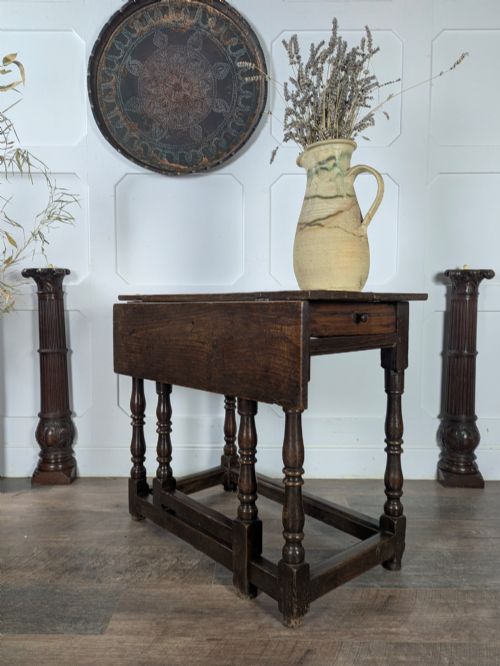
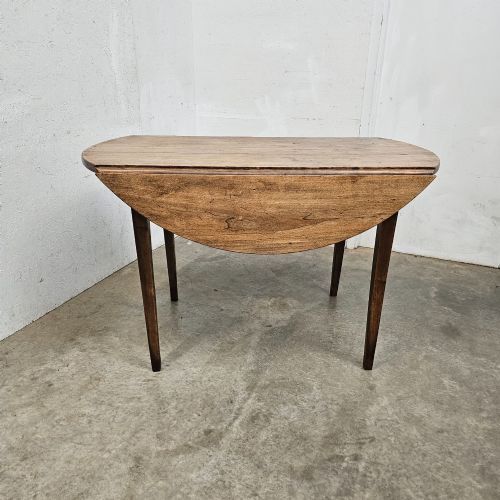
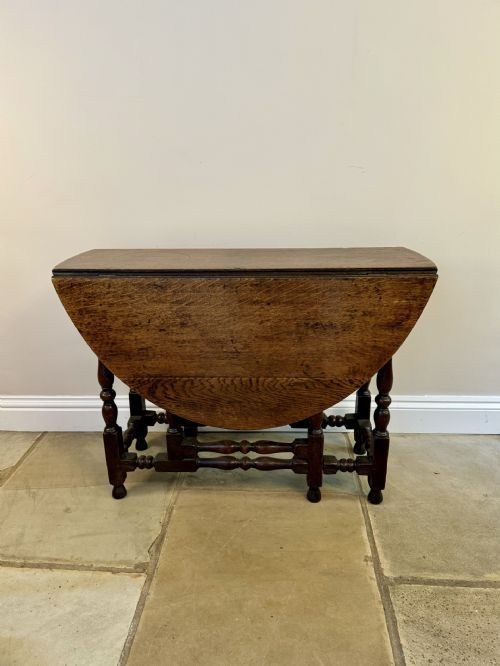
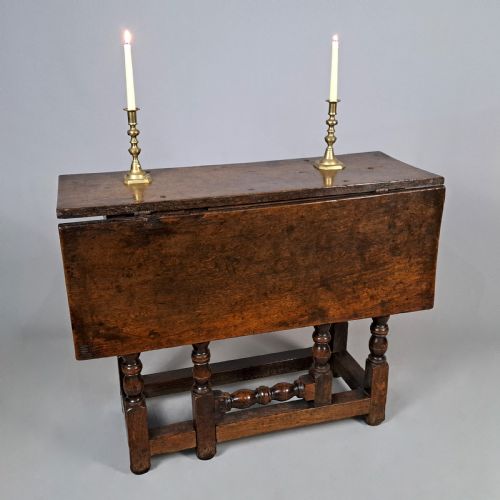
Country oak drop leaf furniture comprises tables designed with hinged flaps that fold down to save space when not in use. These pieces emerge predominantly from the seventeenth and eighteenth centuries, reflecting utilitarian domestic needs across rural English and French interiors.
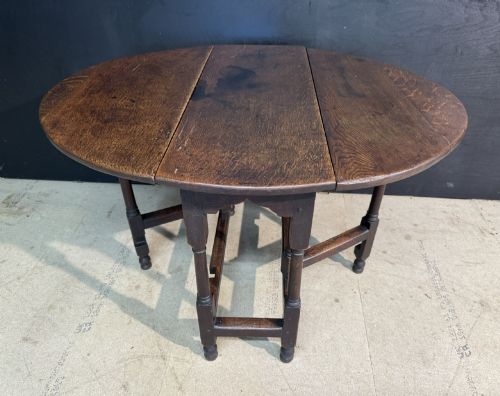
The most common formats met here are gateleg dining tables and smaller side or occasional tables. Examples range from intimate four-seat breakfast tables to large oval boards capable of seating eight or ten guests.
Makers utilised local timbers, creating sturdy surfaces supported by pivoted legs that swing outward to bear the weight of the extended leaves. Such tables served daily dining and kitchen tasks in farmhouses before being cleared away to the edge of the room.
How They Were Made
Construction relies heavily on solid oak, frequently augmented with secondary native hardwoods like fruitwood, ash, and walnut for internal framing or secondary surfaces. Peg joining and traditional frame methods secure the joints without relying on modern metal fasteners.
Turning lathes shaped the upright posts and baluster legs, while hand planes smoothed the thick plank tops. Iron and brass hardware appears selectively on hinges and occasional drawer mounts.
Formats span compact side tables up to large oval dining tables seating eight or ten people.
What Varies In Quality
The standard of a country oak drop leaf table rests upon the thickness of the top boards and the integrity of the original frame timbers. Pieces retaining untouched surface conditions and honest timber shrinkage display greater integrity than heavily restored examples.
Proportion and scale dictate desirability, with smaller side formats and balanced multi-leg dining tables commanding particular attention. The depth of the timber's surface colour and natural grain pattern further separate standard utility boards from exceptional survivals.
The Country Oak Drop Leaf Glossary
- Gateleg table
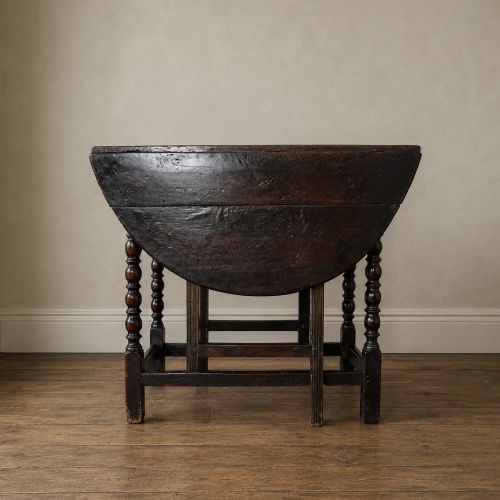
- A table featuring hinged flaps supported by one or more legs that swing outward on a gate-like pivot. This clever mechanism allows the surface area to expand or contract swiftly.
- Drop leaf
- A hinged table leaf that hangs vertically when lowered and locks horizontally when raised. It provides flexible footprint management in smaller domestic spaces.
- Baluster
- A moulded column or post supporting the table frame, often turned on a lathe. Early versions display robust vase or reel shapes typical of seventeenth-century joinery.
- Peg joined
- A construction method securing mortise and tenon joints with wooden dowels rather than modern adhesives. This allows the timber to expand and contract naturally with seasonal humidity changes.
- Patina
- The deep surface sheen and mellow tone developed by wood through centuries of handling, polishing, and light exposure. It serves as a visual indicator of age and continuous use.
Country Oak Drop Leaf: Frequently Asked Questions
How do you use a drop leaf table daily?
Keep the flaps folded down against the wall to serve as a side console or hallway surface when floor space is tight. Raise one or both leaves on their swing-out gate legs whenever you need a full dining or workspace.
Position the table away from direct heat sources and radiators to prevent the solid oak top boards from drying out or splitting. Wipe spills promptly with a dry or slightly damp cloth to protect the historic wood surface.
How can I tell a seventeenth-century table from an eighteenth-century one?
Seventeenth-century examples typically feature heavier baluster turnings, peg-joined frames, and thicker plank construction. They often reflect the simpler, utilitarian aesthetic of the Jacobean and Charles II periods.
Eighteenth-century pieces, particularly those from the Georgian era, generally introduce more slender leg profiles and refined proportions. They accommodate shifting domestic fashions while retaining the core vernacular oak material.
Will an antique oak table fit in a modern kitchen?
Many smaller gateleg tables and side variants offer compact footprints that suit contemporary kitchens or breakfast rooms. Their folding leaves allow you to shrink the perimeter when daily traffic requires extra floor space.
Measure your clearance carefully around the swing-out legs to ensure chairs fit comfortably underneath when the leaves are raised. The neutral tone of aged oak blends naturally with both rustic and modern interior schemes.
What is the difference between a gateleg and a Pembroke table?
A gateleg table relies on pivoting leg frames that swing out from a central undercarriage to support large folding leaves on both sides. These tend to be heavier, sturdier dining boards dating from the seventeenth and eighteenth centuries.
Pembroke tables generally feature shorter, hinged drop leaves supported by small swinging brackets rather than full legs, often accompanied by a single drawer. They emerged later in the Georgian period primarily as lighter writing or occasional tables.