
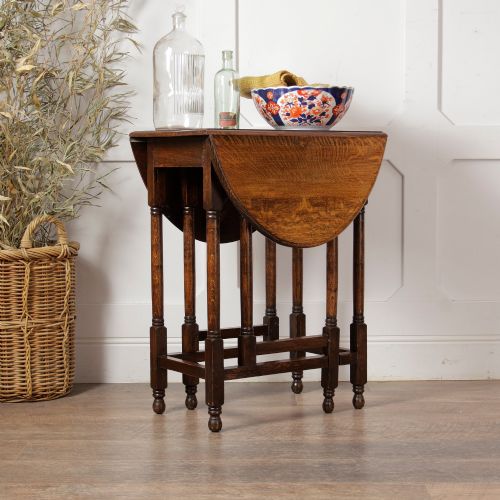
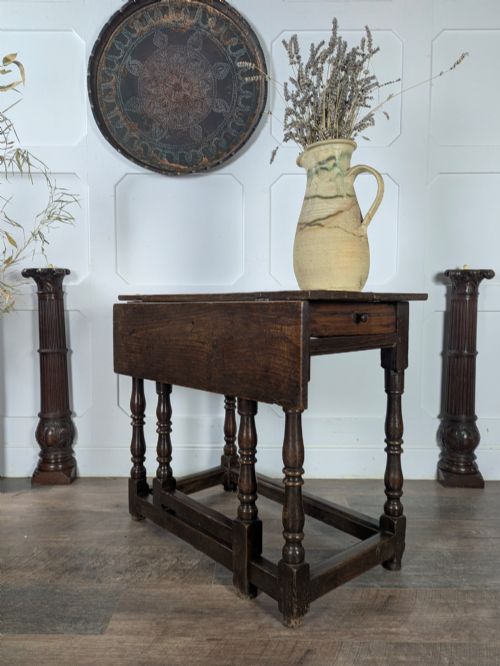
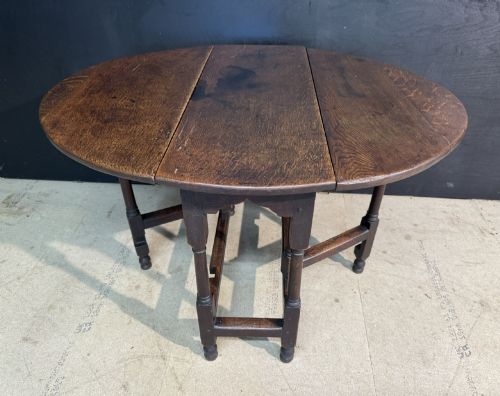


Small Oak Gateleg Table
A small oak gateleg table provides a sturdy folding surface that adapts to compact rooms.
Small Oak Gateleg Table Types
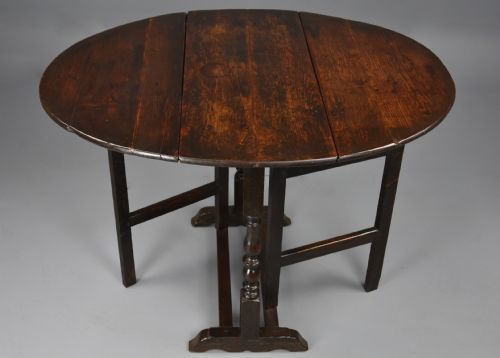
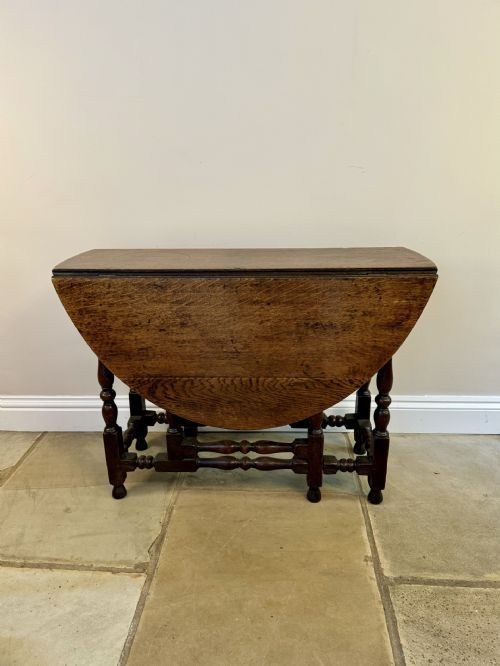
A small oak gateleg table combines folding drop leaves with hinged gate supports to save space in compact rooms. These versatile pieces function as side tables, coffee tables, occasional tables, or compact dining tables depending on their proportions.
The pieces appearing on this page span several centuries, including authentic 17th century and 18th century examples alongside later Edwardian and 1900s revivals. Seventeenth and eighteenth century pieces often display regional country craftsmanship, while later items bring revival styles into domestic spaces.
Buyers will encounter oval surfaces, rectangular drops, and occasional variants intended for lamps or supper. Oak dominates the construction, sometimes paired with ash or elm, delivering the robust character expected from early English furniture.
Materials and Construction
Cabinet makers relied primarily on solid oak, frequently supplemented by ash or elm for secondary timbers or specific structural components. Timber selection prioritized density and strength, ensuring the folding legs and swinging gates could support the weight of the drop leaves over decades of regular use.
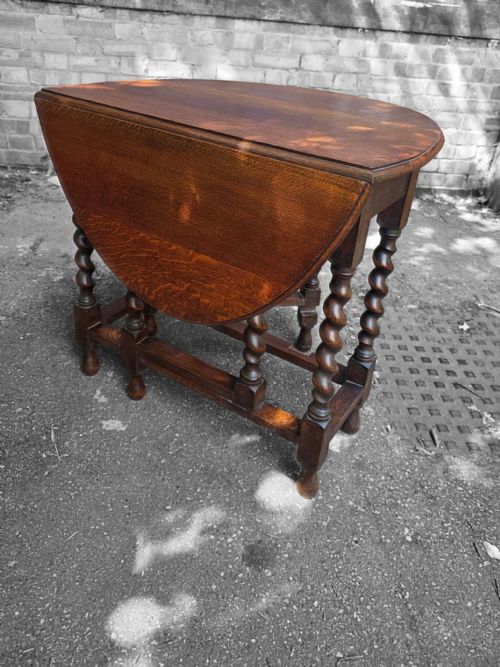
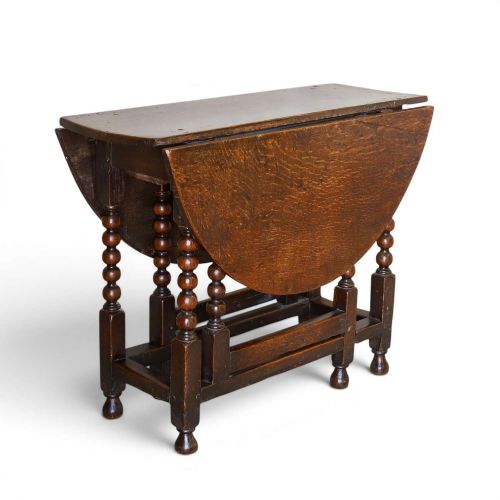
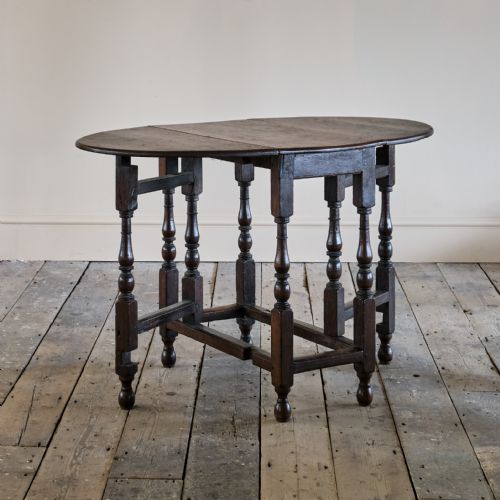
Joinery methods involved traditional pegged mortise and tenon frames alongside turned uprights and stretchers. Turning work ranges from simple vase shapes to ornate barley twist configurations that support the hinged leg assemblies.
Retail Price Guide 2026
Typical UK retail prices for small oak gateleg table, calculated from the Sellingantiques database of over a million retail prices indexed since 2003. This retail price guide relies exclusively on Sellingantiques data; no external sources or auction records are used, so the figures do not describe the wider market.
Primary construction materials across the archive consist of solid oak, supplemented occasionally by ash and elm.
Quality Variations
The standard of timber preparation and surface patination distinguishes superior examples from standard ones. Tables exhibiting deep, natural colour developed through centuries of exposure contrast with pieces that have undergone heavy intervention or stripping.
The precision of the gate mechanism and the stability of the hinged leaves determine daily utility. Higher grade items maintain tight joints in the swing legs and retain original underframes without excessive timber replacement.
The Small Oak Gateleg Table Glossary
- Gateleg table
- A table with hinged flaps supported by swing-out legs that resemble a gate opening. This design allows the surface area to expand or contract efficiently.
- Drop leaf
- A hinged section of a table top that can be folded down when not in use. It creates flexibility in overall room footprint.
- Barley twist
- A spiral turning technique resembling a twisted rope, commonly found on table legs and stretchers during the seventeenth century and later revival periods.
- Sledge base
- A runner-style foot configuration connecting the lower ends of the table supports horizontally. This provides additional stability on uneven floors.
- Patination
- The surface sheen and colour acquired by wood through age, wear, and exposure to light. It serves as an indicator of historical integrity.
Frequently Asked Questions
How do I use a small oak gateleg table daily?
These tables adapt easily to changing room layouts by operating with one or both leaves dropped. Positioned against a wall, they function effectively as side or lamp surfaces.
Raising both leaves transforms the piece into an intimate dining or supper table. The folding gates swing outward smoothly to support the extended leaves during meals.
How can I tell a seventeenth century table from a later revival piece?
Seventeenth century examples display hand-cut joinery marks, peg construction, and natural surface wear accumulated over centuries. The timber grain and heavy patination reflect period tool work.
Revival pieces from the Edwardian era or around nineteen hundred often feature standardised machine-cut elements and cleaner timber surfaces. Examining the interior framework usually reveals the chronological age of the construction.
What woods are used besides oak?
Ash and elm appear frequently in historical listings alongside primary oak. These native hardwoods provided alternative strength for turned legs and framing components.
Makers selected these timbers for their durability and grain pattern. Their inclusion remains consistent with country workshop traditions of the seventeenth and eighteenth centuries.
Where do I place a drop leaf table in a modern home?
A compact footprint makes these tables suitable for hallways, landings, or smaller living rooms as occasional surfaces. Folding down one leaf allows the table to sit flat against a wall.
They also serve effectively behind sofas or as bedside alternatives. The folding mechanism provides extra surface area instantly when guests visit.