


Country Milking Stool
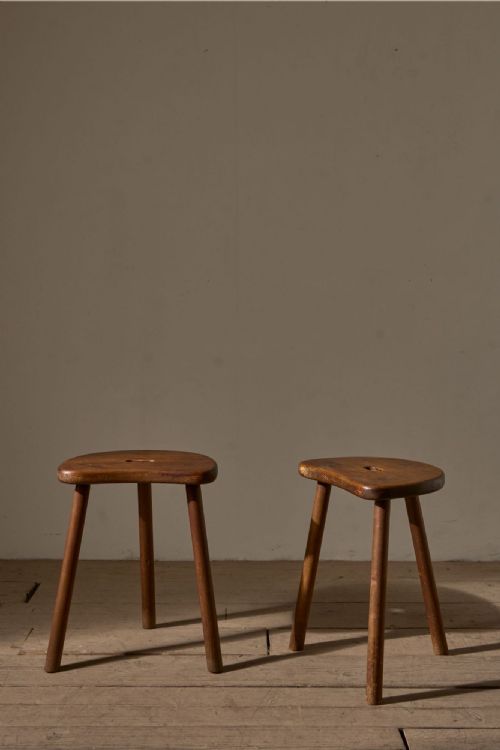
A country milking stool is a low, unpretentious seat shaped by utility, offering an honest piece of domestic history for modern interiors.
Country Milking Stool
When you search for a country milking stool, you encounter low, utilitarian seats shaped for labour in the dairy or farmhouse. These objects span periods from the eighteenth century through the Victorian era and into the early twentieth century.
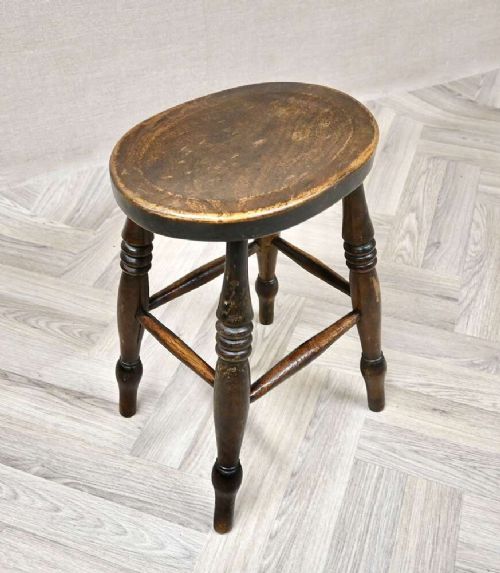
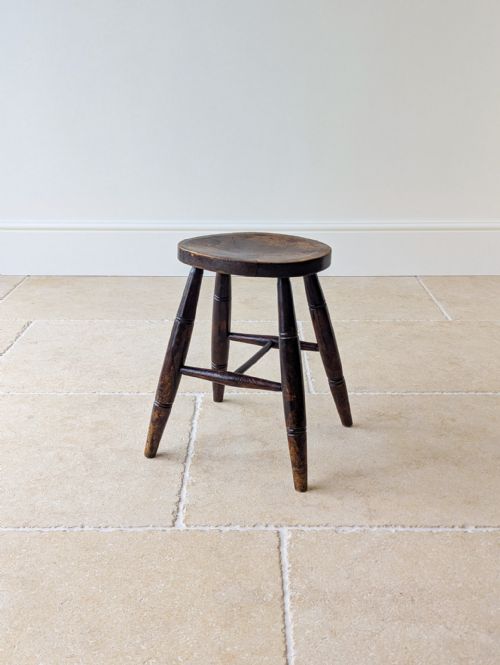
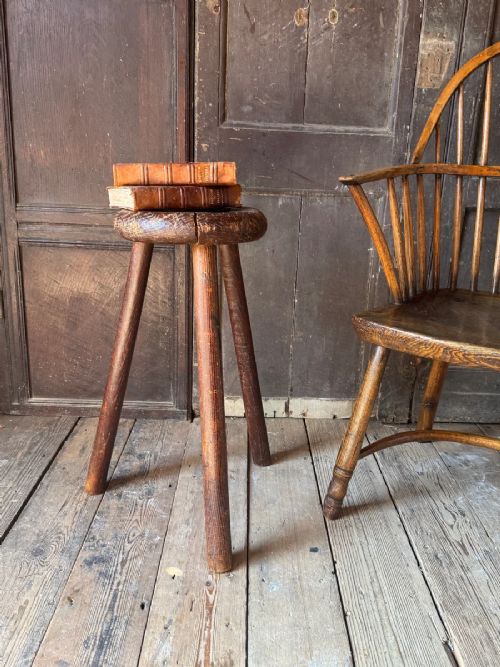
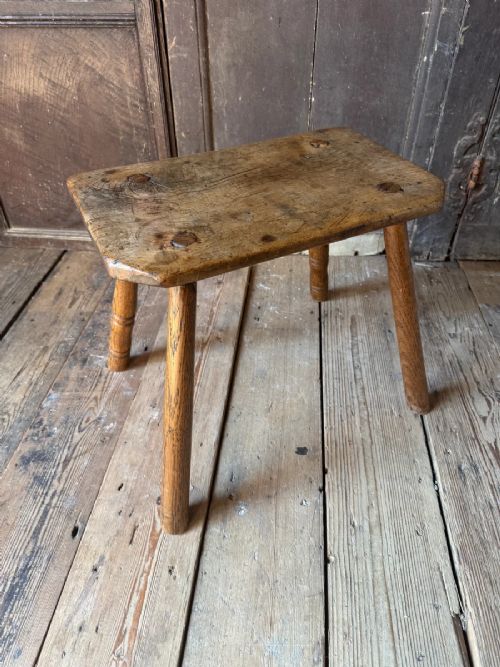
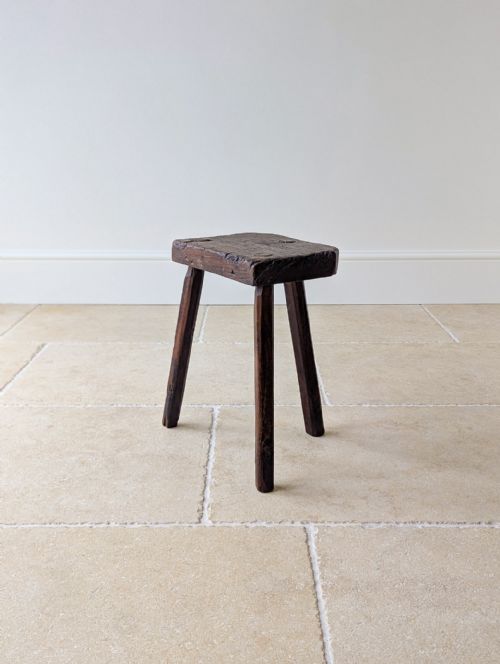
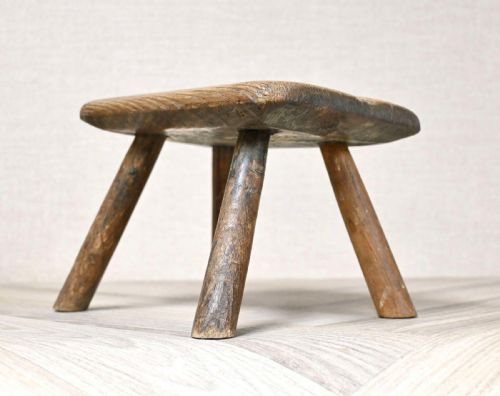
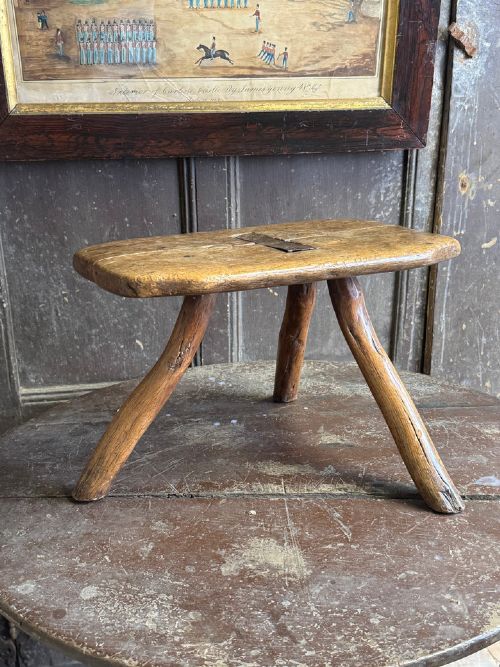
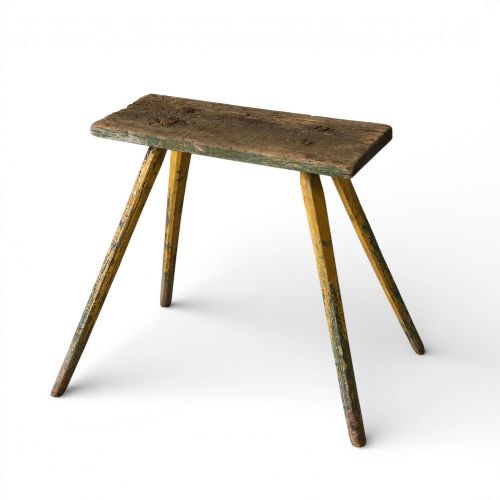
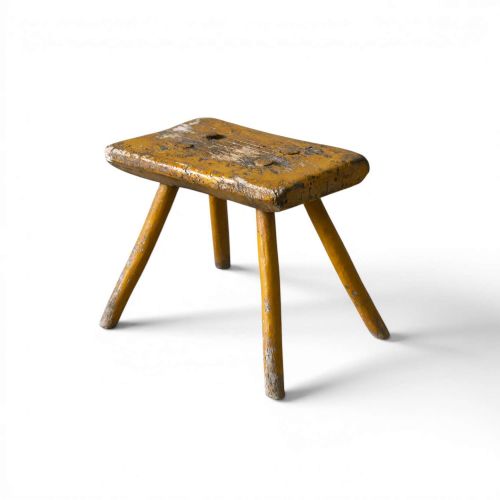
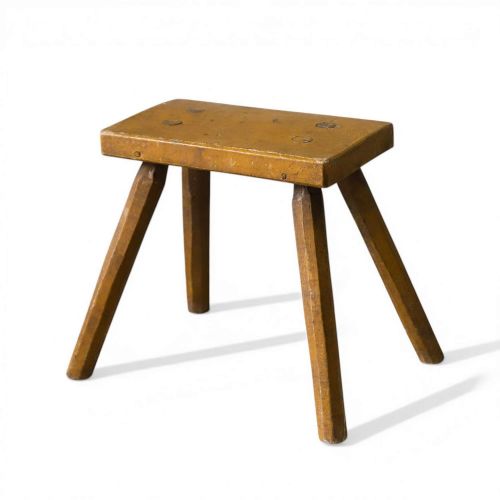
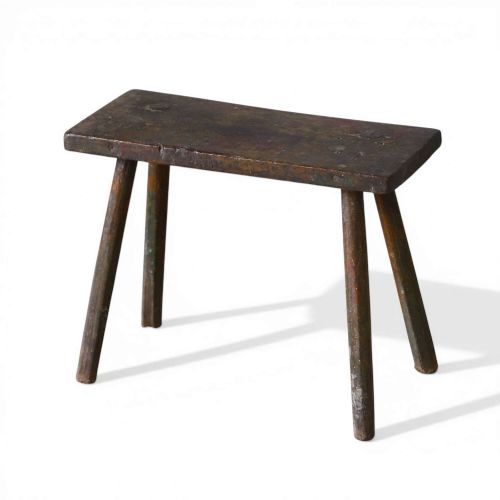
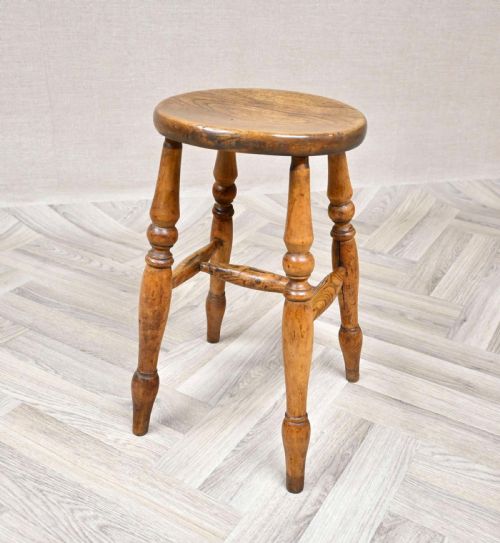
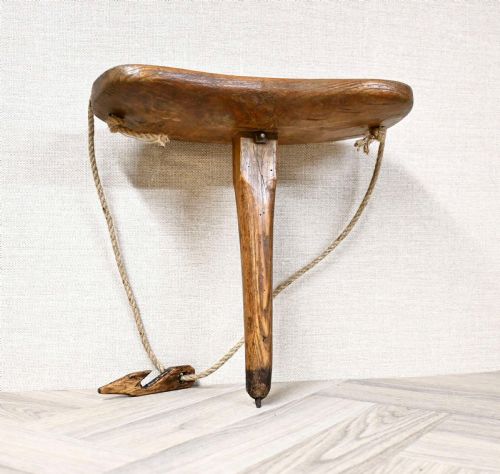
The versions you are most likely to meet on this page feature solid timber tops in elm, oak, ash, or pine, supported by three or four splayed legs. Their forms range from simple Windsor constructions to primitive single-leg variants and painted European examples.
How they were made
Maker-joiners constructed these utilitarian pieces using readily available native hardwoods and softwoods, frequently pairing elm or wild elm seats with ash or beech legs. Pegged joints, wedged tenons, and blacksmith repairs secured the structure for daily farm work.
Many survivors retain remnants of original paint finishes, such as ochre, yellow, green, or black, applied to protect the timber and brighten domestic or agricultural spaces.
Unusual single-leg milking stools forced the user to act as the fourth point of balance.
What varies in quality
Quality in a country milking stool rests in the integrity of its timber and the character of its wear. Sculpted seats with deep grain figure, such as burr yew or wild elm, distinguish finer pieces from plain utility items.
The balance between the splayed legs and the thickness of the top seat board determines the overall presence of the stool. Early blacksmith repairs and untouched original paint surfaces elevate an example far above standard replacements.
The Country Milking Stool Glossary
- Splayed legs
- Legs angled outwards from the underside of the seat to provide stability on uneven floors or agricultural ground.
- Vernacular
- Objects designed and made by local craftsmen for practical use, following traditional regional patterns rather than high-style cabinetmaking.
- Pegged construction
- A method of joining wooden components using tight wooden dowels or pins rather than metal screws or modern adhesives.
- Windsor
- A seating style characterised by legs and back spindles driven directly into a solid, thick sculpted wooden seat.
- Primitive
- Descriptive of furniture fashioned with basic hand tools and simple joinery, prioritising raw function over refined finish.
Country Milking Stool: Frequently Asked Questions
Were milking stools actually used for milking?
These low seats served farm workers during daily chores in the dairy or cowshed, where a compact, stable stool suited confined spaces.
Over time, they found secondary uses around the hearth, cottage workshops, and everyday domestic settings.
How do I spot an 18th-century stool?
Eighteenth-century examples often display deep patination on native timbers like oak or ash, accompanied by visible tool marks from adzes and drawknives.
Primitive construction details, such as hedgerow splayed legs and early blacksmith repairs, point toward this earlier period.
Why do some stools have three legs?
A three-legged configuration naturally rests firmly on uneven stone or earth floors without rocking during use.
This practical necessity governed much early rural furniture design across English and European workshops.
How should I style a milking stool at home?
Their compact size allows them to function easily as side tables, plant stands, or occasional low seats in living spaces.
Placing one beside a chair highlights the sculptural grain of the timber and the honesty of the construction.