






Primitive Wooden Bench
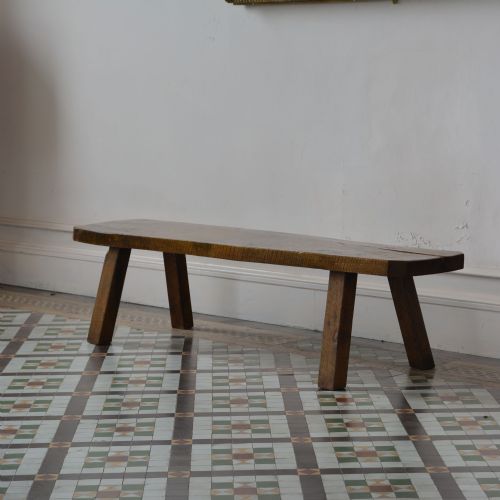
A primitive wooden bench offers honest construction and unpretentious utility, grounding an interior with decades or centuries of honest domestic wear.
Primitive Wooden Bench
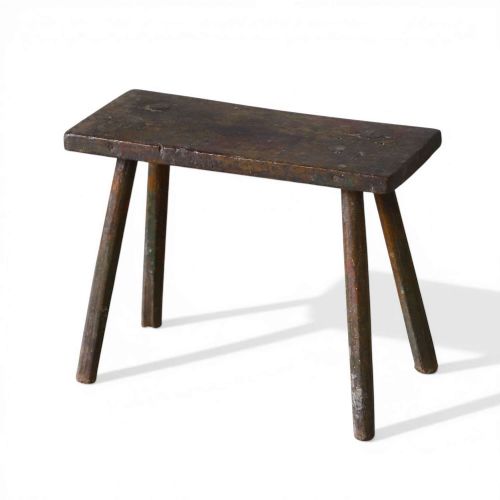
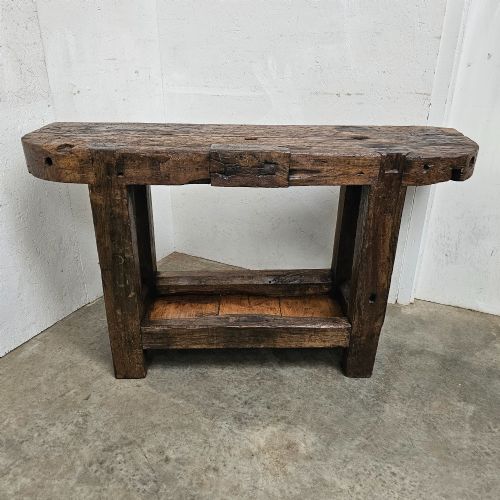
A primitive wooden bench encompasses utilitarian seating and low tables shaped by country makers for everyday domestic, agricultural and workshop tasks. When you search for a primitive wooden bench, you encounter forms ranging from low milking stools and narrow pig benches to long Welsh oak seating and heavy worktables.
The pieces on this page originate from periods spanning the eighteenth, nineteenth and early twentieth centuries, drawing on English, French, Scandinavian, Hungarian and Eastern European regional traditions. Most survivors take the form of simple boarded benches, trestle tables, settles and jointed stools designed for practical function rather than polite drawing rooms.
Makers built these items for specific roles such as cobbling, milking, cutting or hearthside sitting, using whatever timber lay to hand. This straightforward purpose gives each survivor a distinct character shaped entirely by its original working environment.
How they were made
Makers fashioned these pieces from solid hardwoods and softwoods including oak, pine, elm, ash, sycamore and timber, selecting woods for local availability and toughness. Carpenters and country joiners relied on straightforward pegged joints, trestle supports and wedged tenons to hold heavy boards together under daily strain.
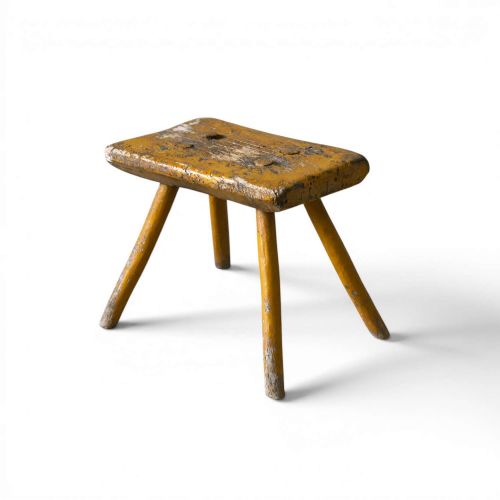
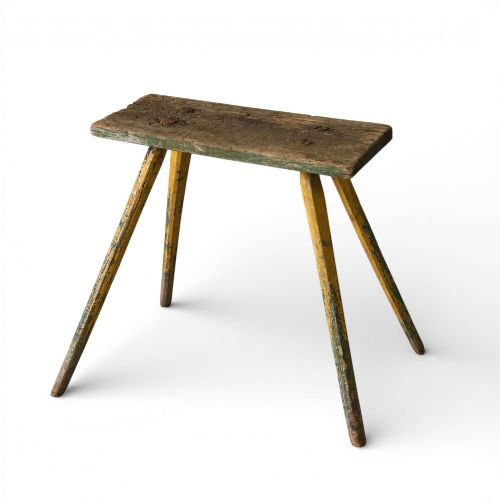
Many surviving surfaces retain traces of original paintwork, such as ochre and green, or develop a deep waxed patina through generations of handling. Iron braces and fastenings occasionally reinforce structural joints where heavy use required additional strength.
Primitive Wooden Bench Retail Price Guide 2026
Typical asking prices for primitive wooden bench among the pieces listed under this phrase on Sellingantiques today, from the lower quarter to the upper quarter. They describe what is for sale here now, not the wider market.
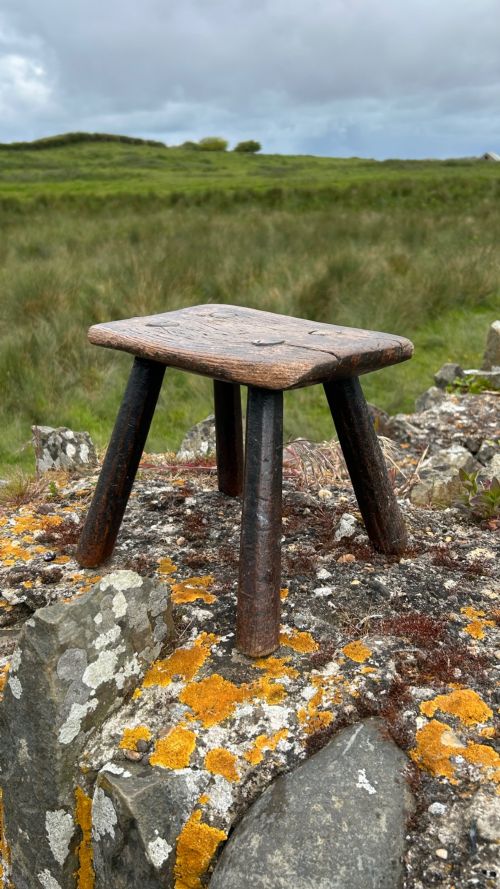
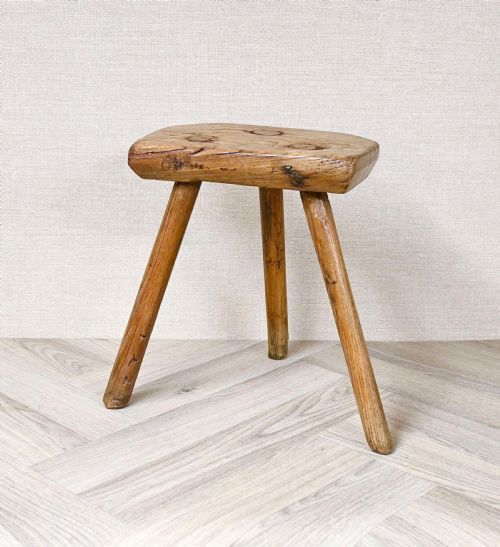
Several milking stools retain bright splashes of original ochre and green paint, proving that working dairy farmers enjoyed a dash of colour.
What varies in quality
Quality in these vernacular pieces rests on the integrity of the original construction and the honesty of the surface wear. Pieces that retain their unstripped timber, untouched original paint or authentic structural proportions stand apart from those altered or overly scrubbed by later hands.
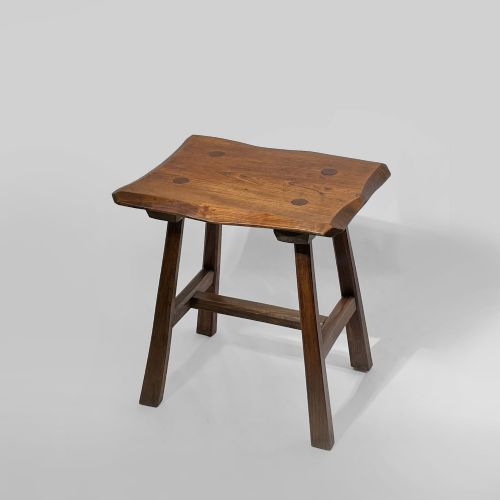
The visual appeal depends upon sculptural qualities in the seat or legs, such as natural form oak, sculpted rounded tops or neat proportions. Better examples combine sound structural survival with untouched patination earned through genuine working lives.
The Primitive Wooden Bench Glossary
- Pig bench
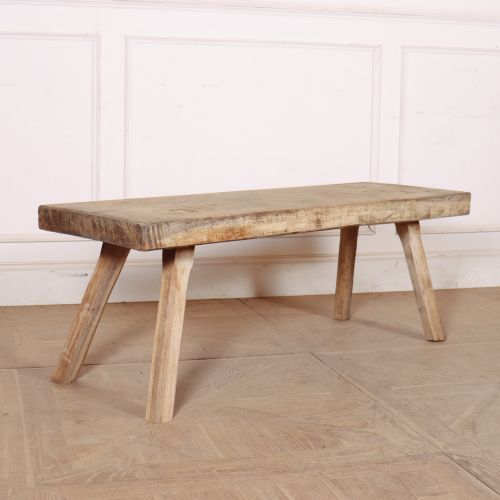
- A low wooden bench or table traditionally used in agricultural or butchery contexts, now frequently adapted as a coffee table. These items usually feature narrow proportions and sturdy timber construction.
- Milking stool
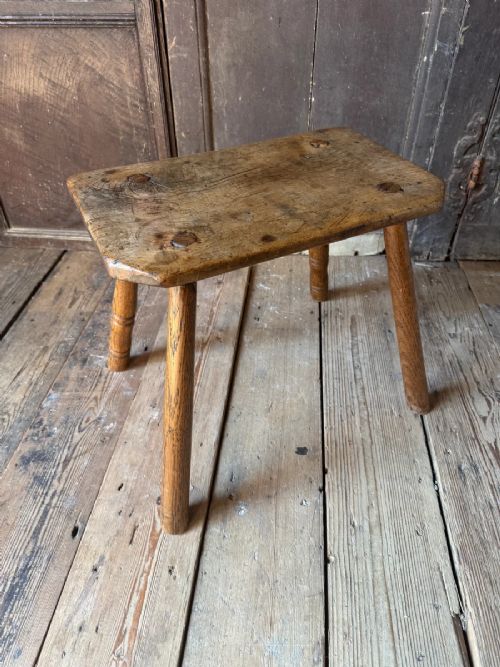
- A small, three or four-legged seat designed for use in milking sheds, characterised by a simple wooden top and splayed legs. They appear frequently in various regional vernacular styles.
- Settle
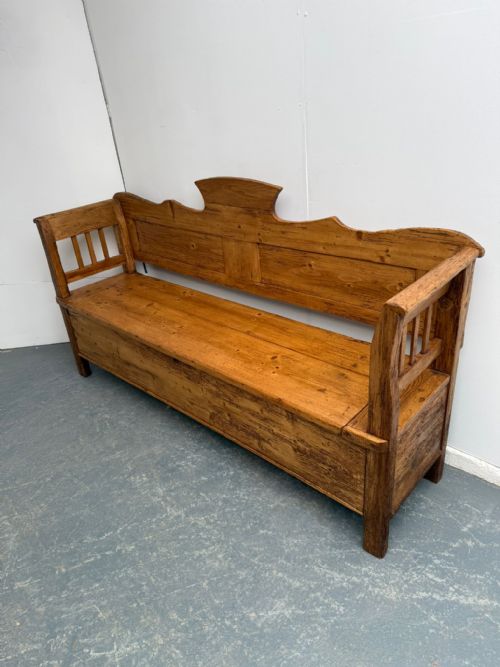
- A wooden bench with a high back and solid arms designed to keep out draughts in domestic interiors. Examples range from simple pine construction to larger box settles with integrated storage.
- Scumble
- A paint technique used to create a simulated wood grain or mottled decorative finish on furniture surfaces. Scumbled pine surfaces frequently survive from the Georgian and nineteenth-century periods.
- Trestle
- A structural support consisting of a horizontal beam fixed to two splayed legs, commonly used to support long bench or table tops. This method provides stable support for heavy working surfaces.
Primitive Wooden Bench: Frequently Asked Questions
What is a primitive wooden bench?
A primitive wooden bench is a functional item of country furniture made for workshops, farms or simple domestic use rather than formal display.
These pieces rely on solid timbers like oak, pine and elm, showcasing straightforward construction methods rooted in regional vernacular traditions.
How were these benches originally used?
They served practical roles in daily rural life, ranging from seating around a hearth to specialised work surfaces for cobblers and butchers.
Their robust design accommodated heavy labour, dairy work and seating requirements in modest farmhouses and workshops.
How do I style a primitive bench at home?
These pieces suit contemporary and traditional interiors alike, functioning as hallway seating, low coffee tables or display surfaces.
Their weathered timber and honest construction introduce warmth and historical texture to modern living spaces.
How can I tell the age of a primitive bench?
Age is indicated by the tool marks, timber selection, method of joint construction and the natural patina developed over centuries.
Examining the wear patterns and original surface treatments helps connect a piece to eighteenth, nineteenth or early twentieth-century traditions.