


Corner Hanging Storage
Corner hanging storage pieces turn neglected room junctions into display space, offering Georgian and Victorian wall-mounted cupboards made for tidy domestic interiors.
Corner Hanging Storage
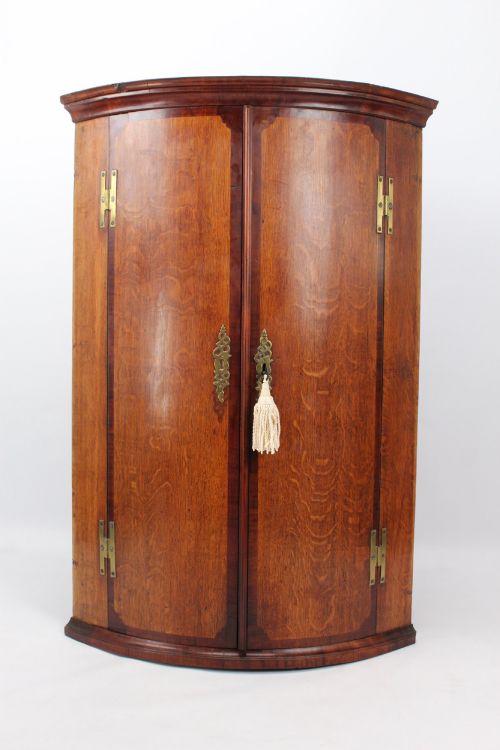
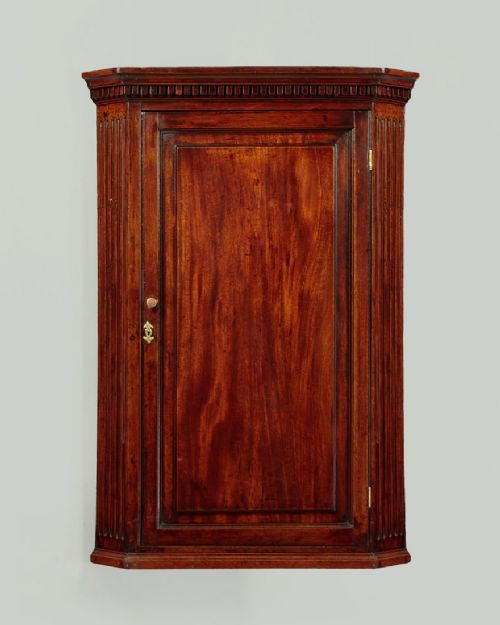
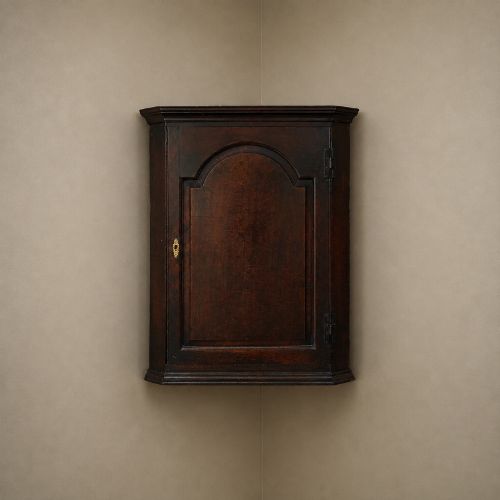
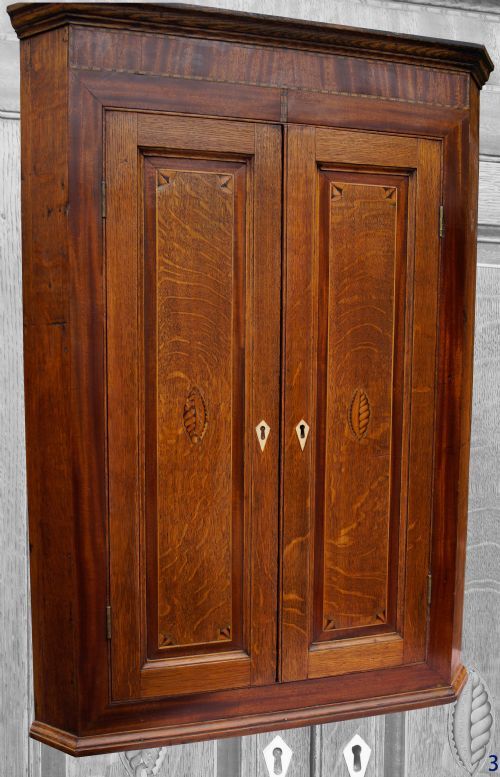
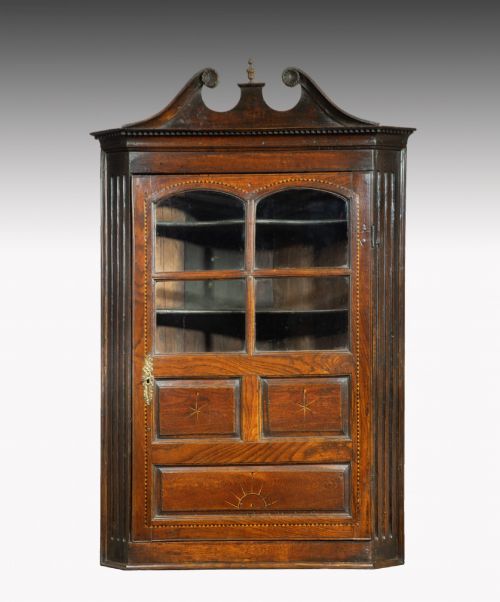
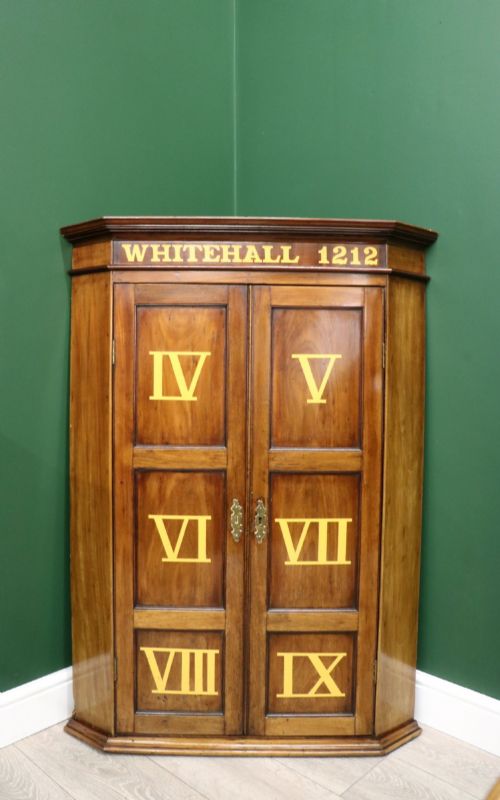
When you search for corner hanging storage, you are looking at wall-mounted cabinets designed to fit snugly into room junctions and utilise dead space. The versions you meet most often on this page are Georgian and 18th century oak or mahogany wall cupboards, alongside later Victorian and Art Nouveau examples.
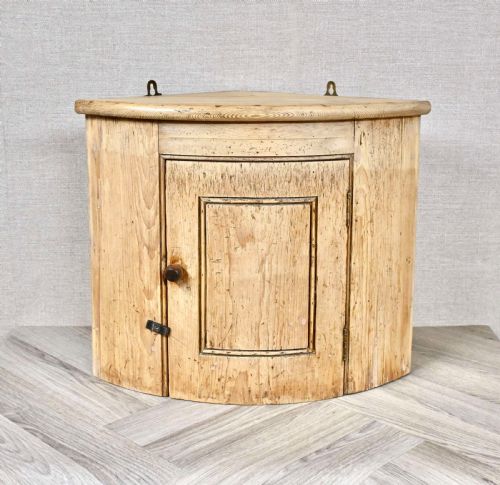
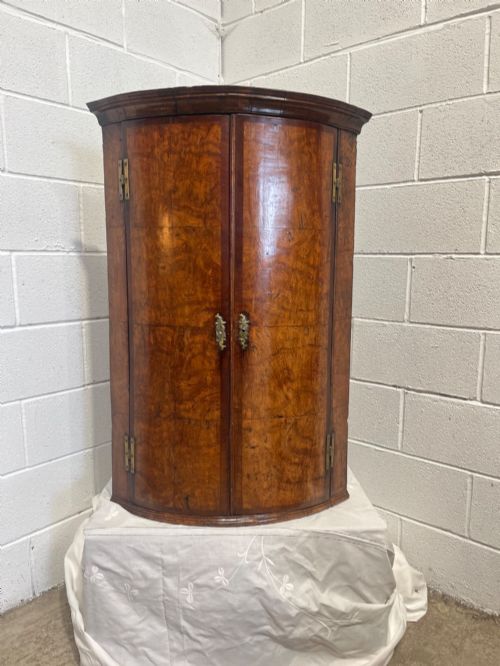
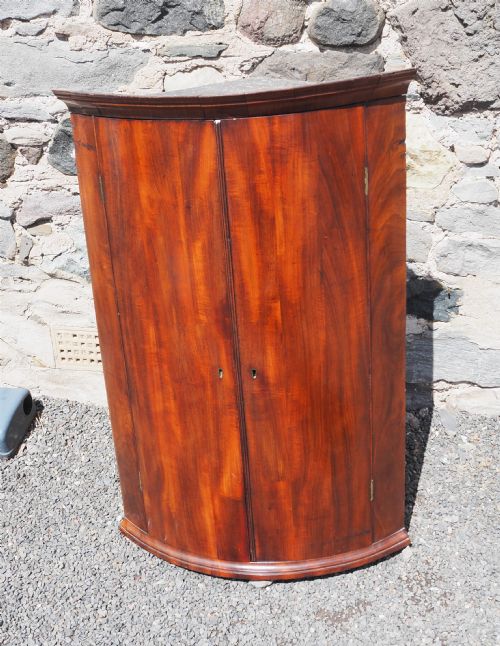
The form spans straightforward panelled timber boxes to bow front designs with curved doors and shaped internal shelves. Provincial pieces lean towards sturdy local woods like oak and elm, while refined urban examples employ flame mahogany or walnut veneers.
Many of these cabinets feature architectural cornices, brass H-hinges and panelled doors that open to reveal painted or shelved interiors. They hang securely from walls, lifting storage off the floor in compact rooms.
Materials and construction methods
Cabinet makers relied predominantly on solid oak, mahogany and walnut, occasionally incorporating pine for secondary woods and boxwood for stringing lines. Timber was selected for grain pattern, particularly in flame mahogany and burr oak variants.
Construction relies on dovetail joints for carcass corners and pegged mortise and tenon frames for doors. Brass hardware such as escutcheons and hinges provided functional strength and decorative contrast against the dark wood.
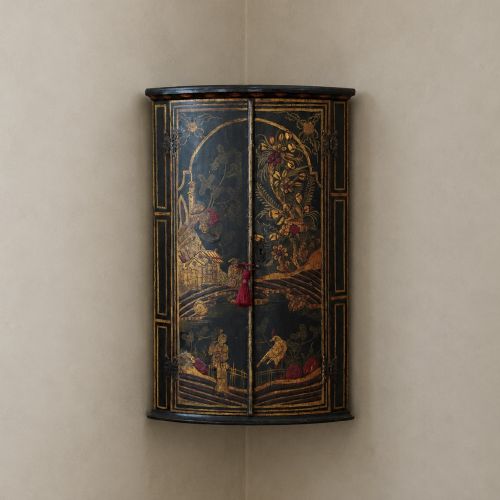
Surface finishes range from clear wax polish highlighting natural timber to japanned Chinoiserie lacquer and painted schemes. Bow front doors required steam bending or careful carving from solid blocks to achieve their curved profiles.
Listings feature woods spanning mahogany, oak, walnut, pine, elm and boxwood alongside glass and brass elements.
Distinctions in quality and finish
The division between standard and superior pieces rests on timber selection and decorative nuance rather than scale. Cabinets featuring figured burr oak, flame mahogany or intricate japanned Chinoiserie demonstrate greater workshop ambition than plain pine or utilitarian oak.
Joinery execution defines the upper tier, visible in tight dovetailing, well-fitted curved doors and original brasses. Secondary woods and internal shelving finish reveal whether a maker bothered with refinement inside the cupboard as well as out.
The Corner Hanging Storage Glossary
- Bow front
- A convex, outwardly curved cabinet door or front profile. This shape requires skilled timber forming and appears frequently on Georgian mahogany pieces.
- Japanned
- European imitation of East Asian lacquerwork, created using layered varnishes and decorative motifs. It appears on select 19th century and Georgian cabinets.
- Chinoiserie
- European artistic style reflecting Chinese motifs and landscapes. This decoration turns up on painted and lacquered hanging cupboards.
- Escutcheon
- A protective brass plate surrounding a keyhole. Better examples feature pierced or engraved detailing that complements the door hinges.
Corner Hanging Storage: Frequently Asked Questions
What is the difference between a wall cabinet and a corner robe?
Wall cabinets mount at height to hold small items, ceramics or glassware on internal shelves. They leave floor space entirely free underneath.
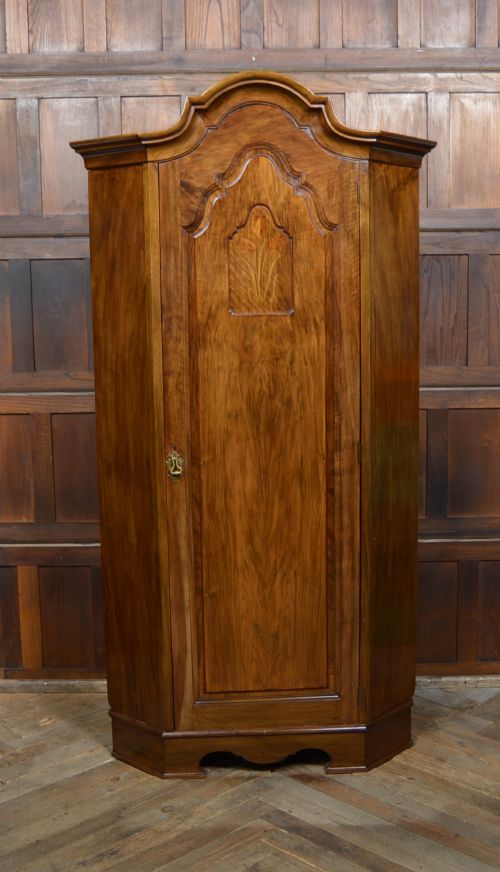
Corner robes are tall floor-standing garments pieces designed to fill a room angle vertically. They provide full-length hanging space rather than compact shelving.
How do I care for antique mahogany and oak surfaces?
Maintain timber by applying natural beeswax sparingly and buffing with a soft cloth. Avoid silicone sprays and keep cabinets away from direct heat sources to prevent wood splitting.
Check brass hinges and locks periodically without over-tightening screws. Gentle cleaning preserves the historic patina developed over centuries.
Were these cupboards meant for specific rooms?
Georgian and Victorian households placed them in parlours, dining rooms or bedchambers to store porcelain, medicines or documentation. Their corner placement kept high-traffic areas clear while keeping necessities accessible.
Today they function equally well in modern kitchens, hallways or bathrooms for compact shelving. The triangular footprint makes them adaptable to awkward spaces.