


Copper Wall Charger
A copper wall charger brings weight and warmth to a room, offering centuries of metalworking skill from English workshops and distant international kilns alike.
Copper Wall Charger
A copper wall charger serves primarily as a decorative display piece, combining substantial metal plates with intricate surface decoration. When searching for a copper wall charger, buyers encounter diverse regional traditions ranging from British Arts and Crafts hammered metalwork to Japanese Meiji period cloisonne enamel and Middle Eastern Cairo ware.
The pieces span several decades of production from the nineteenth century into the twentieth, including Victorian and Regency eras. Forms vary from circular platters to broad decorative trays designed specifically for wall hanging.
Makers utilised various alloys and base metals alongside pure copper, creating distinct regional aesthetics that define each category.
Materials and construction methods
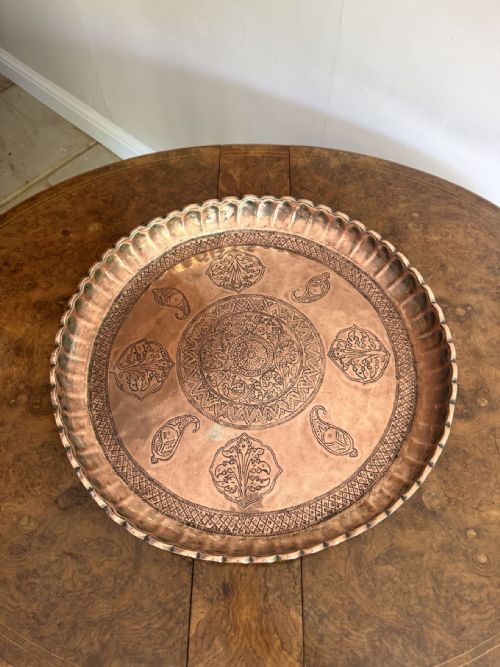
Artisans shaped these objects using hammering, repousse work, and hand piercing to raise motifs from the metal sheet. Mixed metal applications incorporate brass wire, silver, and bronze elements into the primary copper or patinated copper body.
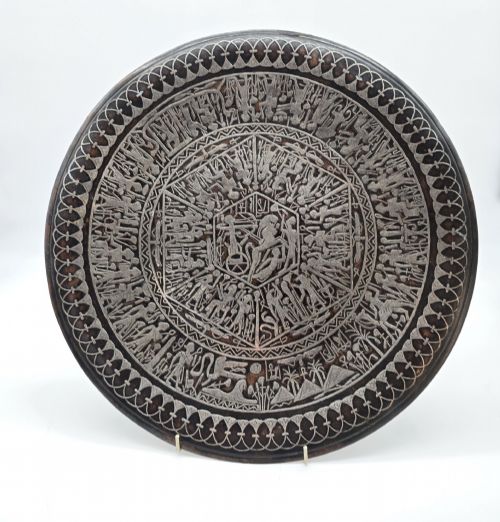
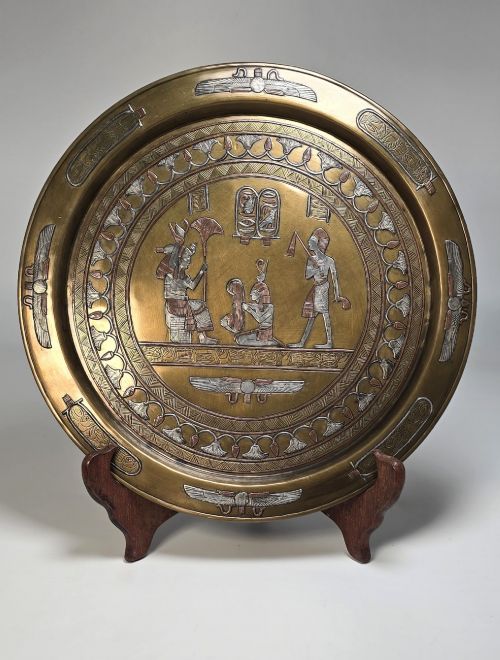
Cloisonne pieces rely on delicate wire compartments fused to a metal base and filled with coloured enamel before firing. Cairo ware items employ contrasting silver and copper inlay techniques across bronze and copper substrates.
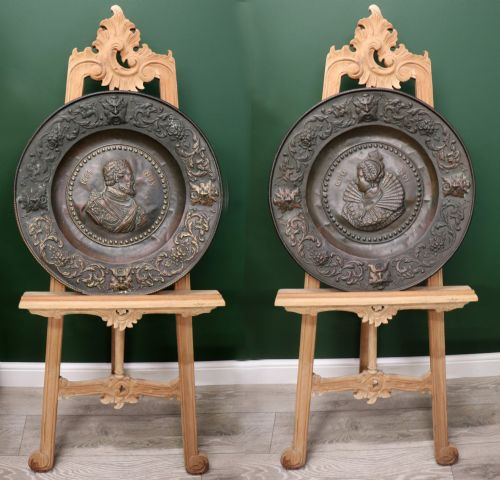
Several chargers feature unlikely companions on their surfaces, pairing leaping koi and owls with portraits of Henry IV.
Assessing quality and craftsmanship
Quality rests upon the precision of the hand engraving, the depth and clarity of the repousse relief, and the control shown in mixed metal or enamel work. Finer examples display rigorous balance in their motifs, whether depicting foliage, animals, or figural scenes.
The integration of secondary metals and the preservation of the original patina significantly influence the overall character of each piece.
Faulkner Bronze Company·J F Poole of Hayle·Hugh Wallis
The Copper Wall Charger Glossary
- Repousse
- A metalworking technique where the artisan hammers the metal from the reverse side to form a raised design on the front. This method creates tactile depth across the surface of the plate.
- Cloisonne
- An enamel technique using thin metal wires soldered to a base to create cells that hold coloured glass paste. Firing hardens the paste into vibrant decorative panels.
- Cairo Ware
- Metalwork originating from Egypt during the nineteenth and early twentieth centuries, typically featuring dense silver and copper inlay on bronze or brass.
- Patinated Copper
- Copper that has undergone controlled chemical treatment to alter its surface colour and tone. This ageing process highlights the relief work underneath.
- Meiji Period
- A Japanese historical era spanning from 1868 to 1912 noted for exceptional technical mastery in metalwork and cloisonne enamel.
Copper Wall Charger: Frequently Asked Questions
How do I hang a copper wall charger safely?
Most chargers include an integrated foot ring or rim suitable for specialised wall hooks that distribute weight evenly without pinching the metal. Ensure the fixing matches the total weight of the piece, particularly with heavier bronze-inlaid or cloisonne items.
Avoid using adhesive fixings that rely on glue alone, opting instead for adjustable brass or coated wire display brackets designed specifically for heavy decorative plates.
What is the difference between Cairo ware and Arts and Crafts chargers?
Cairo ware originates from Middle Eastern and Egyptian revival traditions, characterised by dense silver and copper inlay work on dark bronze or patinated surfaces. These pieces emphasise intricate geometric and figurative contrast.
Arts and Crafts chargers stem from British regional workshops, focusing on hammered copper textures, naturalistic motifs like pomegranates and foliage, and visible artisan marks rather than intricate metal inlay.
How can I tell a Japanese Meiji period charger apart from other styles?
Japanese Meiji period pieces on this page are predominantly distinguished by meticulous cloisonne enamel work depicting subjects such as dragons, phoenixes, and Mount Fuji. The precision of the wirework and the brilliance of the enamel set them apart from European hammered metal.
Signatures or maker marks are occasionally present on the reverse or base of these Japanese items, further confirming their period and origin.