



Hand Hammered Platter
A hand hammered platter brings tactile warmth and enduring metalcraft into a room, offering both decorative presence and utilitarian service.

Hand Hammered Platter
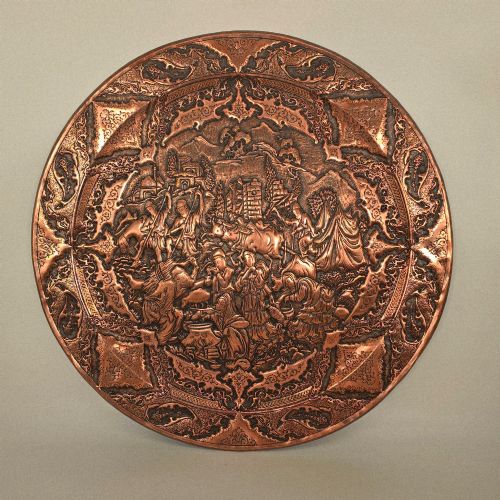
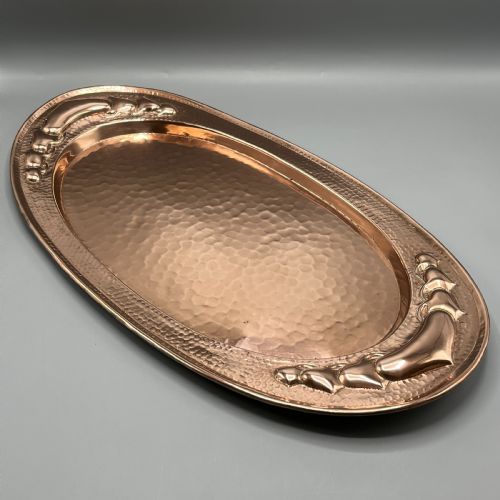
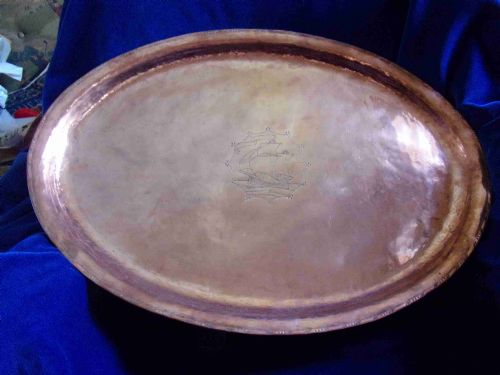
A hand hammered platter is a substantial metal dish formed by manual beating, appearing primarily in copper, brass, and pewter forms across this selection. These pieces serve as decorative chargers, wall plates, and serving trays designed to catch the light.
The versions you meet most frequently on this page belong to the Arts and Crafts and Art Nouveau movements, alongside Persian and Anglo-Indian Raj styles. They date predominantly from the late nineteenth century and the early decades of the twentieth century.
Makers and workshops of this period utilised techniques like repousse work and engraving to enrich the metal surface with foliage, pomegranates, and geometric motifs. You will find items ranging from large twin-handled trays to deep decorative chargers meant for display.
Materials and construction
Metals such as copper, brass, and pewter form the structural base of these platters, shaped through persistent manual beating. Artisans worked sheet metal over stakes and blocks to raise the central basin and flatten the rims.
Surface ornamentation relied on repousse work and chasing, where craftsmen hammered designs from the reverse side to create relief before refining details from the front. Engraving was also applied to cut crisp lines into the patinated metal.
Someone spent hours hammering pomegranates into a sheet of copper around 1900, and now it gets to hold your post.
Assessing quality in metalwork
Quality rests in the depth and clarity of the repousse relief, where confident hammer control produces crisp botanical or geometric details without thinning the metal wall inappropriately. Superior examples display harmonious proportions between the central field and the decorated rim.
The integrity of the original surface patina separates standard production from finer studio or guild pieces. Hand-beaten textures show deliberate rhythm rather than erratic indentation, reflecting the deliberate hand of the metalworker.
Hugh Wallis·Faulkner Bronze Company·Newlyn
The Hand Hammered Platter Glossary
- Repousse
- A metalworking technique where the artisan hammers the design from the reverse side to form a raised pattern in relief. This method creates tactile depth on copper and brass chargers.
- Charger
- A large decorative plate or platter traditionally used for presentation rather than daily dining. These substantial pieces frequently hang on walls or anchor table centerpieces.
- Patinated copper
- Copper that has developed a darkened, oxidized surface sheen through age and deliberate chemical treatment. This finish highlights the varied tones of the metal.
- Beaten pewter
- Pewter alloy shaped through repeated hammer blows to create a textured, light-diffusing surface. It provides a softer metallic grey tone compared to bright brass.
- Arts and Crafts
- A design movement valuing manual skill, natural motifs, and visible craft over mass production. It forms the stylistic backbone for many domestic metalwares of this era.
Hand Hammered Platter: Frequently Asked Questions
How were these platters used originally?
Many of these large metal vessels served as decorative chargers to adorn dining room sideboards or walls rather than for carrying food. Their substantial size and reflective surfaces made them ideal focal points in late nineteenth and early twentieth century interiors.
Some twin-handled versions functioned as practical serving trays for tea or callers' cards, though their artistic weight encouraged display.
How do I care for a copper platter?
Dust the surface gently with a soft dry cloth to preserve the historic patination and prevent abrasive wear. Avoid harsh commercial dips or heavy chemical polishes that strip away the authentic aged skin of the metal.
Keep these platters away from damp environments and direct moisture to prevent active oxidation or spotting on the copper and brass surfaces.
What is the difference between Arts and Crafts and Raj metalwork?
Arts and Crafts pieces typically feature stylised British flora like pomegranates and clean geometric borders reflecting local guild ideals. They often bear maker signatures or characteristic studio hammer marks.
Anglo-Indian Raj period items display intricate, dense repousse foliage and narrative engraving rooted in traditional Eastern craftsmanship. They utilise heavy brass and copper alloys with distinct regional aesthetics.
Can I hang a copper platter on the wall?
Most large chargers and trays are well suited for wall display provided you use appropriate, secure fixings designed for heavy metal objects. Ensure the weight distributes evenly without straining the rim or handles.
Check that hanging wires or brackets do not bite into or scratch the original beaten surface of the piece.