
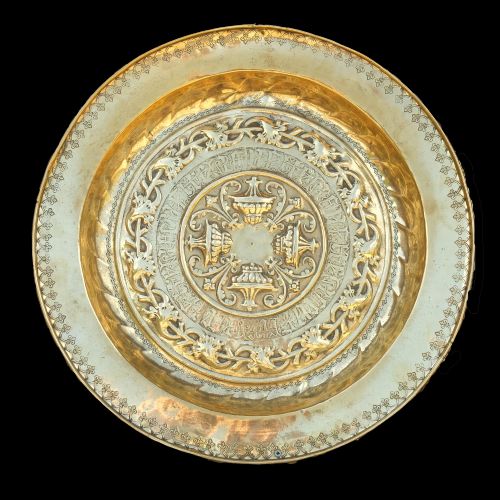


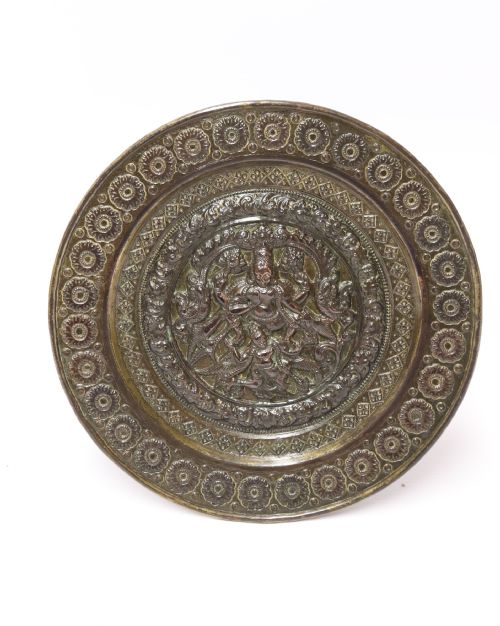
Repousse Brass Dish
These repousse brass dish examples span centuries of decorative metalwork, offering striking wall plaques and chargers shaped by hand.
Repousse Brass Dish
When you search for a repousse brass dish, you find a variety of circular vessels ranging from wall plaques and deep chargers to alms dishes and display plates. The selection includes pieces from the sixteenth, eighteenth, and nineteenth centuries, alongside Edwardian creations and items from the Raj period.
You are most likely to meet circular brass trays and wall chargers featuring hammered or embossed decoration. The forms serve primarily as decorative wall plaques or ceremonial vessels rather than everyday tableware, often displaying mythological scenes, coats of arms, or animal motifs.
How They Were Made
Artisans formed these objects primarily from brass and copper, sometimes utilising latten or bronze. The metal was beaten and worked from the reverse side to push out the design in relief, a technique known as repousse or embossing.
Many items incorporate hand piercing and hammering alongside the raised metalwork. Late nineteenth-century examples often display the distinctive surface texture associated with the Arts and Crafts movement and the Newlyn School.
The listings span multiple centuries, ranging from sixteenth-century Nuremberg alms dishes to nineteenth-century Raj period copper wall chargers.
What Varies in Quality
Quality reveals itself in the depth and clarity of the hammered relief work. Finer examples show crisp detailing in figures such as Diana the huntress or Neptune, alongside well-defined heraldic motifs.
The sophistication of the design execution separates standard decorative trays from exceptional sixteenth-century alms dishes or Raj period chargers. The harmony between the brass surface and the embossed or pierced ornamentation dictates the overall standing of the piece.
The Repousse Brass Dish Glossary
- Repousse
- A metalworking technique where the artisan hammers the design from the reverse side to create a raised relief on the front. This method gives the surface its distinctive three-dimensional quality.
- Alms Dish
- A shallow bowl or basin traditionally used in churches for collecting monetary offerings. Early examples often feature religious or classical motifs beaten into the centre.
- Charger
- A large ornamental plate or platter designed for display rather than dining. These pieces frequently hang on walls as decorative plaques.
- Latten
- A durable yellow metal alloy similar to brass, widely used in historical metalware production. It provides a specific golden tone found in older vessels.
- Embossed
- Ornamented with raised patterns or designs moulded onto the surface. This process creates texture and depth across the metal.
Repousse Brass Dish: Frequently Asked Questions
What is a repousse brass dish?
A repousse brass dish is a decorative metal vessel or wall plaque featuring designs hammered into relief from the reverse side. These items include chargers, alms dishes, and display plates produced across various centuries.
Craftsmen shaped the metal to depict mythological scenes, coats of arms, and natural motifs. They function primarily as decorative wall hangings or display pieces.
How were these metal dishes used?
Historical examples such as alms dishes served in religious ceremonies for collecting donations. Many other forms functioned as ceremonial chargers or decorative wall plaques in domestic interiors.
Over time, their role shifted toward pure display, appreciated for their craftsmanship and pictorial themes. Large circular trays and plates adorned walls and sideboards alike.
How do I live with a brass dish?
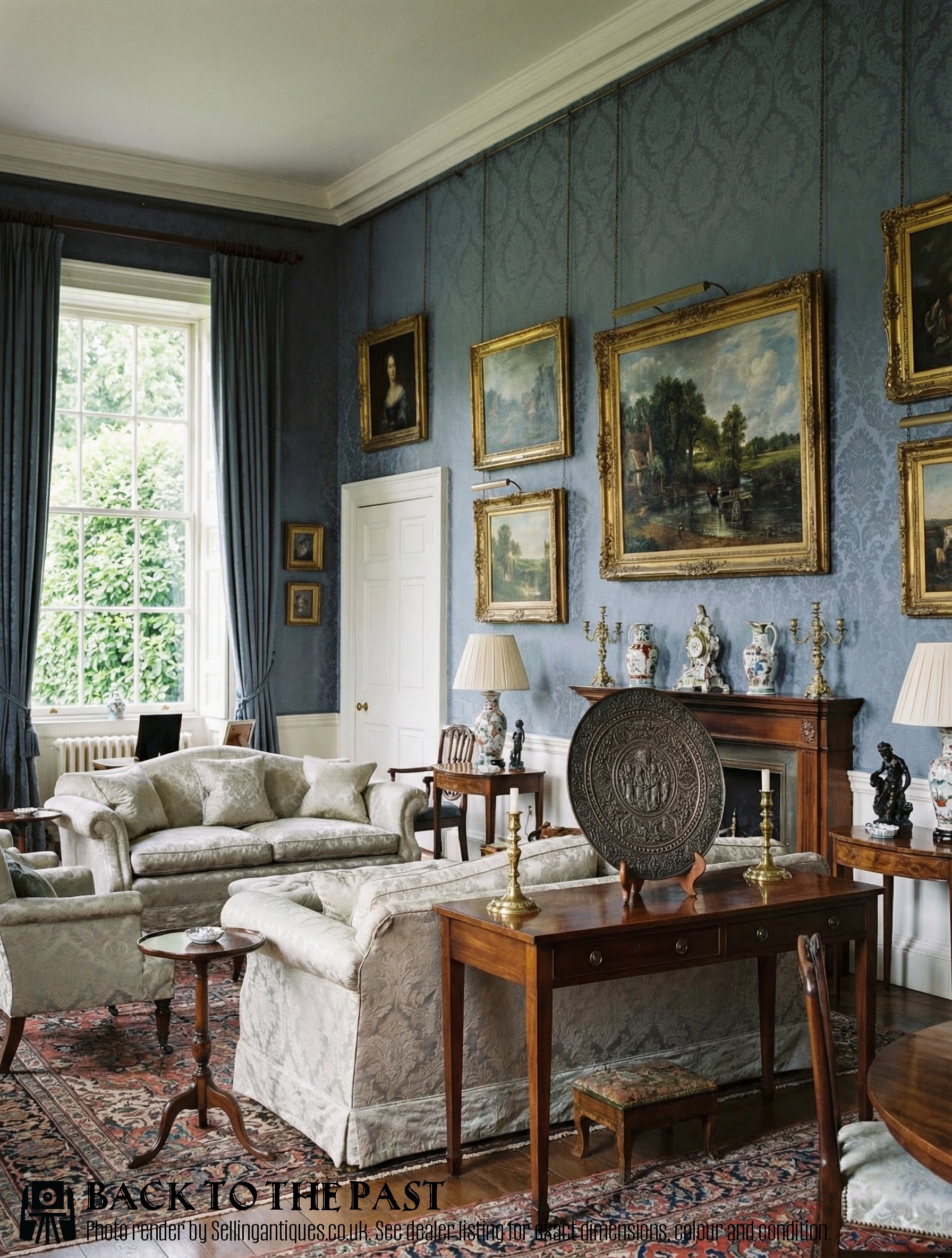
These dishes suit wall mounting or display on sturdy plate stands where their relief work catches the light. They integrate well into both traditional and eclectic interiors alongside other metalware.
Keep them away from excessive moisture to preserve the metal surface. Gentle dusting maintains their appearance without altering the historical patina.
How do I tell different periods apart?
Sixteenth-century pieces often take the form of Nuremberg alms dishes with distinct historical motifs. Nineteenth-century and Edwardian examples frequently show Arts and Crafts influence or Raj period craftsmanship.
Stylistic details like animal motifs, coats of arms, or hand-pierced borders point toward specific eras and regional workshops. Comparing the depth of the repousse work also helps indicate the age and origin.