


Copper Repousse Charger
These copper repousse charger plates bring tactile depth and historic metalwork directly to your wall.

Copper Repousse Charger
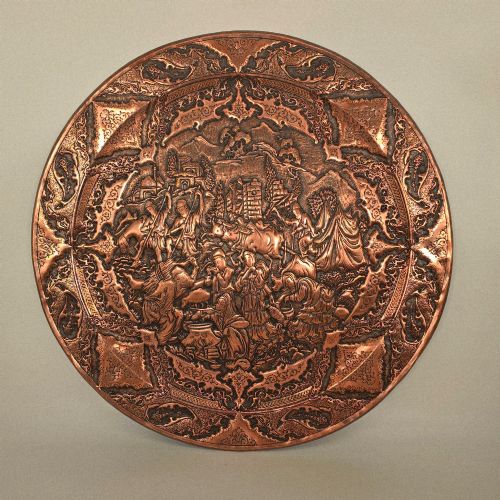
A copper repousse charger is a large decorative metal dish or plaque formed by hammering the reverse side to raise designs in relief. When you search for a copper repousse charger, you encounter large display pieces designed primarily for mounting on walls rather than dining. The examples seen on this page span the nineteenth century, including the eighteen-eighties, eighteen-nineties, and nineteen-hundreds.
Domestic and international workshops produced these items to satisfy Victorian and Edwardian tastes for ornate metalwork. You meet pieces ranging from British Arts and Crafts beaten copper to heavily worked Indian Raj brass and copper compositions. Turkish and Kashmiri regional metalwork also contribute distinctive pierced and plated variations to the selection.
Materials and Techniques
Makers shaped these items primarily from sheet copper, sometimes combining the metal with brass or adding silver plating. Beaten and hammered surfaces create a textured ground that catches the light across the rim and well of the dish. Artisans utilised hand-piercing alongside repousse hammering to introduce openwork details and layered metallic tones.
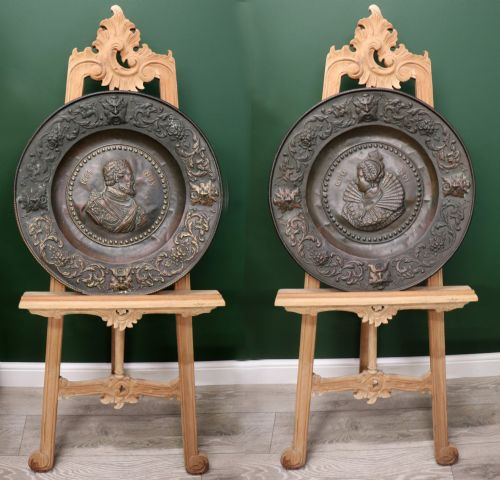
The decorative subjects span portraiture of historical figures, mythological scenes with Diana the huntress, and botanical pomegranate motifs.
Distinctions in Quality
The standard of a copper repousse charger rests upon the crispness of the hammerwork and the depth of the relief. Skilled metalworkers achieved clean undercut details and balanced proportions that hold the viewer's attention across a large surface. Firmer metal gauge prevents the centre of a wide charger from buckling under its own weight.
Design complexity also separates standard production from exceptional examples. Pieces featuring intricate portraiture, dense pomegranate foliage, or complex figural scenes demand greater technical command than repetitive geometric patterns. The integration of mixed metals, such as silver plating applied over copper and brass, marks more ambitious workshop output.
Faulkner Bronze Company
The Copper Repousse Charger Glossary
- Repoussé
- A metalworking technique where the artisan hammers the reverse of a sheet to form a raised design on the front. This method creates tactile dimension on wall plates and chargers.
- Charger
- A large ornamental dish or plate intended for display rather than for serving food at the table. These items frequently hang on walls using integrated or added wire loops.
- Arts and Crafts
- A design movement valuing hand-craftsmanship and natural motifs like pomegranates and foliage. Objects from this tradition reject industrial uniformity.
- Raj Period
- The era of British rule in the Indian subcontinent, spanning the nineteenth and early twentieth centuries. Metalwork from this context often displays dense, heavy copper and brass repoussé decoration.
- Patinated
- A surface treatment or natural chemical alteration that deepens the colour of the metal. This finish highlights the high and low points of the hammered relief.
Copper Repousse Charger: Frequently Asked Questions
How do I hang a copper charger safely?
Most wall chargers require a specialist spring-clip hanger that grips the rim securely without damaging the metal edge. Ensure the fixing in your wall matches the weight of heavier copper and brass pieces.
Avoid hanging pieces in direct sunlight or humid spaces like kitchens to preserve the patinated surface finish.
How should I clean my copper charger?
Dust the surface gently with a dry, soft cloth to remove everyday accumulation. Avoid abrasive metal polishes that strip away the intentional dark patination within the hammered recesses.
Preserving the original aged surface maintains the historical character and visual depth of the repousse work.
What is the difference between a charger and a tray?
Chargers are primarily produced for decorative wall display, featuring wide decorative borders and historical or figural central motifs. Trays are built with functional handles or flat bases intended for carrying items.
Many nineteenth-century metal objects overlap in form, serving both as serving vessels and decorative wall plaques depending on their mountings.
How do I identify an Arts and Crafts copper piece?
Arts and Crafts copper work typically displays visible hand-beaten hammer marks across the surface rather than smooth industrial stamping. Motifs draw heavily from nature, featuring stylized pomegranates, leaves, and interwoven stems.
These pieces often lack maker marks, relying instead on distinct technique and material honesty for attribution.