


Decorative Metal Wall Plate
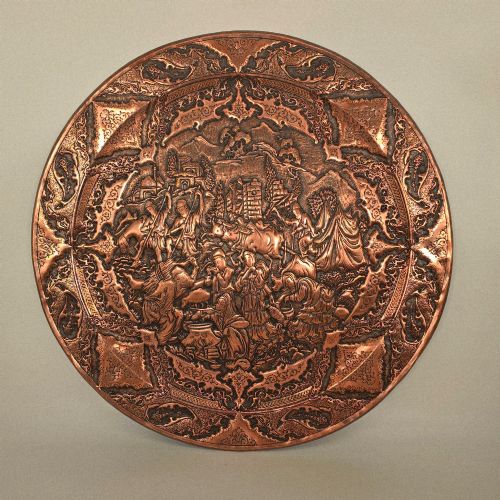
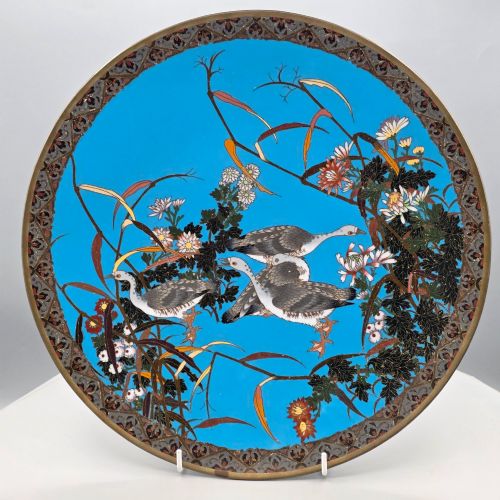
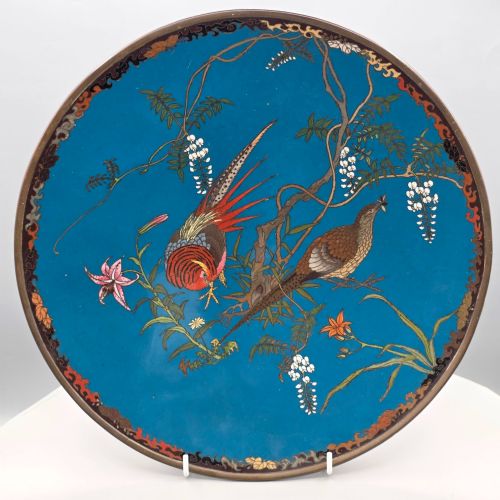
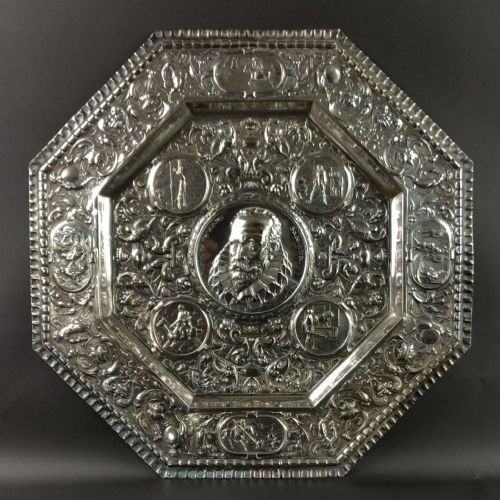
These decorative metal wall plate examples span distinct global workshops, offering rich metallic surfaces for hanging display.
Decorative Metal Wall Plate
A decorative metal wall plate serves primarily as a visual display piece rather than tableware, often incorporating hanging hardware or a wide rim designed for wall mounting. The selection encompasses large chargers, circular trays, and plaques spanning the nineteenth and early twentieth centuries.
Japanese Meiji period cloisonné enamel chargers dominate the offerings, alongside European repoussé brass, silver-plated bronze, and Middle Eastern inlaid metalwork. These items derive from diverse stylistic traditions including Arts and Crafts, Egyptian Revival, and Art Nouveau.
How they were made
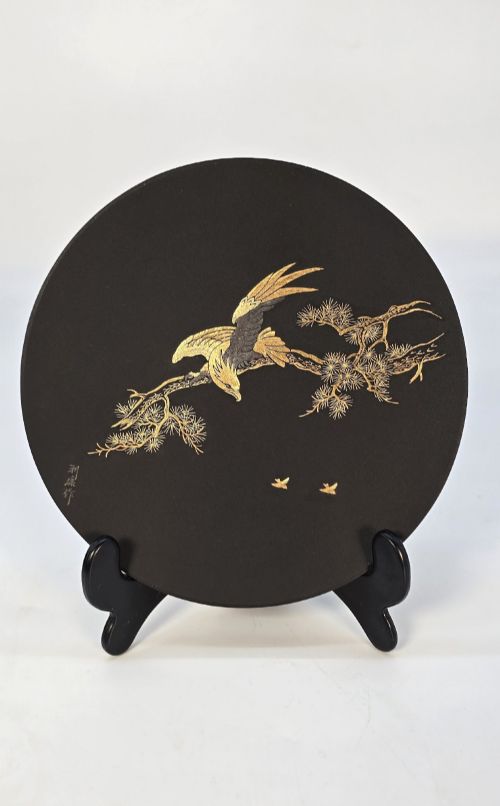
Metalworking techniques rely heavily on hand-hammered repoussé, chasing, and metal inlay using contrasting metals such as gold, silver, and copper upon patinated iron or bronze bases. Cloisonné pieces utilise thin wire soldered to metal foundations to form cells subsequently filled with coloured enamel pastes.
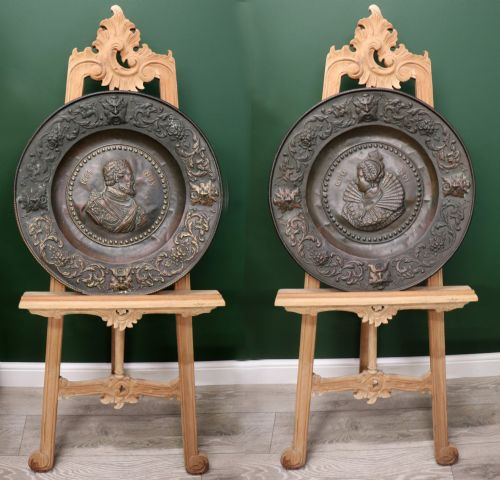
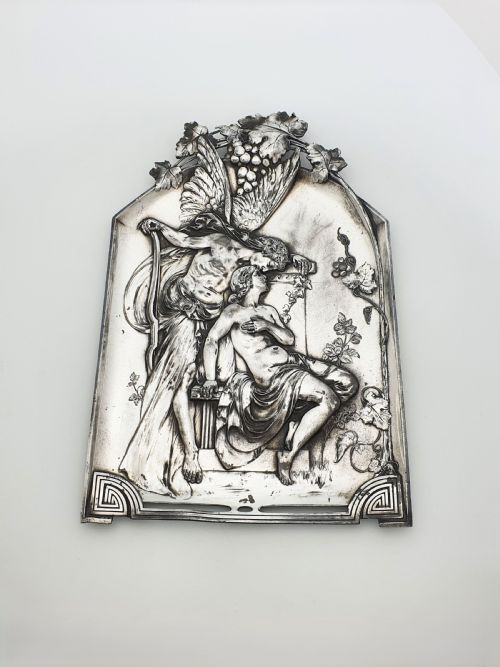
Electrotyping allowed manufacturers to duplicate complex historical reliefs in silver plate and bronze, while traditional foundry casting produced heavy cast iron and brass wares.
Listings feature items spanning the eighteenth century through the Art Deco era, predominantly showcasing Japanese Meiji period cloisonné and European Arts and Crafts copper.
What varies in quality
The fineness of detail in chased or inlaid decoration dictates the upper tier of quality, particularly visible in the precision of Japanese wirework or Middle Eastern metal encrustation. Greater control over enamel firing and patination results in cleaner colour transitions and more lifelike pictorial depth.
Substantial gauge metal prevents warping in large chargers, whereas inferior production often yields thinner, more pliable plates with less defined relief work.
Elkington Co·Kasli Foundry
The Decorative Metal Wall Plate Glossary
- Repoussé
- A metalworking technique where the artisan hammers the metal from the reverse side to form a raised design in relief on the front.
- Cloisonné
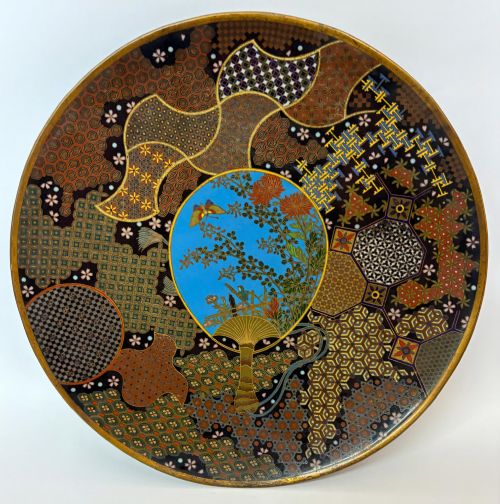
- An enamelling method using thin metal wires soldered to a base plate to create compartments filled with vitreous enamel paste.
- Electrotype
- A replica metal object produced by electrodeposition onto a mould, common in nineteenth-century reproduction and decorative items.
- Charger
- A large ornamental plate used traditionally for display or ceremonial purposes rather than everyday dining.
- Totai Shippo
- Japanese porcelain ware decorated using cloisonné enamel techniques over the ceramic body.
Decorative Metal Wall Plate: Frequently Asked Questions
How do I hang a heavy metal charger?
Most large chargers require a specialised wall bracket or spring-loaded plate hanger that securely grips the rim without damaging the metal. Ensure the fixing is anchored directly into wall studs or uses appropriate wall plugs given the substantial weight of cast iron or bronze pieces.
Avoid using existing decorative handles or pierced borders for weight-bearing support unless the piece was explicitly manufactured with reinforced hanging loops on the reverse.
What defines Cairo Ware metalwork?
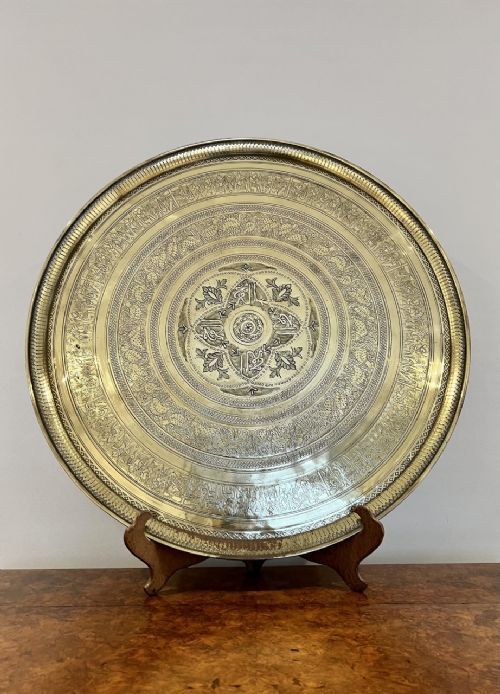
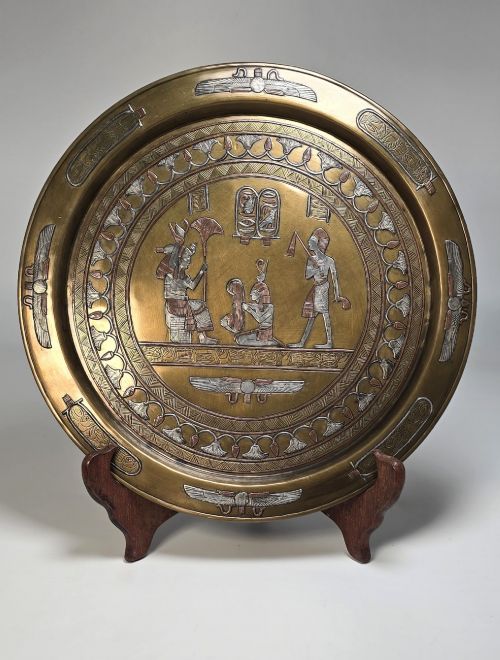
Cairo Ware typically originates from late nineteenth-century Egyptian Revival production, featuring brass or bronze bodies heavily inlaid with contrasting silver and copper geometric or calligraphic patterns. These items were frequently acquired by European travellers during the Grand Tour.
The intricate metal inlay creates a dense surface pattern that mimics medieval Mamluk metalwork traditions popularised during the Victorian era.
How do I distinguish Meiji period cloisonne?
Meiji period cloisonne often displays exceptionally fine silver or brass wiring forming naturalistic motifs like birds, flowers, and dragons against dark, reflective enamel grounds. Japanese pieces from this era frequently bear artist signatures on small applied plaques or within the enamel base.
Earlier nineteenth-century examples tend to feature thicker wires and softer, opaque enamel colours compared to the microscopic detail achieved toward the end of the century.