


Antique Indian Platter
An antique Indian platter brings a heavy, hand-worked weight of brass, copper, silver, or carved timber straight to your table.
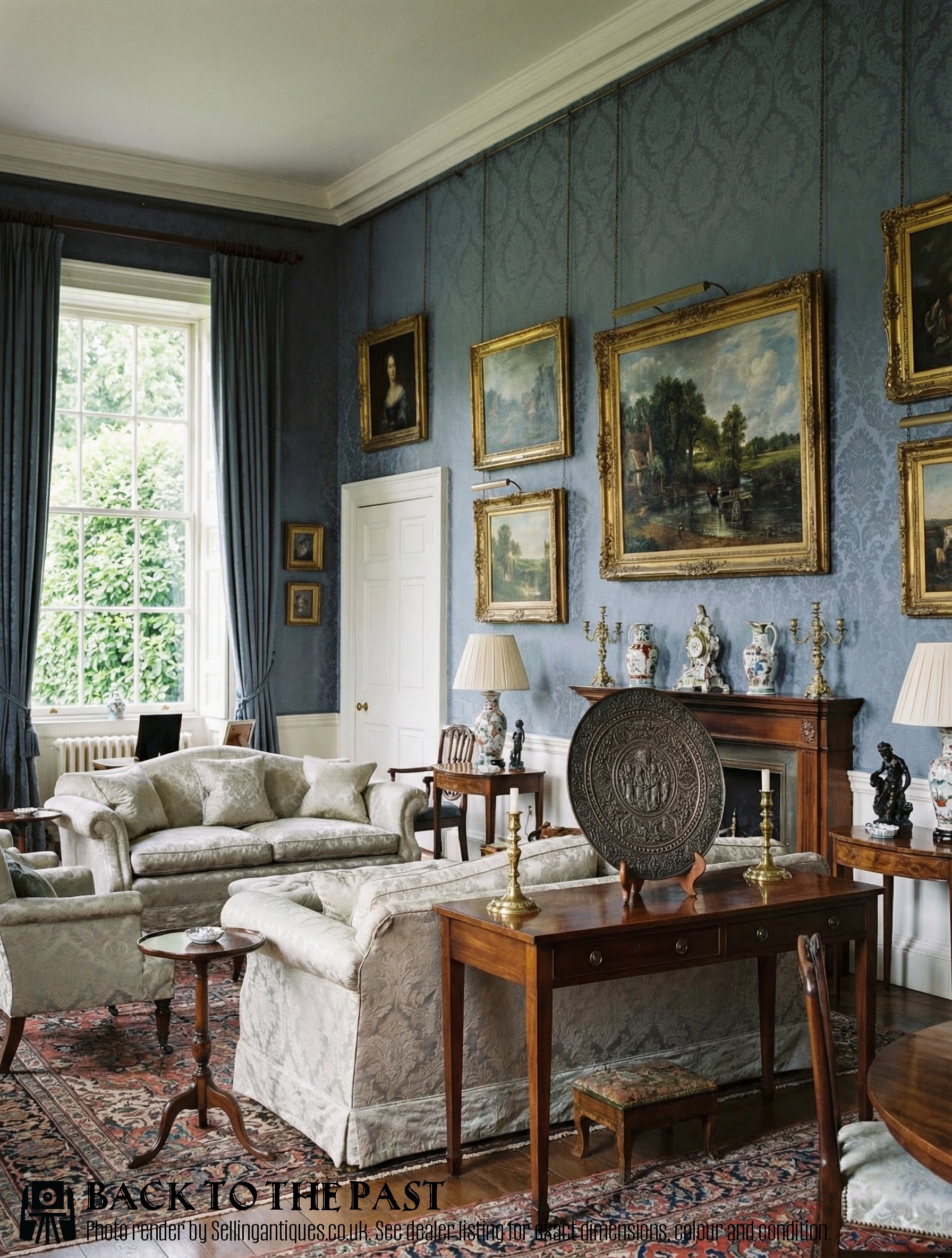
Antique Indian Platter
When you search for an antique Indian platter, you encounter serving trays, wall chargers, salvers, and carved tea platters spanning the Victorian era through the early twentieth century. Anglo-Indian, Kashmiri, Indo-Persian, and Indian Colonial styles dominate the selection, crossing paths with British colonial taste and traditional folk art.
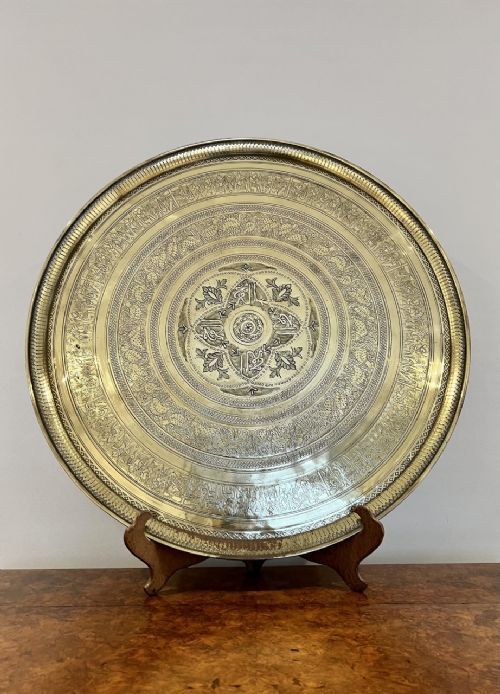
The materials run from solid silver, silver plate, and mixed metal to warm brass, copper, teak, walnut, shisham wood, and papier-mâché. Forms range from broad circular chargers intended for display to footed tazzas, deep dishes, and afternoon tea slides.
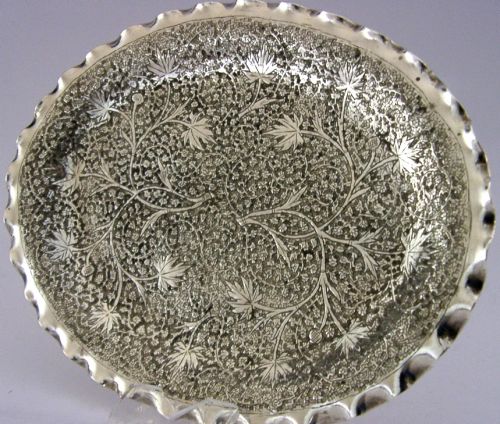
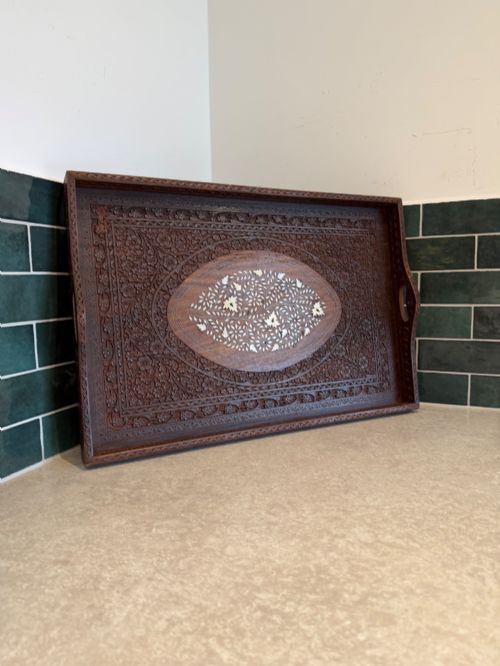
Most pieces date from the nineteenth century up to the nineteen-twenties, reflecting both local domestic production and items brought back during the Raj period. You find heavy repoussé work, hand-piercing, and intricate carving on timber surfaces.
How they were made
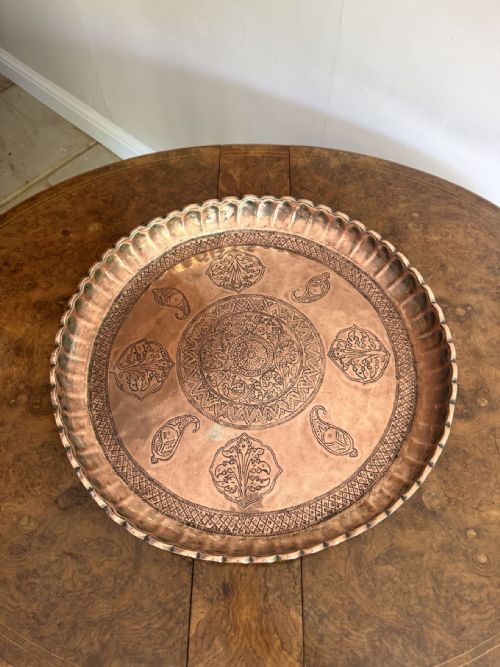
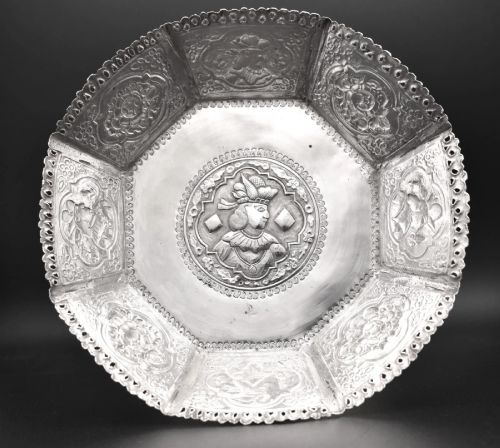
Metal platters rely on hammering, chasing, and repoussé techniques, pushing and shaping copper, brass, and silver from the reverse to create raised decorative motifs. Piercing work cuts delicate openwork patterns through copper and silver-plated surfaces, while mixed metal pieces combine contrasting tones.
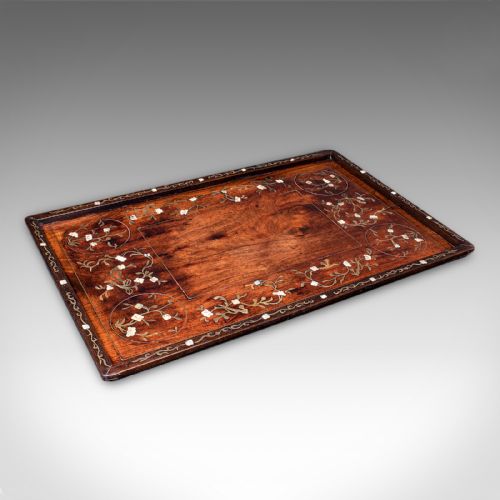
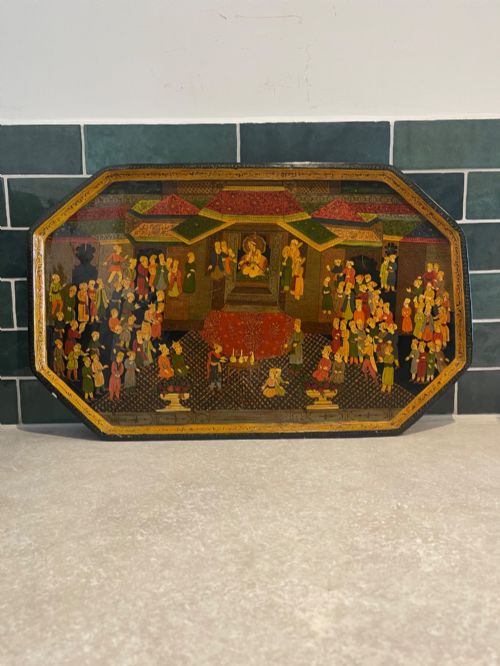
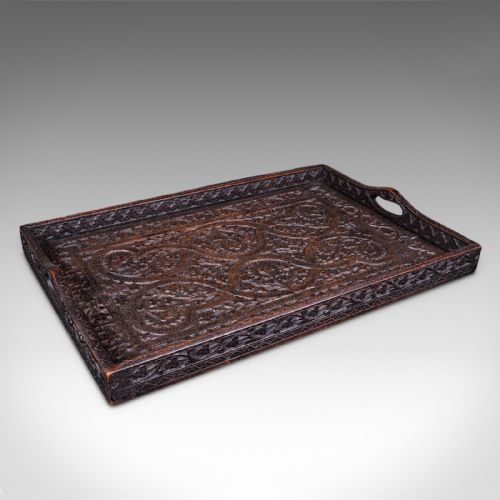
Wooden platters and trays utilise dense timbers like teak, walnut, and shisham wood, shaped by hand carving. Artisans in regions like Kashmir also worked with papier-mâché, applying painted and lacquered finishes to light bases.
One piece includes an afternoon tea slide, proving that Victorian comfort habits travelled comfortably to the subcontinent.
What varies in quality
The depth and crispness of the hand-worked repoussé or carving separate standard production from exceptional examples. Deeper relief, sharper tool marks, and denser surface detail indicate skilled craftsmanship.
The choice of material alters the character, with heavy solid silver, thick gauge copper, and dense carved teak sitting above lighter metals or simple pressed constructions.
The Antique Indian Platter Glossary
- Repoussé
- Metalworking technique where the design is hammered into relief from the reverse side. This creates raised patterns on brass, copper, and silver platters.
- Anglo-Indian
- Style reflecting the cultural intersection of British domestic forms with Indian craftsmanship during the colonial period. It appears frequently in carved teak trays and silver pieces.
- Charger
- A large decorative plate or platter traditionally used for service or display. Many examples feature heavy repoussé work and wall-mounting provisions.
- Tazza
- A shallow bowl or dish raised on a foot or pedestal. These stand out among serving vessels.
- Salver
- A flat tray, usually of silver or silver plate, used for presenting items. Colonial examples often carry engraved or chased decoration.
Antique Indian Platter: Frequently Asked Questions
What is an antique Indian platter used for?
These pieces served variously for afternoon tea, formal presentation, and domestic service, or hung as decorative wall chargers.
Today, buyers utilise them as table centerpieces, serving surfaces, or wall display items.
How do I identify a Raj period platter?
Raj period items often combine traditional Indian motifs like repoussé work and hand-piercing with British utilitarian forms such as afternoon tea slides and salvers.
Materials typically include heavy copper, brass, and solid silver dating from the nineteenth and early twentieth centuries.
Are wooden and metal platters from the same region?
Timber trays often originate from Anglo-Indian workshops using teak, walnut, and shisham wood, while metalwork frequently points to Kashmiri or broader Indian craft traditions.
Papier-mâché pieces are specifically associated with Kashmiri makers.
How should I clean a brass or copper platter?
Metal platters retain their historic character best with minimal intervention, preserving the dark patination accumulated over decades.
Avoid harsh chemical dips that strip away the aged surface appearance of copper and brass.