
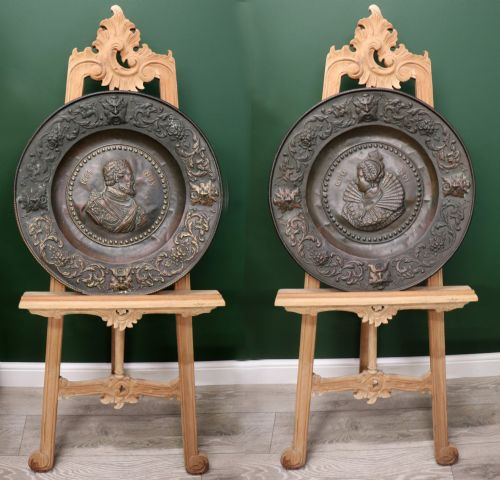


Repousse Wall Plaque
A repousse wall plaque brings deep metallic texture and centuries of decorative craft straight to your interior walls.
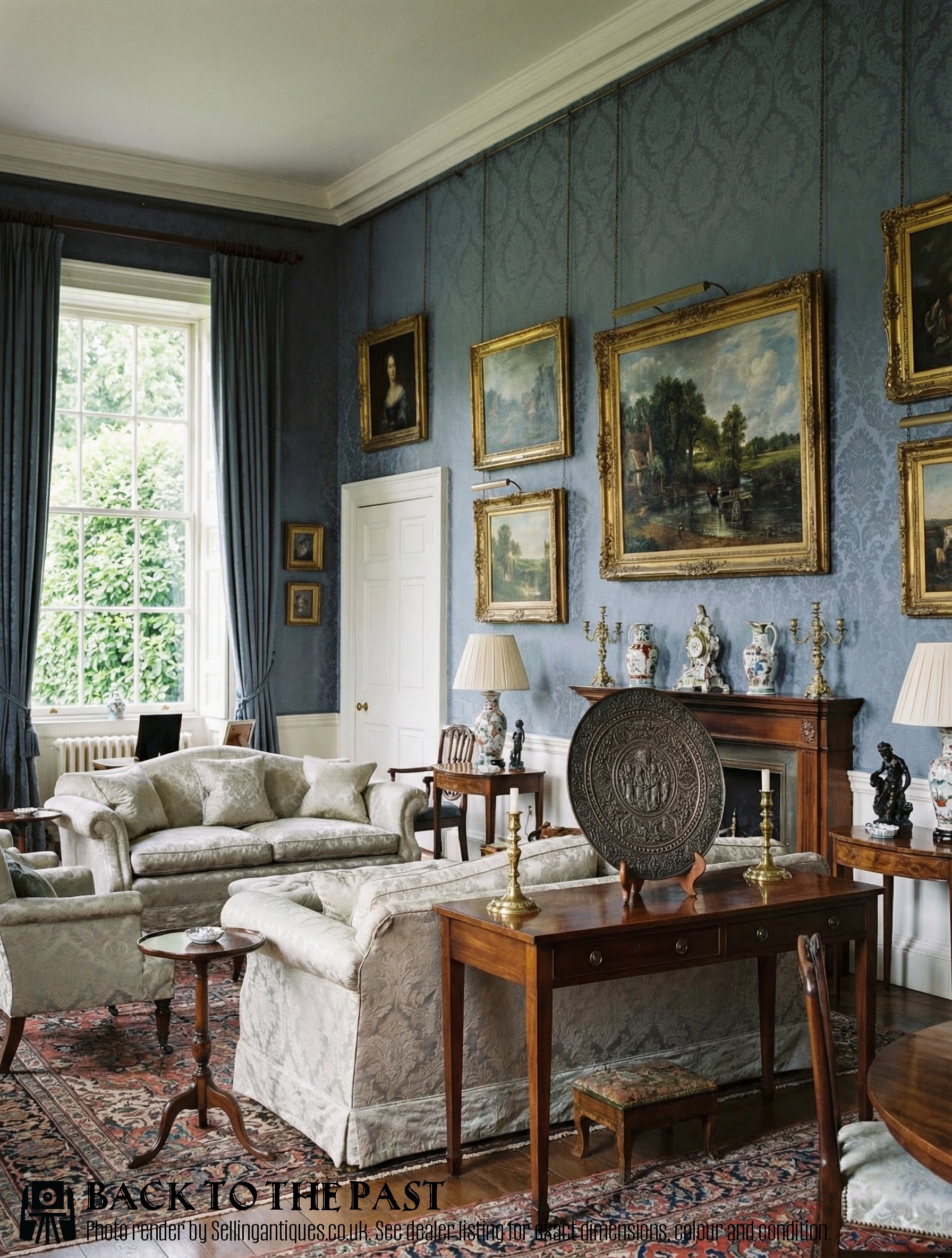
Repousse Wall Plaque
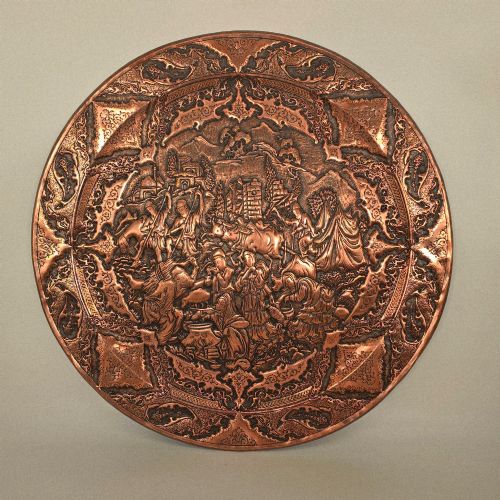
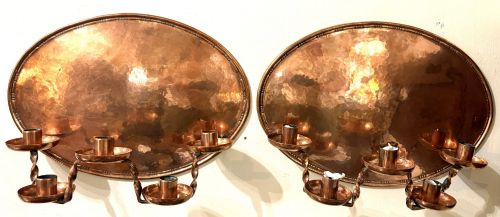
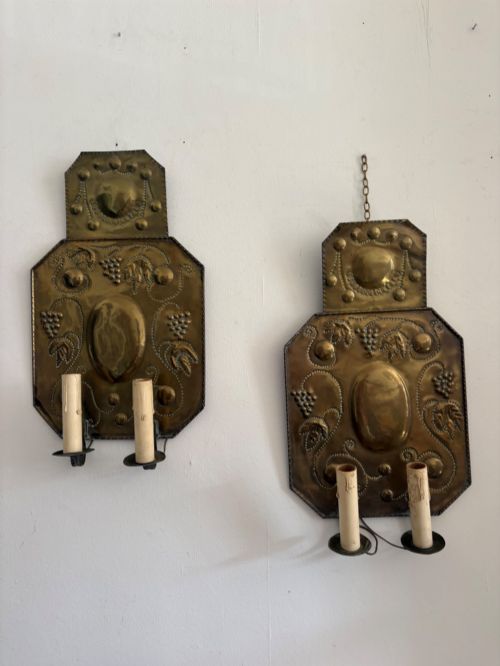
A repousse wall plaque is a decorative metal piece shaped by hammering from the reverse side to create raised designs on the front. On this page, you will most frequently meet round chargers, circular trays, and wall sconces shaped in copper and brass.
The objects span periods from the eighteenth century through to the early twentieth century, taking shape across various global traditions. You will find pieces grouped under styles such as Arts and Crafts, Renaissance Revival, and Indo-Persian designs.
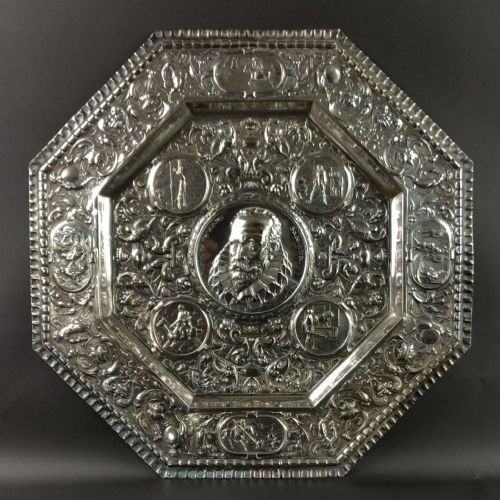
Forms range from large display chargers depicting historical figures like Miguel De Cervantes and Henry IV to botanical patterns and animal motifs. These items function primarily as wall art, mounted individually or displayed in pairs.
Materials and construction methods
Makers utilised malleable metals, predominantly copper and brass, alongside silver plate, bronze, pewter, and electrotype metal. These materials allowed artisans to hammer deep relief work without fracturing the sheet metal.
The technique relies on beating the metal from the rear using specialised punches and hammers while resting the sheet on a yielding pitch bed. Artisans then refined details on the front side through chasing, engraving, and piercing.
Listings feature copper and brass prominently, alongside silver plate, bronze, pewter, and oak across the nineteenth and early twentieth centuries.
Assessing quality in metal relief
The balance of the composition and the skill of the secondary chasing separate standard production items from finer studio pieces. Stronger examples show deliberate hand-beaten marks rather than uniform machine pressing.
Gustav Grohe·Faulkner Bronze Company·Elkington & Co·WMF
The Repousse Wall Plaque Glossary
- Repoussé
- A metalworking technique where the artisan hammers a design from the reverse side to form a raised relief on the front. This method creates three-dimensional depth in flat sheet metal.
- Charger
- A large ornamental plate or dish intended for display on a wall or sideboard rather than for dining use. These items often feature elaborate historical or botanical scenes.
- Electrotype
- A metallic copy produced by electroplating metal onto a mould, capturing fine detail popular in nineteenth-century manufacturing. This process allowed accurate replication of complex historical reliefs.
- Alms dish
- A shallow basin traditionally used in churches for collecting offerings, frequently decorated with embossed or hammered patterns. Many surviving examples date to earlier centuries.
- Chasing
- The complementary metalwork technique performed on the front side of a piece after repoussé work. It refines the contours and sharpens surface lines.
Repousse Wall Plaque: Frequently Asked Questions
How do I hang a repousse wall plaque?
Most chargers and plates feature integrated hanging loops or rims suitable for secure wall mounting brackets. Ensure the fixing matches the weight of the specific metal piece.
Take care to distribute the weight evenly using appropriate fixings to protect the wall and the decorative metal rim.
How do I clean an antique copper plaque?
Dust the surface gently with a soft, dry cloth to remove everyday particles without disturbing the aged patina. Avoid harsh chemical polishes that strip away historical character and colour.
Leaving the natural oxidation intact maintains the visual depth built up over the centuries since manufacture.
What is the difference between brass and copper pieces?
Copper objects typically display a warm, reddish-brown metallic tone and tend to be softer to hammer into deep relief. Brass pieces offer a brighter golden hue and a slightly firmer alloy composition.
Both materials were widely utilised across the nineteenth century for decorative wall art and sconces.
How do I date an antique metal plaque?
Examine the construction marks, the style of the relief work, and the specific motifs used across the design. Arts and Crafts pieces often show distinct hand-beaten textures, while nineteenth-century revival items lean on classical portraits.
Comparing the manufacturing technique against known period styles helps narrow down the decade of production.