



Arts and Crafts Platter
An arts and crafts platter brings hand-wrought metalwork and timber into the home, offering both utility and distinct period character.
Arts and Crafts Platter
When you search for an arts and crafts platter, you are looking at serving trays, decorative chargers, and wall plaques spanning from the Victorian and Edwardian eras into the early twentieth century. These items manifest the design philosophies of the movement through practical household objects that double as striking wall decor.
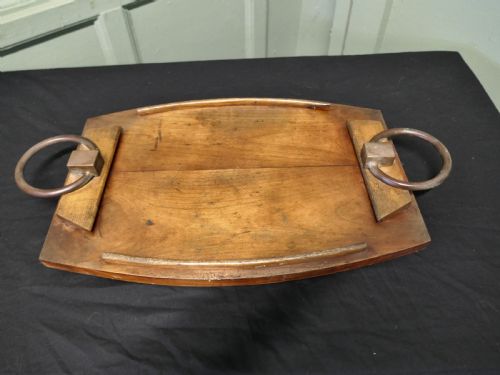
The most common versions met on this page are hand-worked metal chargers and trays rendered in copper, brass, and pewter. Alongside these metal examples, golden elm ship's trays represent the woodworking tradition that parallels the metalworking output of the period.
Origins stretch across designated British craft communities and commercial workshops, linking vernacular domestic items to specific regional aesthetics. Whether utilised for serving drinks or mounted upon a wall, each piece reflects the period's emphasis on material honesty.
How they were made
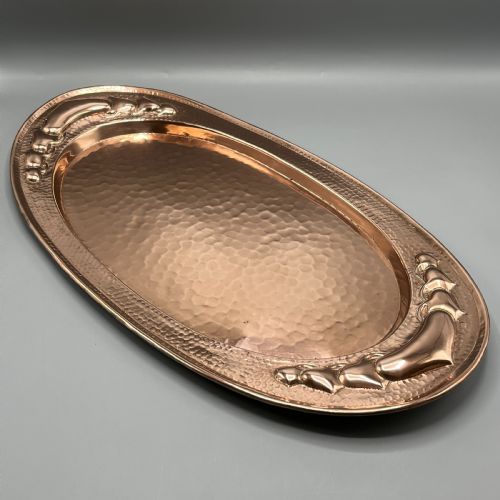
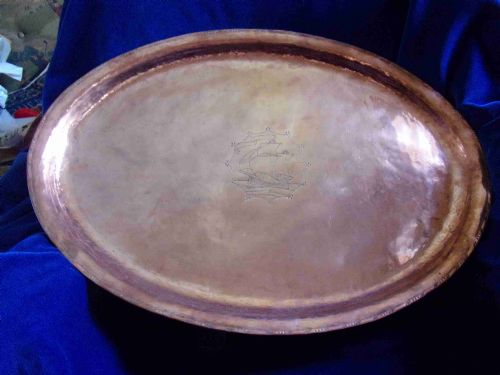
Makers shaped sheet metals like copper, brass, and pewter through hand-hammering and beating techniques that left visible tool marks across the surface. This manipulation of metal created textured finishes and robust rims designed for daily service or wall display.
Repoussé and relief work allowed artisans to push floral motifs, pomegranates, animal subjects, and marine scenes outward from the reverse side of the metal. Such decorative detailing required precise control to achieve balanced compositions around central bowls or fountains.
Timber examples utilised domestic hardwoods such as golden elm, turned and fitted with metal mounts to withstand the demands of shipboard or domestic use.
Three brass fish swim eternally around a central fountain on one Edwardian charger.
What varies in quality
Quality rests upon the depth and crispness of the hand-hammered relief work, distinguishing pieces with sharply articulated pomegranates, foliage, and figurative motifs from flatter, less defined stampings. The confidence of the beating directly dictates the visual impact of the surface.
Proportion and structural integrity separate standard domestic production from finer studio output, particularly in the weight of the metal gauge utilised for the tray base and the execution of twin handles. Substantial gauge thickness ensures the piece holds its form firmly over time.
Hugh Wallis·Liberty and Co·Faulkner Bronze Company·Hukin and Heath
The Arts and Crafts Platter Glossary
- Charger
- A large decorative plate or platter, typically displayed on a wall or sideboard rather than used for active service at the table. These items often feature elaborate repoussé borders and central pictorial motifs.
- Repoussé
- A metalworking technique where the artisan hammers the metal from the reverse side to form a raised design in relief on the front. This method gives arts and crafts metalwork its characteristic tactile depth.
- Pewter
- A malleable alloy traditionally composed of tin alloyed with copper and antimony, favoured during the period for its dull lustre and ease of casting or beating into serving vessels.
- Ship's tray
- A specialised serving tray designed with high rims or secure handles to prevent items from sliding during maritime travel, often constructed from durable timbers like elm.
Arts and Crafts Platter: Frequently Asked Questions
What is an arts and crafts platter?
An arts and crafts platter is a hand-worked serving tray or wall charger produced during the late nineteenth and early twentieth centuries. These items showcase the period's focus on visible craftsmanship through beaten surfaces and natural motifs.
Craftsmen utilised metals like copper, brass, and pewter alongside woods such as elm to create functional items with strong aesthetic value.
How were these metal platters used?
These platters served both practical and decorative purposes in domestic spaces. Many functioned as serving trays for drinks and food, while larger chargers were hung on walls as decorative plaques.
The robust construction of the metal allowed them to withstand regular handling while adding texture to household interiors.
How do I live with one?
Living with these pieces involves integrating their distinct patinas into modern or traditional interiors. Copper and brass pieces develop natural tones over decades of exposure to air and light.
Wall-mounted chargers should be hung securely using appropriate fixings to support the weight of the heavy metal plates safely.
How can I tell periods apart?
Distinguishing periods relies on observing stylistic shifts from Victorian eclecticism through Edwardian design to later modernist influences. Early pieces often lean heavily toward naturalistic floral and animal motifs.
Later examples from the 1920s and 1930s sometimes incorporate silver plating and cleaner lines associated with cocktail culture and changing tastes.