




Copper Serving Platter
A copper serving platter brings warmth and hand-hammered character to the table, and this selection ranges from Victorian presentation pieces to Arts and Crafts designs.
Copper Serving Platter
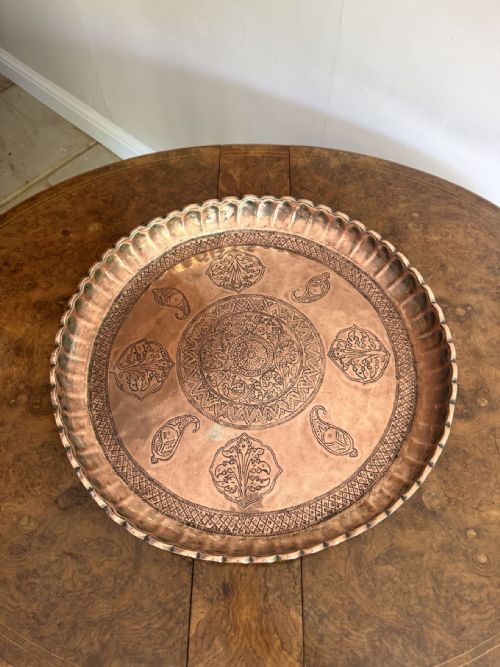
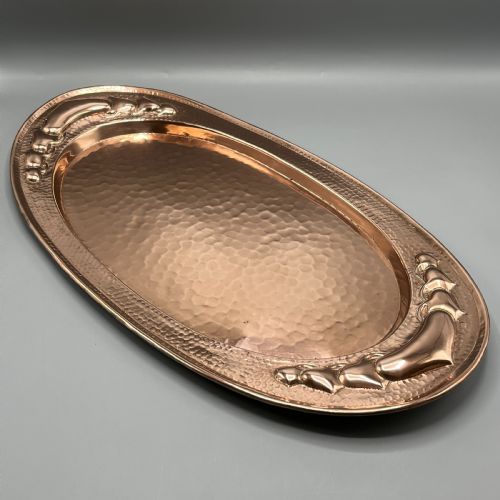
A copper serving platter unites utility with decorative metalwork across various historical periods, frequently appearing as large circular chargers and two-handled trays. You will most commonly encounter pieces originating from the Victorian era and the Arts and Crafts movement.
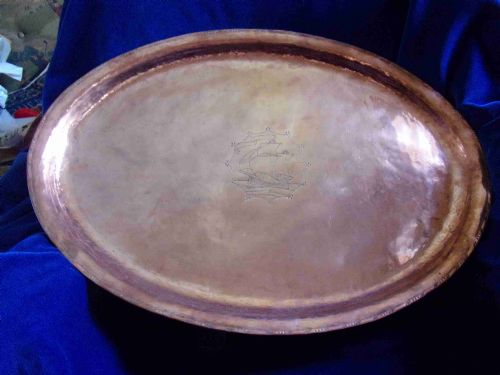
The forms span simple oval serving platters with pie crust edges alongside highly decorative presentation trays. Makers from different traditions utilised the malleable nature of the metal to create functional vessels for the home.
Geographic influences stretch from English workshops to Middle Eastern, Persian, and Japanese studios. This global reach means a copper serving platter might feature traditional European floral relief or intricate foreign engraving.
Materials and methods
These items rely primarily on copper, often combined with silver plate, brass, bronze, and mixed metals to create contrasting surface tones. Artisans shaped the base metal by hand before applying decorative surface treatments.
Repoussé and chased techniques dominate the ornamentation, pushing the metal from the reverse to create raised floral and figural motifs on the face. Some examples incorporate cloisonné enamel or pierced openwork alongside engraved detailing.
Leaping koi fish swim across Japanese enamel trays alongside everyday English tea platters.
Distinguishing the work
Quality rests upon the depth and precision of the hand-worked surface decoration rather than plain metal thickness. Skilled repoussé work displays crisp, deliberate lines and well-defined relief rather than flat, machine-pressed stamping.
The integrity of the construction, especially around handles and pie crust edges, separates standard utility trays from masterwork chargers. Superior pieces maintain balanced proportions and harmonious integration of mixed metals or enamel inlays.
Hugh Wallis·Newlyn
The Copper Serving Platter Glossary
- Repoussé
- A metalworking technique where the artisan hammers the design from the reverse side to create a raised image on the front. This method gives Arts and Crafts copper trays their tactile, dimensional quality.
- Cloisonné
- An ancient technique for decorating metal object surfaces, using vitreous enamel held within thin metal wire compartments. Japanese pieces from the Meiji period frequently employ this detailed process.
- Charger
- A large ornamental platter used traditionally for ceremonial display or beneath smaller course plates. These substantial pieces often feature extensive engraved or chased decoration.
- Pie crust edge
- A decorative, fluted or scalloped rim shaped along the perimeter of a tray. This traditional edge adds structural rigidity and visual movement to circular and oval vessels.
Copper Serving Platter: Frequently Asked Questions
What is a copper serving platter used for?
These pieces served historically for presenting food, carrying drinks, or acting as decorative wall chargers in the home. They combine robust utility with ornate surface artistry suited to formal dining.
Today, they function well as centrepieces, serving surfaces for special occasions, or wall-hung decorative panels that showcase period metalwork.
How do I identify an Arts and Crafts copper tray?
Arts and Crafts examples typically display hand-hammered surfaces, organic Art Nouveau motifs, and visible maker signatures or guild marks. The construction emphasises artisan craftsmanship over industrial uniformity.
Look for honest tool marks, riveted handles, and stylized floral or faunal reliefs that define the aesthetic of the period around nineteen hundred.
Are these platters safe for serving food?
Many antique copper vessels were manufactured purely for presentation, decorative display, or dry goods rather than direct food contact. Some interior surfaces feature protective lacquers or historical tarnish that makes them unsuitable for wet foods.
Check the surface condition and lining before using any antique metal tray for serving unwrapped food items.
How do I care for antique copper?
Maintenance involves gentle cleaning to preserve the natural patina rather than aggressive polishing down to bright pink metal. Avoid harsh chemical abrasives that strip away the historical surface character.
Dust with a soft cloth and consult a specialist metal restorer if deeper cleaning becomes necessary to protect delicate repoussé or silver-plated areas.