




Copper Brass Decorative Dish
These copper brass decorative dish examples bring together mixed metals, intricate inlay, and regional motifs from the nineteenth century.
Copper Brass Decorative Dish
A copper brass decorative dish brings together metalwork forms spanning decorative trays, chargers, bowls, and wall plates. When searching for a copper brass decorative dish, buyers encounter items ranging from large circular trays to footed bowls and presentation chargers. The selection draws heavily on Victorian origins, Middle Eastern workshops, and the Meiji period.
Most entries on this page originate from the late nineteenth century, including pieces attributed to the Newlyn School and Japanese cloisonne enamel workshops. Forms vary from flat chargers and platters to deep bowls and planters. Each object utilises mixed metals to create visual depth across the surface.
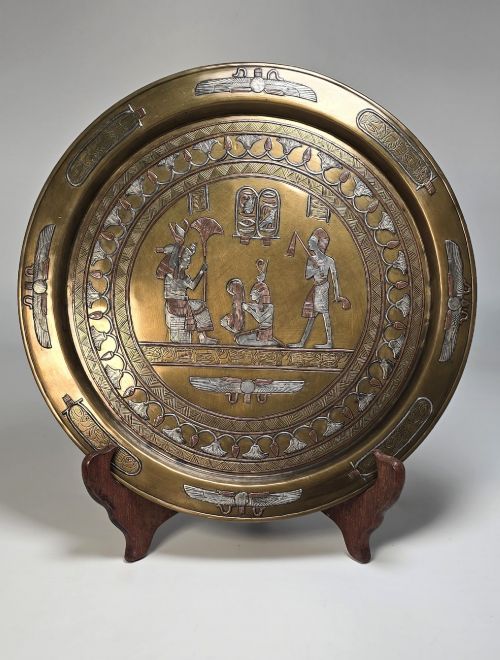
Regional styles dominate the offerings, covering Egyptian Revival, Persian, Syrian, and Islamic metalwork aesthetics alongside Japanese motifs. Buyers frequently find mixed-metal dishes featuring birds, animals, or complex geometric patterns. These items served both decorative functions and presentation roles in their original settings.
Materials and construction
Makers utilised combinations of copper, brass, bronze, and silver inlay to build contrast across the surface of each vessel. Hammered brass and patinated copper form the foundation for many trays and chargers. Artisans added depth through hand-piercing, engraving, and mixed-metal application.
Japanese pieces rely on cloisonne enamel work, fixing coloured glass pastes within wire cells upon a metal base. Middle Eastern and Cairo ware items incorporate silver inlay into dark patinated copper or brass bodies. Some vessels feature gold inlay alongside bronze and mixed-metal elements.
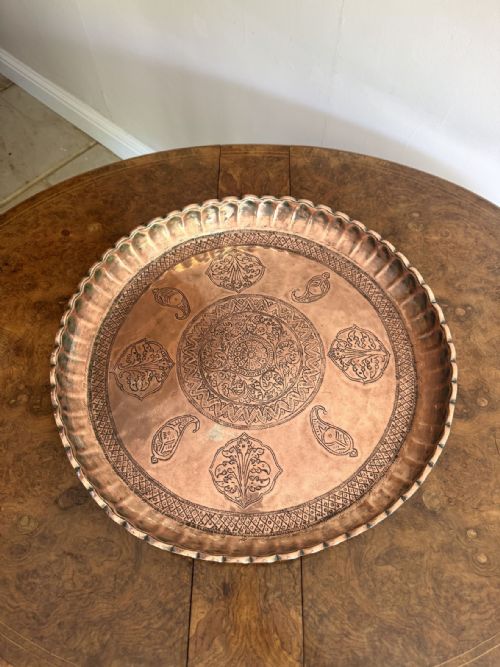
Techniques varied by region, from the hammered surfaces associated with British arts and crafts production to the precise inlay of Persian and Egyptian workshops. Artisans shaped sheet metal into large circular chargers and deep decorative bowls. The resulting objects display both structural integrity and fine surface detail.
Copper Brass Decorative Dish Retail Price Guide 2026
Typical asking prices for copper brass decorative dish among the pieces listed under this phrase on Sellingantiques today, from the lower quarter to the upper quarter. They describe what is for sale here now, not the wider market.
Listings incorporate items dated across the Victorian era, the Meiji period, and the Indian Raj, demonstrating diverse international metalworking traditions.
Judging the range
Quality separates through the crispness of the hand-piercing, the precision of the silver inlay, and the complexity of the surface motifs. Superior examples maintain clear separation between inlaid metals without blurring at the edges. Plain hammered surfaces rely entirely on the purity of the form and the depth of the patina.
Japanese cloisonne items depend on the evenness of the enamel work and the complexity of the pictorial subject, such as birds or Mount Fuji. Middle Eastern and Cairo ware pieces achieve higher status when the silver and mixed-metal inlay covers the surface in dense, deliberate patterns. Lesser pieces show simpler decoration and less refined metal junctions.
The integration of the materials dictates the overall success of the piece. Where copper, brass, and silver work together cohesively, the object demonstrates greater artisan skill. Surface wear affects lower tiers, whereas top-tier examples preserve their original patination and inlaid details intact.
The Copper Brass Decorative Dish Glossary
- Charger
- A large ornamental plate or dish used historically for presentation or display rather than dining. These wide vessels provide a large canvas for engraved or inlaid metalwork.
- Cloisonne
- An enamel technique where thin metal wires are soldered to a metal base to create compartments, which are then filled with coloured glass paste and fired. This method produces vivid, detailed imagery.
- Cairo Ware
- Late nineteenth-century metalwork produced in Egypt, typically constructed from brass with dense silver and copper inlay in Islamic geometric styles. European travellers frequently purchased these items during the Grand Tour.
- Patination
- The natural or induced ageing of a metal surface that alters its colour and sheen over time. Collectors value stable patination for the historical depth it imparts to copper and brass.
Copper Brass Decorative Dish: Frequently Asked Questions
How do I clean antique copper and brass?
Antique copper and brass generally require minimal intervention to preserve their historic patination. Gentle dusting with a soft cloth prevents dust accumulation without removing the surface finish.
Avoid aggressive metal polishes that strip away age and character. Preserving the original patinated surface maintains both the historical integrity and the visual depth of the piece.
What is Komai style metalwork?
Komai style metalwork originates from Japanese artisans who inlaid gold and silver onto a dark iron or copper base. This technique creates intricate, pictorial designs resembling traditional paintings.
Named after the famous Kyoto workshop family, these pieces often depict landscapes, deities, or dragons with remarkable precision.
Were these dishes used for dining?
Large chargers and decorative plates were primarily intended for display, wall mounting, or presentation rather than holding food. Their elaborate silver inlay, piercing, and enamel work made them unsuited for regular utility.
Smaller bowls and jardiniere dishes served functional roles for holding plants or decorative items within nineteenth-century interiors.
How can I tell Japanese export pieces apart?
Japanese export pieces from the Meiji period typically feature distinct stylistic markers such as cloisonne enamel, bronze mixed-metal applications, or finely detailed imagery like Mount Fuji and local flora. Signatures or marks often appear on the reverse of chargers.
In contrast, Middle Eastern and Indian Raj items rely heavily on engraved copper, brass piercing, and geometric silver inlay rather than enamel work.