


Copper Planter Bowl
These copper planter bowls combine utility and display, offering deep metallic warmth for plants and interiors.
Copper Planter Bowl
A copper planter bowl serves as a vessel for greenery or as a decorative centrepiece, drawing on forms from cookware to wine cisterns. When you search for copper planter bowl, you encounter diverse domestic and display objects spanning the eighteenth, nineteenth, and early twentieth centuries.
The pieces on this page appear in styles ranging from Georgian and Victorian Country to Arts and Crafts and Japanese Mingei. You frequently meet jardiniere forms, heavy grain measures, and pedestal bowls alongside utilitarian pans adapted for display.
Origins stretch across British, Italian, and Japanese traditions, showing how utilitarian metalwork crosses domestic and ornamental boundaries. Each period brings distinct construction details, from early riveted seams to later decorative cabochon settings.
Materials and construction
Makers formed these pieces primarily from solid copper, frequently pairing the metal with iron, brass, or wrought iron for handles, stands, and structural reinforcement. Wood, ceramic, and enamel also appear as supporting elements in specific regional traditions and decorative styles.
Construction techniques include hand-beating, riveting, and casting, depending on whether the vessel originated as utilitarian cookware or a dedicated jardiniere. Riveted joints provide structural strength on heavy storage and planting vessels, while pedestals and stands elevate the main bowl.
Grain measure number six lived a hard life before becoming someone's favourite flowerpot.
Judging quality in copper vessels
Quality rests on the weight of the metal and the integrity of the construction, where heavy-gauge copper and secure riveting distinguish superior pieces from lighter items. Form and proportion also dictate standing, as balanced proportions elevate vessels originally made for utilitarian tasks.
Artisanal detail separates standard domestic wares from exceptional decorative pieces, particularly in Arts and Crafts examples featuring applied cabochons or specialised stands. Patina and surface finish reflect age and usage, contributing to the visual depth of the metal.
The Copper Planter Bowl Glossary
- Jardiniere
- An ornamental pot or stand for holding flowers or plants. These vessels often feature decorative handles or feet for interior display.
- Hibachi
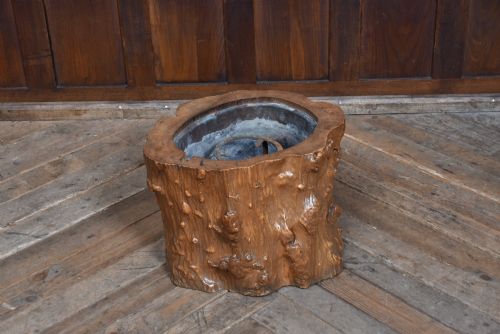
- A traditional Japanese heating device or bowl, typically constructed from wood and metal. They function well as low planters or decorative bowls in contemporary spaces.
- Wine cistern
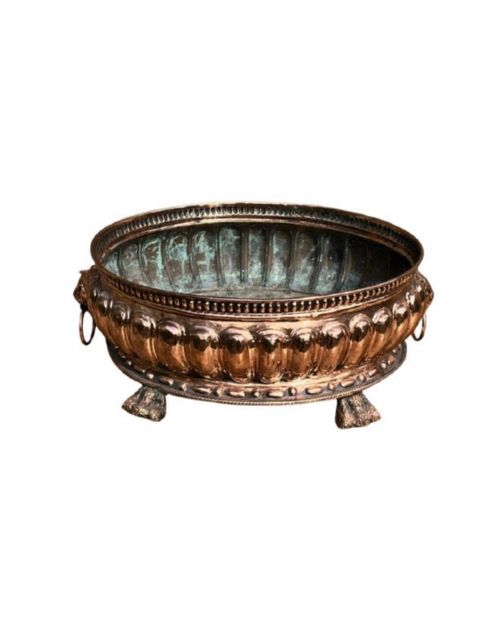
- A large vessel historically used for cooling wine bottles. Their generous proportions make them suitable as deep planter bowls.
- Cabochon
- A gemstone polished rather than faceted. In Arts and Crafts copper bowls, these stones provide ornamental colour contrast against the metal.
- Mingei
- Japanese folk art movement valuing utilitarian objects made by nameless craftsmen. Pieces from this tradition emphasise honest materials and practical form.
Copper Planter Bowl: Frequently Asked Questions
What is a copper planter bowl?
A copper planter bowl is a metal vessel used to hold plants, flowers, or decorative items, drawing on historic forms such as jardiniere bowls, wine cisterns, and heavy pans.
These pieces range from utilitarian nineteenth-century containers to decorative Arts and Crafts bowls, combining practical metalworking with warm interior display.
How were antique copper bowls used?
Historically, vessels of this metal served diverse domestic roles, including grain measurement, cooking, wine cooling, and heating.
Over time, many heavy pans and cisterns transition into decorative plant holders and tabletop centrepieces within domestic interiors.
How do I style a copper planter bowl?
You can place these bowls on tables, stands, or fireplace hearths, using their warm metallic tones to contrast with green foliage or neutral interiors.
Pairing pedestals or Arts and Crafts bowls with traditional or industrial furnishings highlights their handcrafted origins and material depth.
How can I tell the period of a copper bowl?
Dating relies on observing construction methods, such as hand-riveting techniques, along with stylistic details associated with Georgian, Victorian, or Arts and Crafts periods.
Materials like added iron handles, wood elements, or ceramic cabochons provide further clues regarding the workshop origin and manufacturing era.