


Verdigris Copper Vessel
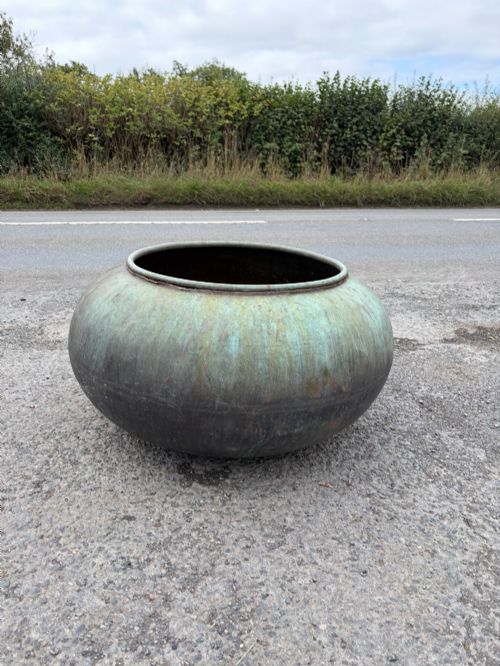
These verdigris copper vessel examples bring utilitarian warmth and weathered garden presence to interiors.
Verdigris Copper Vessel
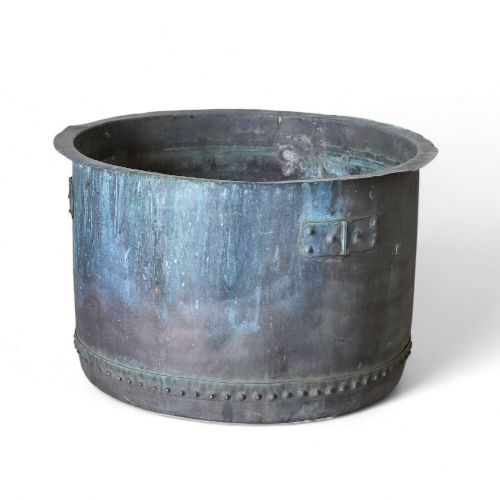
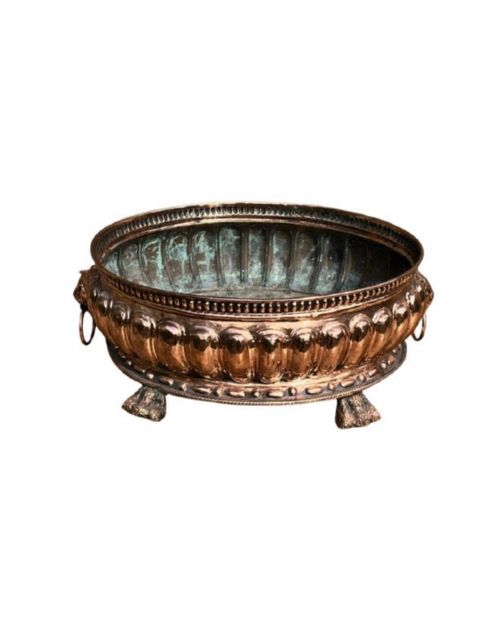
A verdigris copper vessel brings a rich green natural surface to practical utility forms originating from the nineteenth century. Buyers searching this phrase look for heavy garden display pots, cheese vats, jardiniere bowls, log bins, and heavy buckets showing considerable age.
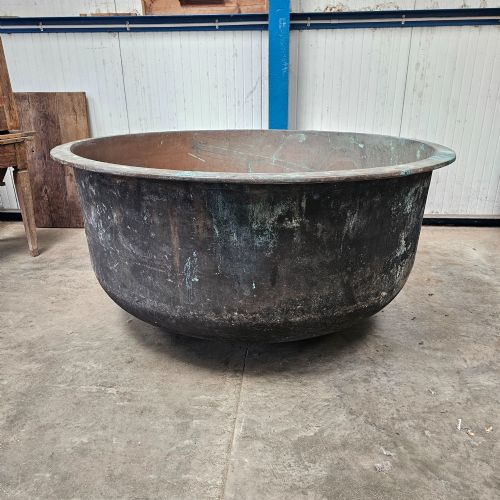
Most examples found on this page date to the nineteenth century, including Victorian pieces and French provincial or country pieces. Forms span from utilitarian boilers and coppers to decorative planters and troughs created for practical work.
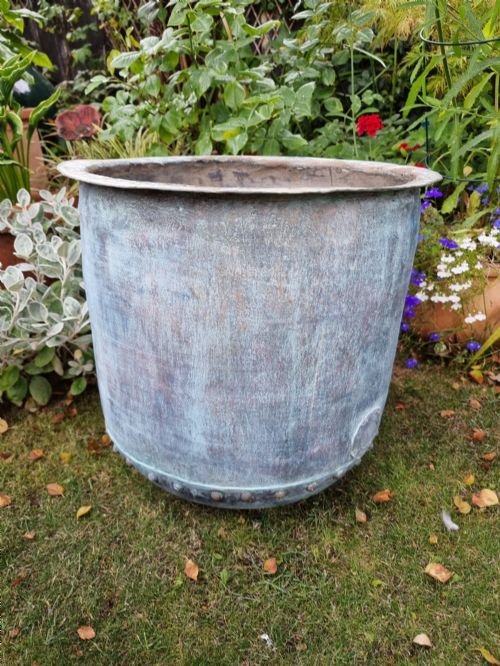
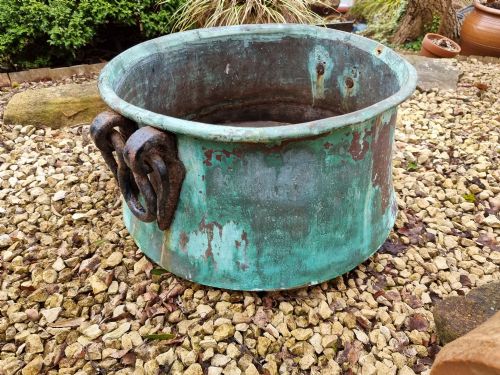
The objects are primarily heavy copper containers that have developed verdigris finishes through weathering in gardens or workshops over many decades. They function today as plant containers, log holders, and decorative display items.
How they were made
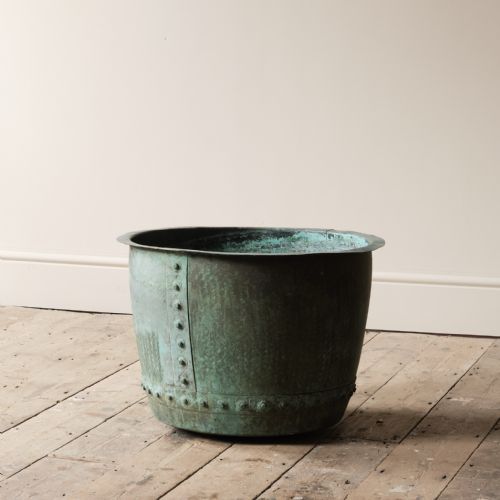
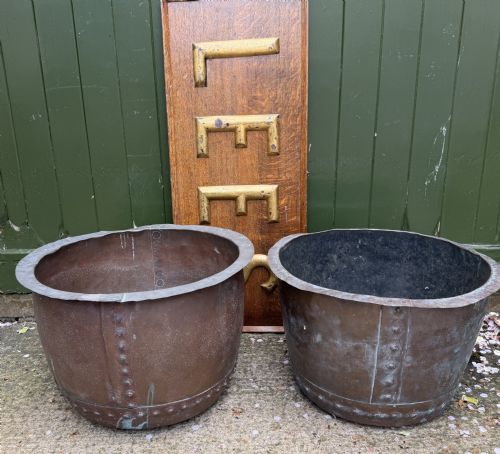
Construction relies heavily on sheet copper joined with hand-riveted seams that showcase robust industrial methods. Makers reinforced rims and bases with iron or brass bands to handle heavy loads of water, cheese curd, or logs.
The distinct verdigris surface develops naturally through exposure to the elements over a century or more, interacting with moisture and air. Hand-beaten shaping gave these utilitarian vessels their generous curved bodies and flat stable bases.
Some nineteenth-century cheese vats now hold houseplants instead of curd, proving that heavy dairy work makes exceptional interior decor.
What varies in quality
Quality rests in the depth of the natural verdigris patination and the integrity of the hand-riveted construction. Vessels displaying crisp riveted joints alongside deep, undisturbed surface weathering sit at the higher end.
Proportion and scale dictate desirability, particularly with massive garden display pots and cheese vats compared to standard domestic buckets. Examples retaining their original heavy iron handles or brass fittings hold stronger architectural presence.
The Verdigris Copper Vessel Glossary
- Verdigris
- A green patina formed naturally on copper, brass, or bronze through atmospheric weathering over long periods. This chemical layer provides both protection to the metal and visual depth.
- Patina
- The surface sheen and coloration developed on metal through age, use, and exposure to the environment. Good patination shows genuine organic wear rather than artificial chemical treatments.
- Cheese Vat
- A large vessel utilised in dairy production for holding and processing milk into curds. Their substantial industrial scale makes them ideal repurposing candidates for modern garden planters.
- Riveted
- Joined together using metal bolts or pins hammered flat at the ends to secure heavy overlapping plates. This technique ensures durable construction across nineteenth-century utilitarian hardware.
Verdigris Copper Vessel: Frequently Asked Questions
How do I clean a verdigris copper vessel?
Wash the surface gently using warm water and a soft cloth to remove accumulated dust without disturbing the underlying green patina. Avoid abrasive scouring pads and chemical polishes that strip away the aged verdigris finish.
Dry the metal thoroughly after cleaning to preserve the historic surface character. Leaving the natural weathering intact maintains both the visual appeal and the historical integrity of the piece.
Can I use these vessels outdoors?
Many of these pieces served originally as garden display pots, planters, and coppers designed to withstand outdoor conditions. Copper handles moisture well and develops further character when exposed to the elements.
Protect vulnerable indoor pieces from freezing water during winter if used outside as plant containers. Ensuring proper drainage prevents standing water from stressing historical riveted seams.
How can I date a nineteenth-century copper vessel?
Examine the construction methods, paying attention to hand-beaten sheet metal and irregular hand-driven rivets. Nineteenth-century items often display robust utilitarian forms built for heavy agricultural or industrial tasks.
Look for tool marks and maker characteristics typical of Victorian workshop production rather than modern machine stamping. Natural verdigris accumulation also points towards extended historical exposure.
What is the difference between a log bin and a planter?
Log bins and planters share sturdy nineteenth-century copper and iron construction but differ largely in their functional context. Planters often feature wider rims and drainage adaptations suited for holding soil and growing plants.
Log bins typically prioritise deep, stable cavities for holding firewood near a hearth. Many surviving examples cross over between both uses depending on current interior needs.