




Copper Kitchen Pot
These copper kitchen pot items bring heavy gauge metal and historic utility straight to the work surface.
Copper Kitchen Pot
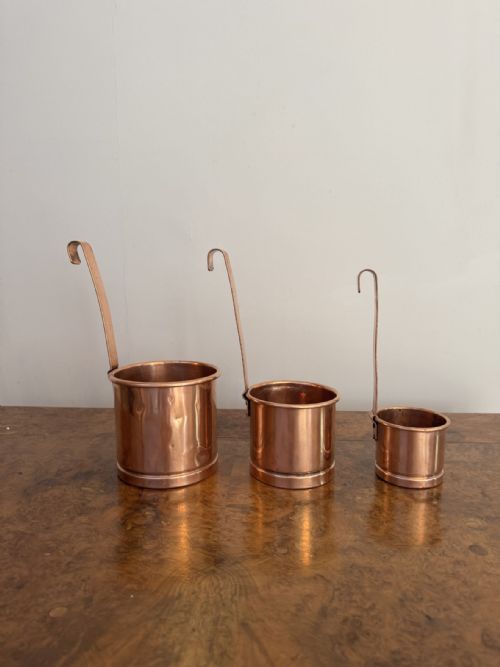
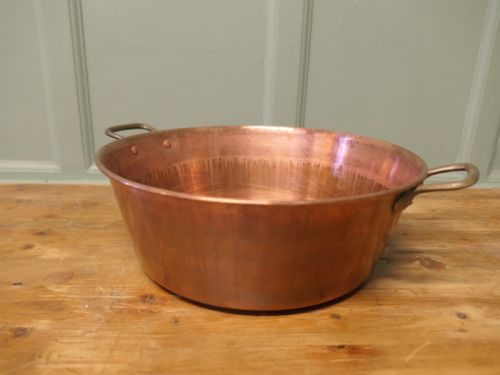
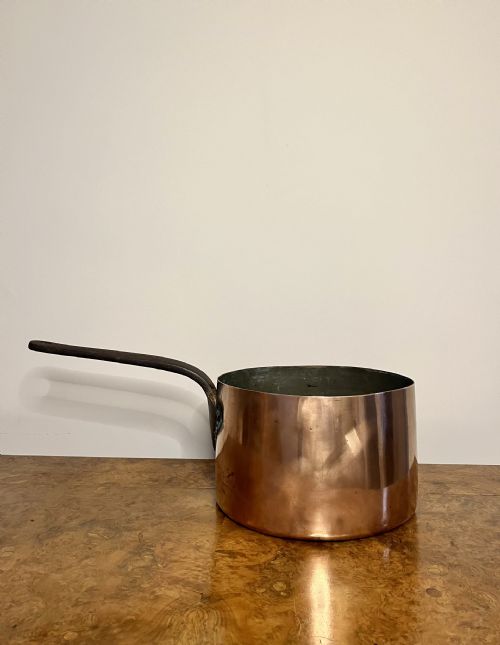
A copper kitchen pot search brings up sturdy cookware and kitchenalia forged in Georgian, Victorian, and nineteenth-century workshops. The items most likely to be met on this page include saucepans, jam pans, kettles, and multi-piece sets hailing from English and French country traditions.
Forms range from single handled saucepans and cream setting pans to large double handled vessels and tea kettles. They span utilitarian kitchenware designed for daily heat and the heavier measures or pans bearing maker stamps.
How they were made
Vessels are constructed primarily from beaten copper, frequently paired with brass handles, iron fittings, or wrought iron attachments. Interiors typically feature a protective tin lining, while sturdy joints use traditional riveting and heavy casting.
Makers shaped sheet copper into deep cooking pots and pans, incorporating turned wooden handles on specific coffee pots or cast handles on heavy saucepans. The integration of brass and cast iron adds structural support to the softer copper body.
Current listings feature copper, brass, iron, cast iron, tin, and wrought iron across Georgian and Victorian periods.
What varies in quality
The distinction between ordinary utility wares and finer examples rests on the weight of the metal and the integrity of the construction. Thicker gauge copper holds its shape better under intense heat and sustained use.
Stamped maker marks, original handles, and matched sets elevate certain pieces above anonymous single vessels. Surviving interior tin linings and crisp hand-beaten seams also separate well-preserved kitchenalia from heavily worn items.
Hodges and Sons·Liptons·Griffiths
The Copper Kitchen Pot Glossary
- Kitchenalia
- Domestic utensils and equipment collected for their historic character. These items formed the working heart of historic kitchens before modern appliances took over.
- Jam pan
- A wide, open vessel designed for fruit preservation and sugar boiling. They often feature large double handles for lifting heavy loads of boiling fruit.
- Tin lining
- A protective metallic coating applied to the interior of copper cookware. This layer prevents copper from reacting with acidic foods during cooking.
- Cream setting pan
- A shallow vessel used in dairying to let cream rise to the surface of milk. They represent the specialised domestic duties of nineteenth-century farmhouses.
- Georgian
- The period spanning the reigns of the first four British monarchs named George. Pieces from this era show characteristic eighteenth- and early nineteenth-century handcraft methods.
Copper Kitchen Pot: Frequently Asked Questions
Are antique copper pots safe for cooking?
Many historic vessels require a renewed tin lining before they can safely touch food again. Without this protective barrier, copper can leach into acidic ingredients.
Buyers who plan to use their cookware should check the interior state carefully. Displaying them unlined remains a popular alternative for historic kitchenalia.
How do I clean antique copper?
Traditional cleaning relies on mild acidic pastes to lift tarnish without scratching the soft metal. Avoid harsh abrasives that wear away the historic surface.
Many collectors prefer leaving a warm patina on older pieces rather than polishing them to a mirror finish. Gentle washing with soapy water suffices for regular upkeep.
How can I tell a Georgian pot from a Victorian one?
Georgian pieces often display simpler, hand-beaten construction with distinct dovetail seams and heavy wrought iron handles. Their forms tend toward utilitarian cooking pots and early kettles.
Victorian items frequently introduce stamped maker names, patent marks, and standardised multi-piece sets. Brass handles and reinforced rims become more common in the later nineteenth century.
What were cream setting pans used for?
Cream setting pans sat in dairies to allow fresh milk to settle. The wide, shallow shape helped the cream separate naturally from the skimmed milk below.
These specialised vessels highlight the rural domestic economy of the nineteenth century. They make striking decorative bowls in modern country kitchens.