
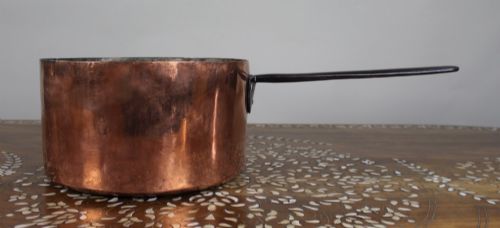
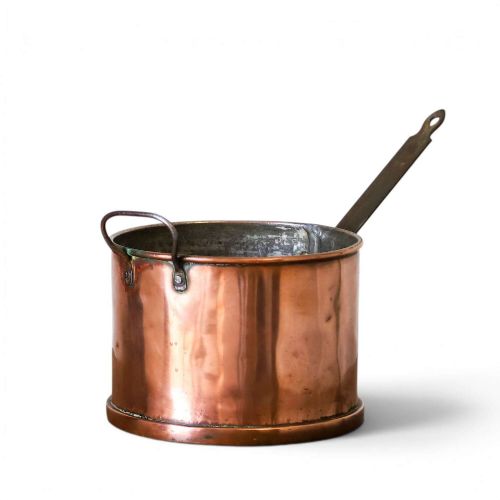


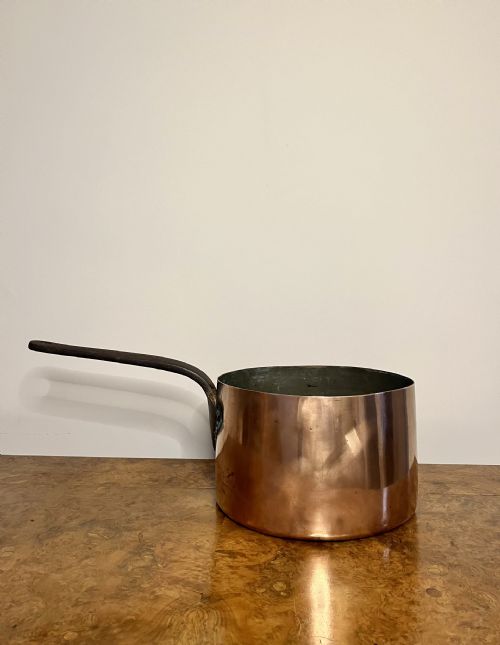


Copper Saucepan Iron Handle
These copper saucepan iron handle pieces are robust historic cookware built for real hearth cooking, prized by collectors and working kitchens alike.
Copper Saucepan Iron Handle
A copper saucepan iron handle search reveals heavy kitchen vessels originating from the Georgian and Victorian eras, often found as single large pans or matched sets.
Most examples hail from the nineteenth century or the French Country tradition, shaped as utilitarian cookware designed for serious culinary tasks.
Buyers encounter individual pint measures alongside expansive sets of four or five pans, spanning both English workshops and French provincial kitchens.
How they were made
Makers formed the bodies from sheet copper, sometimes hand-beaten to heavy gauge standards, and paired them with sturdy iron or wrought iron handles.
Interiors typically received a protective lining of tin to prevent the copper from reacting with food during cooking.
Some vessels incorporate cast iron elements or brass attachments to secure the handle firmly to the main copper body.
Some pans still carry faint soot marks from nineteenth century coal fires, proving they earned their keep long before reaching the mantelpiece.
What varies in quality
The distinction between standard kitchenalia and superior pieces rests on wall thickness, weight, and the crispness of any maker stamp.
Substantial heavy gauge metal and balanced proportions elevate certain pans above ordinary utilitarian wares.
Hodges and Sons·Liptons·Griffiths
The Copper Saucepan Iron Handle Glossary
- Gauge
- The thickness of the metal sheet used to form the pan body. Heavy gauge examples endure repeated thermal use better than thin alternatives.
- Hand-beaten
- A surface finish showing the manual hammer marks of the artisan. This method hardens the copper during shaping.
- Tin lining
- A protective interior coating applied to copper cookware. It separates the food from the reactive copper surface.
- Wrought iron
- A tough, fibrous iron alloy used for handles. It resists bending under heavy loads.
Copper Saucepan Iron Handle: Frequently Asked Questions
Can I still cook with a vintage copper pan?
Many historic pans remain structurally sound for modern use provided the interior tin lining is intact and clean. Cooks often test them on traditional hobs before regular duty.
Buyers should verify the condition of the metal and handle joints to ensure safe handling of hot liquids.
How do I date an old copper saucepan?
Handle attachments, dovetail seams, and maker stamps help narrow down the production period. Georgian and Victorian examples display distinct construction methods compared to later kitchenware.
Archival records and maker marks often provide a clearer window into the exact decade of manufacture.
Why do these pans have iron handles?
Iron provided the necessary strength and rigidity to lift heavy quantities of liquid without flexing. Wrought iron or cast iron also tolerated direct hearth heat well.
Copper alone would be too soft for a long leveraged handle supporting a heavy filled vessel.
Are sets rarer than individual pans?
Matched sets surviving together from the nineteenth century appear less frequently than single orphaned pans. Kitchen use naturally scattered individual pieces over generations.
Complete groupings demand greater attention from collectors seeking a unified display.