




Vintage Copper Saucepan
These vintage copper saucepan examples span Georgian, Victorian, and nineteenth century French workshops, offering practical kitchen heritage and warm metallic display.
Vintage Copper Saucepan
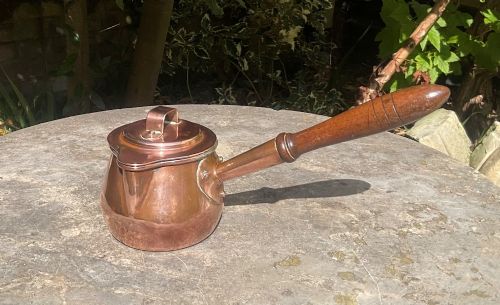
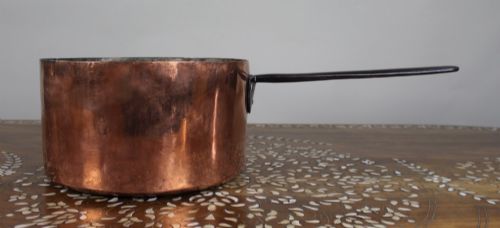
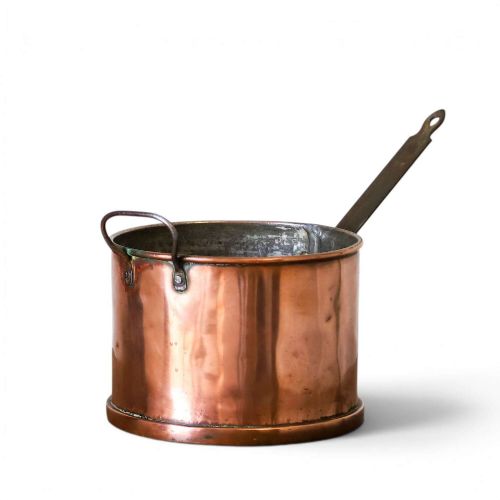
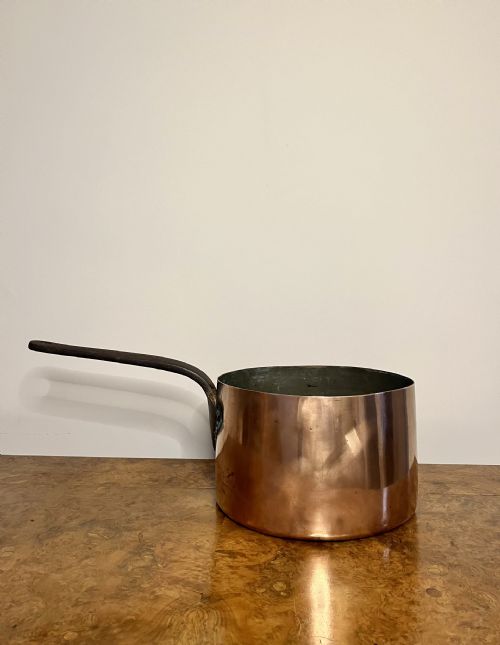
When you search for a vintage copper saucepan, you encounter heavy kitchen vessels originating from Georgian and Victorian English kitchens as well as nineteenth century French traditions. These items range from individual pint pans and brandy warmers to large lidded saucepans and graduated sets.
You are most likely to meet Victorian pieces on this page, often forged in heavy gauge copper with traditional handle attachments. English examples sit alongside French country sets, reflecting domestic culinary practices of the eighteen hundreds.
How they were made
Coppersmiths shaped these pieces using hand-beaten heavy gauge copper, hammering the metal over forms to achieve sturdy walls. Iron and wrought iron handles were riveted securely to the bodies for heavy lifting.
Interior surfaces received a protective coating of tin to prevent food reaction with the copper, while brass fittings and wooden components occasionally finished lids and grips.
Listings feature materials including copper, iron, cast iron, tin, wood, brass, and wrought iron across Georgian and Victorian eras.
What varies in quality
Thickness of the metal plate distinguishes standard utility vessels from superior examples, with heavier gauge copper retaining heat more evenly across the base. The integrity of the hand-beaten finish and the tightness of riveted joints reveal the maker's skill.
Original stamped maker marks or patent details elevate certain pieces, demonstrating documented provenance from makers such as Hodges and Sons or Griffiths.
Hodges and Sons·Liptons·Griffiths Patent
The Vintage Copper Saucepan Glossary
- Gauge
- The thickness of the sheet metal used to form the vessel. Heavier gauges indicate professional culinary use.
- Tinning
- The traditional application of a thin layer of tin to the interior copper surface. This layer prevents copper toxicity during cooking.
- Brandy warmer
- A small specialised saucepan with a long handle, designed for warming spirits or sauces. These feature distinctive single-pour lips.
- Graduated set
- A collection of pans sized in proportional increments so they nest together. These sets were standard equipment in large nineteenth-century kitchens.
- Wrought iron
- Iron worked by hand while hot, commonly used for durable handles on heavy cookware. It provides a contrasting dark texture to the bright copper body.
Vintage Copper Saucepan: Frequently Asked Questions
Are these copper saucepans safe for cooking?
Most vintage pieces require inspection of their interior tin lining before food use. If the underlying copper is exposed, the pan needs re-tinning by a specialist.
Historically, these pans cooked sauces and stews over open hearths or ranges. Modern cooks often use them on gas or electric hobs with appropriate heat management.
How do I clean a vintage copper saucepan?
Standard non-abrasive copper cleaners remove tarnish and restore the metallic shine. Avoid harsh scouring pads that scratch the hand-beaten surface.
Leaving the natural patina intact appeals to some collectors who prefer a mellow, aged appearance. Regular wiping with a soft cloth maintains the exterior finish.
How can I tell a Georgian pan from a Victorian one?
Georgian pans typically display earlier handle attachment styles and heavier hand-forged characteristics from around eighteen hundred. Their forms align with open hearth cooking methods of the period.
Victorian pieces often feature standardised manufacturing techniques and clearer maker stamps or patent marks. Lidded saucepans became more common during the later nineteenth century.
Why do some pans have iron handles?
Iron handles provided the structural strength required to lift heavy, liquid-filled copper vessels safely. Smiths riveted these strong elements directly to the pan walls.
Copper conducts heat rapidly, so iron resisted burning and stayed cooler than the body during long periods on the stove.