
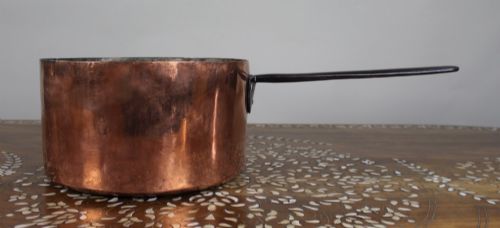
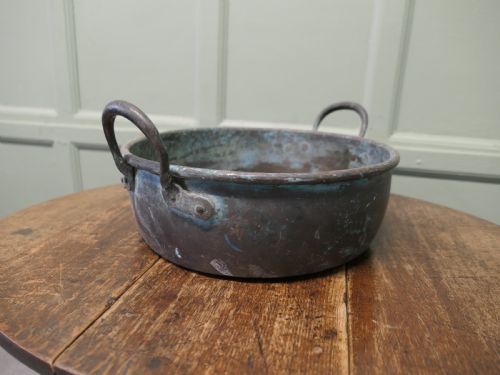
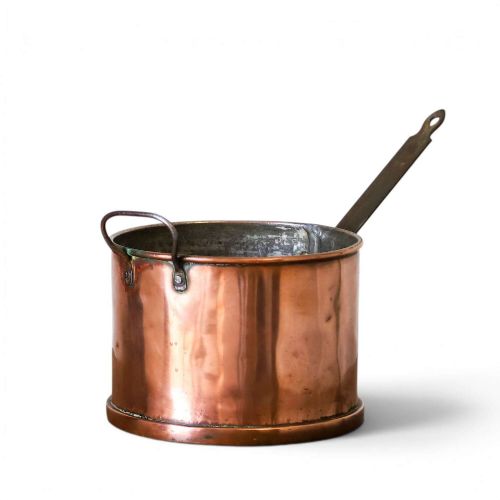
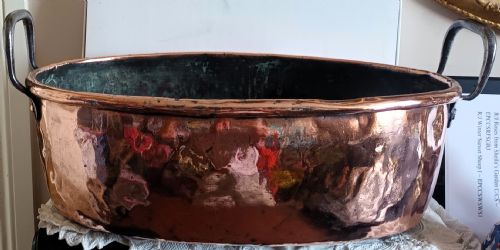


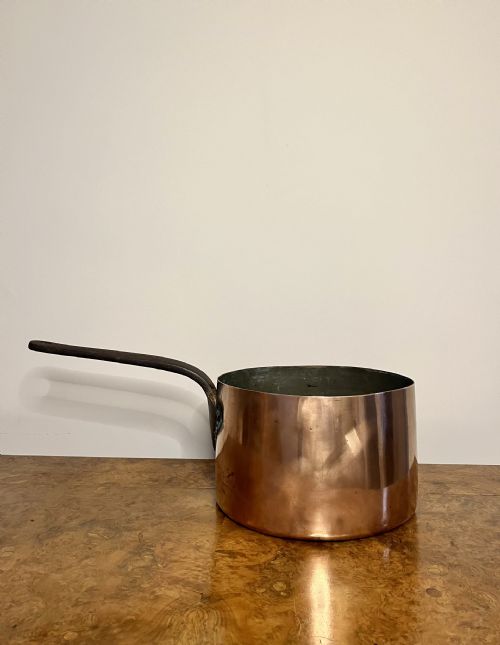

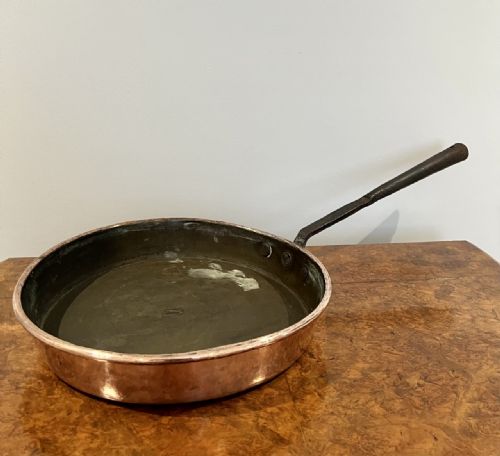


Iron Handle Copper Pan
An iron handle copper pan combines utility and warmth, bringing centuries of culinary tradition directly to your kitchen.
Iron Handle Copper Pan
An iron handle copper pan represents traditional kitchenware fashioned across the Georgian and Victorian eras. These items serve practical culinary functions as saucepans, preserving pans, and cauldrons.
The pieces appearing on this page span several decades, originating from English and French makers. Buyers encounter items ranging from single pint saucepans to large sets of matching vessels.
Forms include deep milk pans, cream setting pans, and heavy preserving vessels designed for domestic hearths and professional kitchens alike. Each piece carries the marks of heavy past usage in period environments.
How they were made
The construction relies on heavy gauge copper bodies paired with sturdy iron or wrought iron handles. Artisans formed the copper sheets through hand-beaten techniques, shaping them into deep vessels before securing the metal handles.
Many examples feature internal tin linings to prevent food from reacting directly with the copper surface. Iron swing handles and fixed handles attach firmly to the main bodies, designed to endure heavy lifting.
Listings feature copper, cast iron, wrought iron, brass, and tin across Georgian and Victorian periods.
What varies in quality
Quality rests in the thickness of the metal gauge and the integrity of the hand-beaten construction. Thicker copper walls retain heat more evenly and resist warping over centuries of use.
Makers' marks, stamps, and patent details elevate particular pieces above standard utility wares. The harmonious matching of sets and the preservation of original tin linings further distinguish finer specimens.
Hodges and Sons·Liptons·Griffiths Patent
The Iron Handle Copper Pan Glossary
- Gauge
- The thickness of the metal sheet used to form the body of the vessel. Heavier gauges indicate superior durability and heat retention.
- Tin lining
- A protective interior coating applied to prevent copper from reacting with acidic ingredients. This coating requires periodic renewal.
- Wrought iron
- A tough, malleable form of iron beaten into shape by hand, frequently utilised for handles and swing Bails. It displays a fibrous texture.
- Cream setting pan
- A wide, shallow vessel designed for resting milk to allow cream to rise to the top. These pieces reflect dairy practises of the Georgian period.
Iron Handle Copper Pan: Frequently Asked Questions
Can I still cook with these pans?
Many of these vessels remain entirely functional for modern cooking provided the interior tin lining is intact and clean. Buyers often use them on gas or electric hobs just as cooks did in the nineteenth century.
For best results, users verify the stability of the iron handle and check that the flat base sits securely on the cooking surface without rocking.
How do I clean antique copper?
Maintenance involves standard non-abrasive metal cleaners designed specifically for copper surfaces. Regular polishing preserves the rich warm tone without removing the underlying metal.
Harsh scouring pads should be avoided to protect the hand-beaten texture and any historical marks stamped into the body.
How do I date an iron handle copper pan?
Dating relies on stylistic clues, handle construction methods, and any stamped maker marks or patent names on the body. Georgian pieces typically exhibit different handle profiles compared to later Victorian iterations.
The transition from hand-beaten surfaces to more uniform industrial sheets also helps narrow the period of manufacture.