






Copper Cooking Pan
A copper cooking pan brings warmth and utility to the kitchen, combining heavy metal sheets with forged handles for centuries of honest work.
Copper Cooking Pan
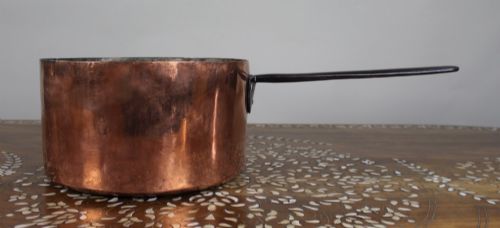
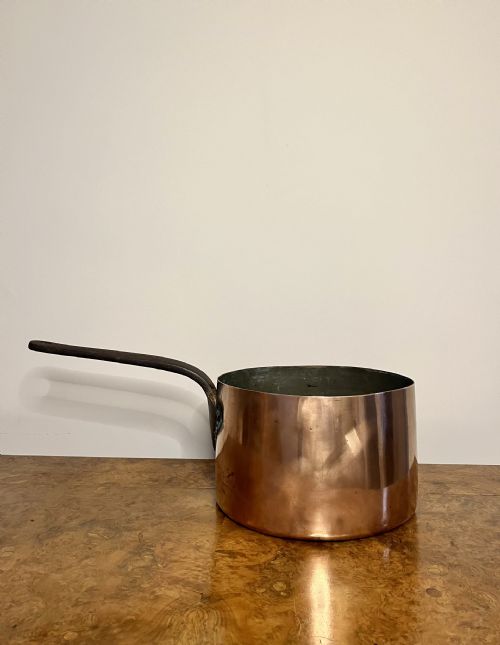
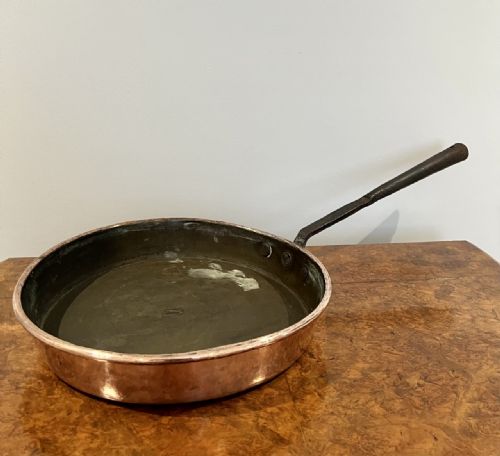
A copper cooking pan is a robust kitchen vessel built for heat conduction, spanning Georgian and Victorian periods in various forms.
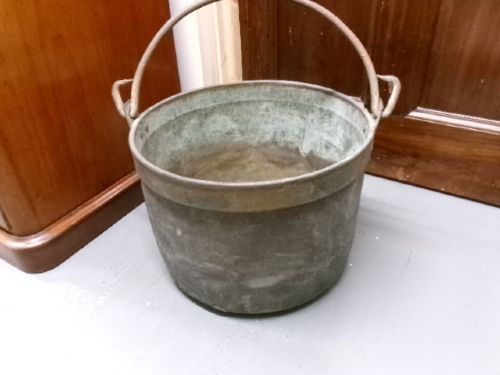
You will encounter single saucepans, preserve pans with swing handles, large cooking vessels, and sets of graduated pans.
Origins include English workshops and French country kitchens, reflecting practical domestic and culinary use over the nineteenth century.
How they were made
Heavy gauge copper sheets form the body of each pan, shaped by hand and joined with visible rivets.
Handles and fittings utilise iron, brass, or wrought iron, attached securely to withstand heavy lifting and hearth cooking.
Interiors retain tin linings or show the bare metal surface, while iron handles provide strength during use.
Some preserve pans still carry the faint, sweet scent of fruit boiled down over a nineteenth-century hearth.
What varies in quality
Thickness of the metal dictates the structural integrity, with heavier pans offering superior durability and heat distribution.
The precision of hand-beating and the finish of riveted joints separate standard utility vessels from pieces bearing maker marks.
Original patinas and untouched surfaces distinguish pieces that retain their authentic character from those heavily altered.
Hodges and Sons·Liptons
The Copper Cooking Pan Glossary
- Tin lining
- A protective interior coating applied to copper cookware to prevent food reacting with the metal. This traditional layer is essential for safe culinary use.
- Preserve pan
- A wide, open vessel designed for boiling jams and fruits, usually featuring a swing handle for pouring. These often have flat bottoms to sit steadily on a heat source.
- Swing handle
- A movable arched handle attached to the sides of a pan or cauldron. It allows the vessel to be suspended over a fire or tipped easily.
- Riveted joint
- A method of fastening handles to the body using metal pins hammered flat. Strong joints show neat, uniform hammering around the fixture.
Copper Cooking Pan: Frequently Asked Questions
Can I still cook with antique copper pans?
Many of these vessels remain structurally sound, though interior tin linings often require professional re-tinning before modern food preparation.
Evaluating the thickness of the base ensures the pan can safely handle heat on contemporary kitchen stoves without warping.
How do I clean old copper?
A gentle polish removes surface tarnish while preserving the darker patinas that accumulate around riveted joints over generations.
Avoid harsh abrasive pads that scratch the soft metal and diminish the historic character of the exterior.
How do I date a copper pan?
Examining the formation of the dovetail seams, the shape of the iron handles, and the style of the maker marks reveals the period of manufacture.
Georgian and early Victorian examples typically feature heavier hand-forged iron fittings compared to later stamped variations.
Why do some pans have iron handles?
Iron provides the rigidity and strength needed to lift heavy pans filled with liquids without bending or flexing.
Forged iron also withstands the intense heat of open hearths and older stove tops far better than softer metals.