
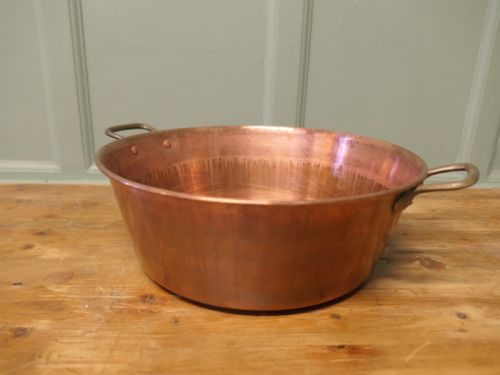
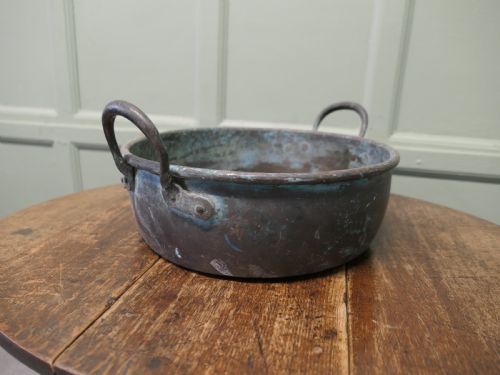
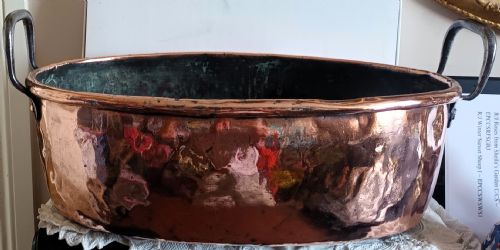


Large Copper Jam Pan
A large copper jam pan brings warmth and honest utility to any room, offering robust metalwork designed to last generations.
Large Copper Jam Pan
A large copper jam pan is a heavy utility vessel designed for culinary work, preserving, and dairy tasks across Georgian and Victorian periods. These pieces span George III through to 1930 examples, showcasing straightforward country craftsmanship.
Buyers encounter heavy preserving pans, cream setting pans, double-handled vessels, and cauldrons with wrought iron swing handles. These forms originate from English kitchens and farmhouses where durability governed design.
Most examples date to the nineteenth century, reflecting utilitarian kitchenware traditions. They serve today just as easily as planters and decorative vessels in modern settings.
How they were made
Makers utilised heavy sheet copper beaten into deep bowl and pan forms to withstand constant hearth use. Iron and brass components appear in handles, providing sturdy points for lifting heavy contents.
Wrought iron forms swinging handles on larger cauldrons, riveted directly to the heavy copper body. Tin linings protected the metal from acidic fruits during jam making and dairy work.
Some heavy cauldrons arrive with soot marks still clinging to their bases from nineteenth-century hearth fires.
What varies in quality
Substance and metal thickness separate standard kitchen vessels from superior examples bearing maker stamps or specific attribution. Heavier gauge copper maintains its shape under intense heat and heavy use.
Finishing touches such as dovetailed base joints, sturdy brass handles, and wrought iron attachments indicate higher workshop standards. Stamped names like Hodges and Sons or Liptons elevate the standing of a piece.
Hodges and Sons·Liptons
The Large Copper Jam Pan Glossary
- Jam pan
- A wide, open metal vessel designed for boiling fruit and sugar. The shallow depth allows steam to escape quickly during preserving.
- Cream setting pan
- A wide shallow basin utilised in dairies to let cream rise to the top of milk. These examples date from the Georgian and Victorian eras.
- Cauldron
- A large rounded cooking vessel fitted with a swing handle for hanging over a fire or hearth. Wrought iron handles provide the necessary strength for suspension.
- Preserving pan
- A heavy-duty metal bowl created specifically for boiling down preserves. They utilise thick copper walls to distribute heat evenly across the base.
Large Copper Jam Pan: Frequently Asked Questions
How do I clean a copper jam pan?
Warm water, mild soap, and a soft cloth keep the metal surface clean without removing the natural ageing. Avoid harsh scouring pads that scratch the soft copper.
Traditional copper cleaners restore bright shine if desired, though many collectors prefer maintaining a darker, patinated finish.
Can I still use these for cooking?
Many historical vessels retain their structural integrity, but verify the condition of any interior tin lining before preparing food. Modern use often requires re-tinning by a specialist artisan.
Most buyers choose to utilise them as display items, log holders, or large planters around the home.
How do I date a copper pan?
Examine the construction methods, handle attachments, and overall form to estimate the period of manufacture. Georgian pieces often feature distinct hand-beaten surfaces and specific rim shapes.
Nineteenth-century examples frequently include maker stamps, heavier iron drop handles, or distinctive double-handled arrangements.
What is the difference between a jam pan and a dairy pan?
Jam pans feature deep, rounded walls intended for boiling fruit mixtures over a heat source. Dairy or cream setting pans are wider and shallower to maximise surface area for milk separation.
Both utilise heavy copper construction, but their specific proportions reflect distinct kitchen and farmhouse tasks.