



Convertible Monks Bench
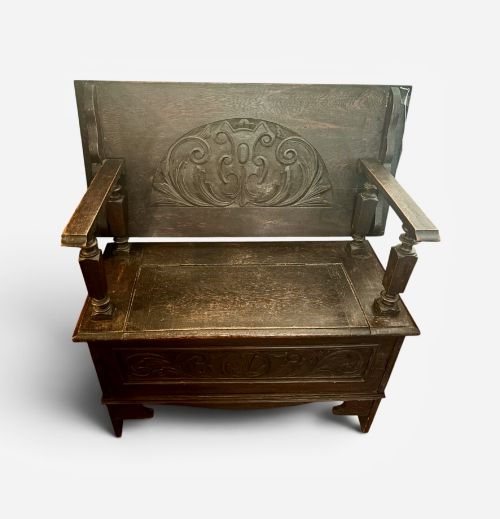
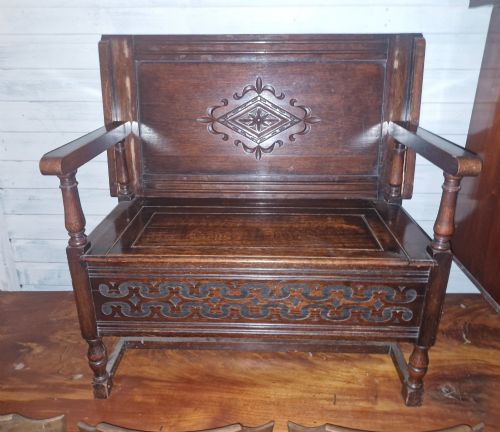
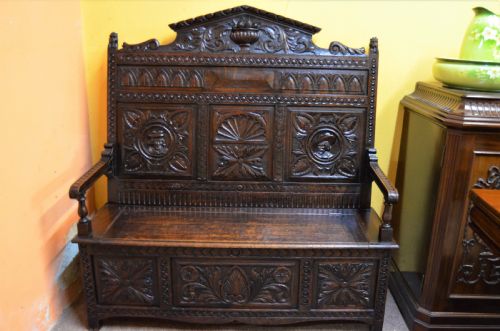
These convertible monks bench pieces transform from seating into tables, giving you clever multi-purpose furniture rooted in centuries of vernacular design.
Convertible Monks Bench
A convertible monks bench operates as dual-purpose furniture, shifting between a standard bench or seat and a table top surface by pivoting or folding the backrest. You will frequently encounter examples from the Victorian period alongside pieces dated to the 1920s and 1930s, reflecting a steady demand for this practical form.
The selections on this page span several stylistic revivals, including Jacobean, Gothic, and Art Nouveau interpretations executed primarily in oak and pine. These objects function equally well as hall seats, settles, or chair tables, incorporating storage compartments beneath lift-up seats or drawers.
Materials and construction
Oak and pine serve as the primary structural timbers, joined through traditional woodworking methods to support the pivoting top mechanisms. Cabinetmakers utilised iron and metal hinges, pins, and brackets to allow the backrest to transition smoothly into a flat table surface.
Carving and panel construction define the decorative approach across many examples, particularly within Revival styles. Artisans shaped timber panels and applied surface carving to the backs and arms, while some country vernacular pieces relied on simple painted finishes.
Listings on this page span periods from the 17th century through to the 1930s, with oak and pine appearing as the dominant materials.
Separating the ordinary from the exceptional
The precision of the pivoting mechanism and the stability of the joints dictate the functional standard of each piece. Superior examples maintain balance and alignment whether operating as a chair or a table.
Depth and crispness of carved detail distinguish finer workshop production from simpler commercial output. Timber selection, grain figure, and the integration of functional storage drawers further elevate the standing of individual examples.
The Convertible Monks Bench Glossary
- Convertible monks bench
- A dual-purpose seat that transforms into a table by folding or pivoting the backrest downward. This form served domestic spaces where floor area was at a premium.
- Chair table
- An early form of multi-functional furniture functioning as a high-backed chair when upright and a table when tilted. These pieces represent a direct ancestor to the later monks bench.
- Settle
- A wooden bench featuring a high back to block drafts and solid arms. Many versions include a compartment beneath the seat for storage.
- Vernacular
- Furniture built by local tradesmen using regional traditions rather than following high-style metropolitan fashions. These pieces often utilise native timbers like pine and oak.
Convertible Monks Bench: Frequently Asked Questions
How does a convertible monks bench work?
The backrest pivots on wooden pins or metal pivots, swinging forward and resting over the arms to form a flat tabletop surface. This dual-use engineering allowed households to save space in smaller rooms.
Beneath the seat, many examples feature a lift-up panel or a built-in drawer for storing household items.
What rooms suit a monks bench?
These pieces fit naturally into hallways, entryways, and living spaces where a combination of seating and surface space proves useful. Their compact footprint makes them practical for transitional areas.
Placing one against a wall allows the bench function to take precedence while keeping the conversion mechanism ready for use.
Are all monks benches old?
While the form originates in earlier centuries, many available pieces date from the Victorian era and the 1920s or 1930s. Revival movements sparked renewed interest in producing these traditional designs.
Examining the construction methods, timber patination, and hardware helps determine the approximate age of an individual piece.
How do I care for oak furniture?
Maintain timber surfaces by applying appropriate furniture wax periodically and avoiding placement near direct heat sources. Regular dusting with a soft cloth preserves the natural finish.
Protect the wood from excessive moisture fluctuations to prevent timber movement or joint loosening over time.