
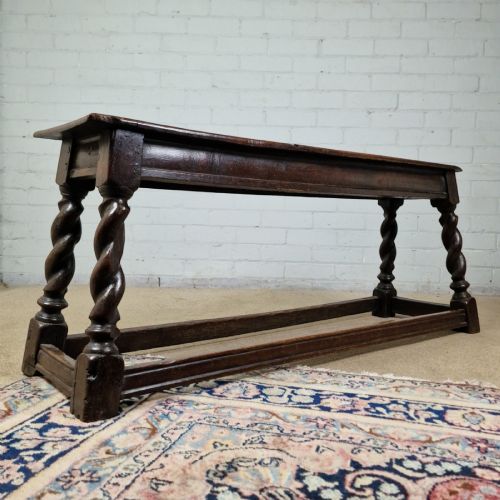
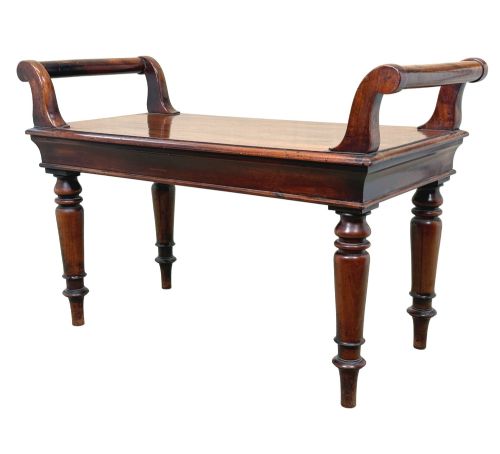
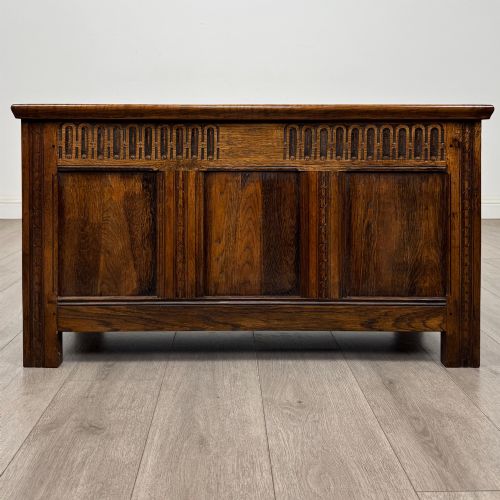

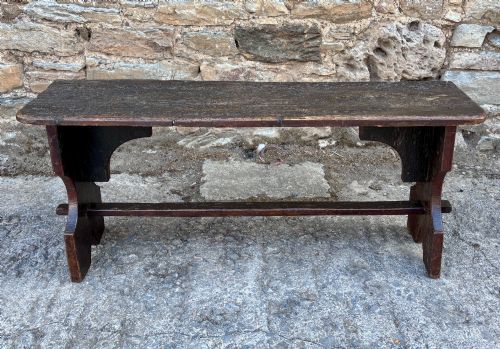



Dark Wood Hallway Bench
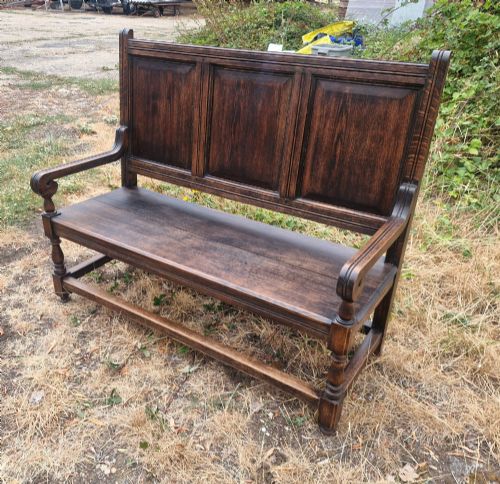
A dark wood hallway bench anchors an entrance hall with solid timber and functional seating.
Dark Wood Hallway Bench
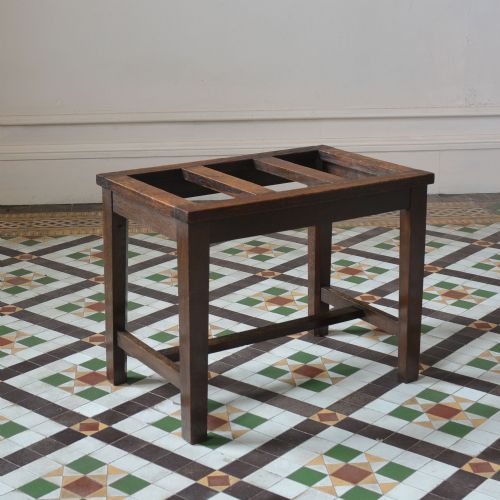
A dark wood hallway bench serves as a practical entrance seat, often combining storage or display functions within a narrow footprint. When searching for a dark wood hallway bench, buyers encounter various historical iterations spanning from the eighteenth century through the Edwardian period and the early twentieth century.
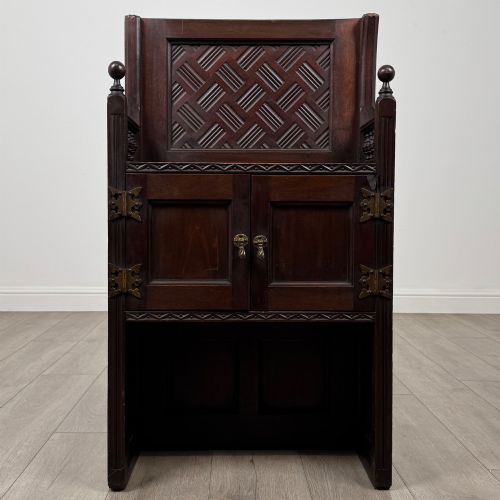
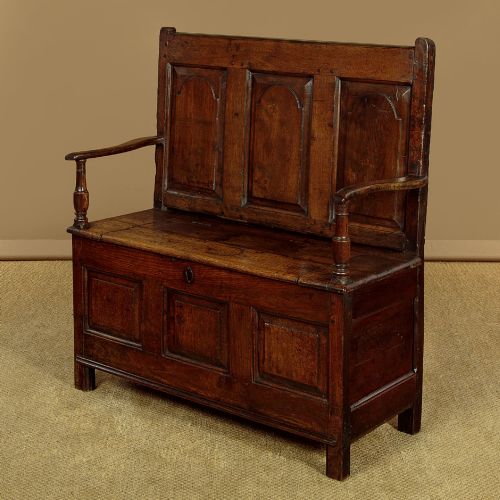
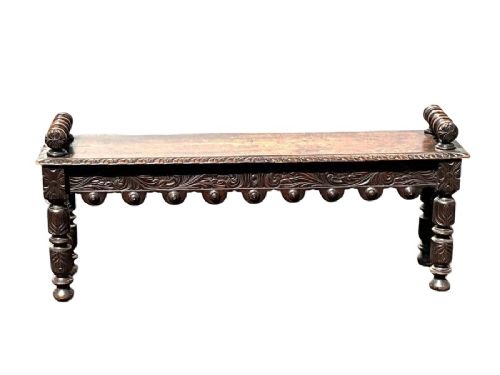
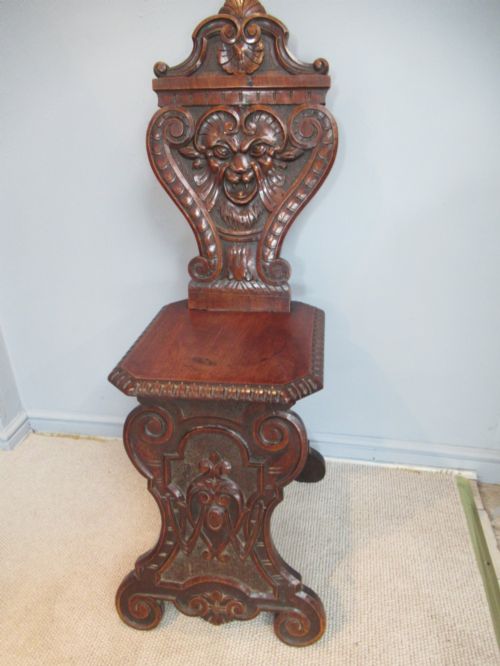
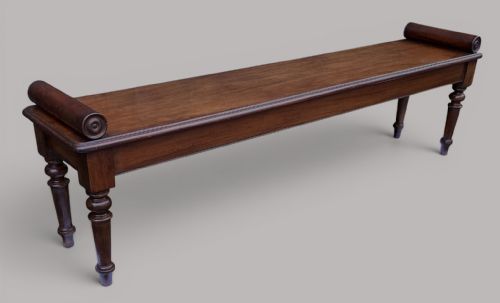
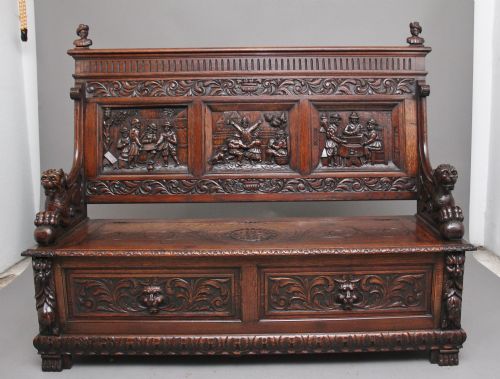
The selections on this page predominantly feature robust oak and rich mahogany forms. These range from high-backed settle designs and long window seats to monks benches, panelled oak seats, and integrated hall stands with brass or iron hardware.
Originating styles stretch across Jacobean Revival, Regency, Victorian Gothic Revival, and Edwardian traditions. Buyers will regularly find sturdy English country pieces alongside formal Regency window seats and carved continental adaptations.
Understanding quality and craftsmanship
Quality rests upon the depth of the timber's grain, the crispness of any hand-carved ornamentation, and the structural integrity of the joints. Finer pieces demonstrate careful timber selection, where panels match harmoniously and mouldings are cleanly executed without modern mechanical shortcuts.
The distinction between standard utility items and exceptional pieces lies in proportion and decorative ambition. Elaborate panel work, well-turned legs, integrated storage compartments, and original brass fittings elevate a piece from simple rustic joinery to a sophisticated example of period cabinet-making.
Listings feature oak and mahogany predominantly, alongside alternative hardwoods, iron, brass, and velvet upholstery.
Gillows
The Dark Wood Hallway Bench Glossary
- Settle
- A wooden bench featuring a high back to block draughts, solid arms, and often a box compartment beneath the seat. This form dates back centuries and provides enclosed hallway storage.
- Monk bench
- A convertible piece of furniture that transforms from a bench with a solid back into a table. It is frequently carved with historical motifs.
- Window seat
- A long, narrow bench designed to fit beneath a window frame, typically featuring low arms or an open mahogany or oak frame.
- Hall stand
- A multi-functional hallway furniture piece incorporating a bench, a back panel with coat hooks, an umbrella stand, and sometimes a mirror or small cabinet.
- Mortise and tenon
- A traditional woodworking joint where a projecting tongue fits snugly into a corresponding cavity to lock timbers together securely.
Dark Wood Hallway Bench: Frequently Asked Questions
How do I choose the right size?
Measure your entrance passage carefully to account for protruding arms, open doors, and the depth of the seat itself. Narrow hallways benefit from compact window seats or wall-mounted hall stands rather than deep settles.
Allow sufficient clearance for walking past the bench when people are seated. Long models require wide walls, while shorter stools fit easily into transitional spaces.
Were these benches originally made for hallways?
Many historic seating forms served multiple rooms before finding a permanent home in the entrance hall. Settles and window seats were often placed in parlours or kitchens to retain warmth near fires.
Over time, homeowners repurposed these robust wooden seats for entranceways to manage coats, hats, and footwear efficiently.
How do I care for dark wood timber?
Dust the surface regularly with a soft, dry cloth to prevent grit accumulation on the polished grain. Apply natural beeswax periodically to nourish the wood and maintain a protective finish.
Keep the timber away from direct heat sources and strong sunlight to prevent the dark finish from fading or the joints from drying out.
How can I tell the period of a bench?
Examine the construction marks, joint types, and decorative styles visible on the timber frame. Eighteenth-century pieces often display hand-planed surfaces and pegged joinery, whereas Edwardian and later variants utilise machine-sawn components.
Stylistic cues such as Jacobean carvings or Regency curves offer strong indicators of the era in which the piece was constructed.