
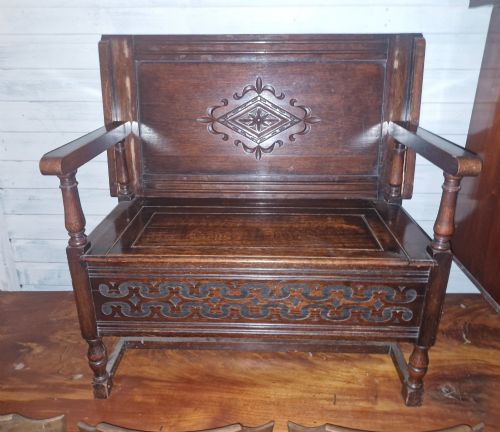


Convertible Chair Table
These convertible chair table pieces combine a seat and a table in one ingenious wooden frame, saving space in historic rooms.
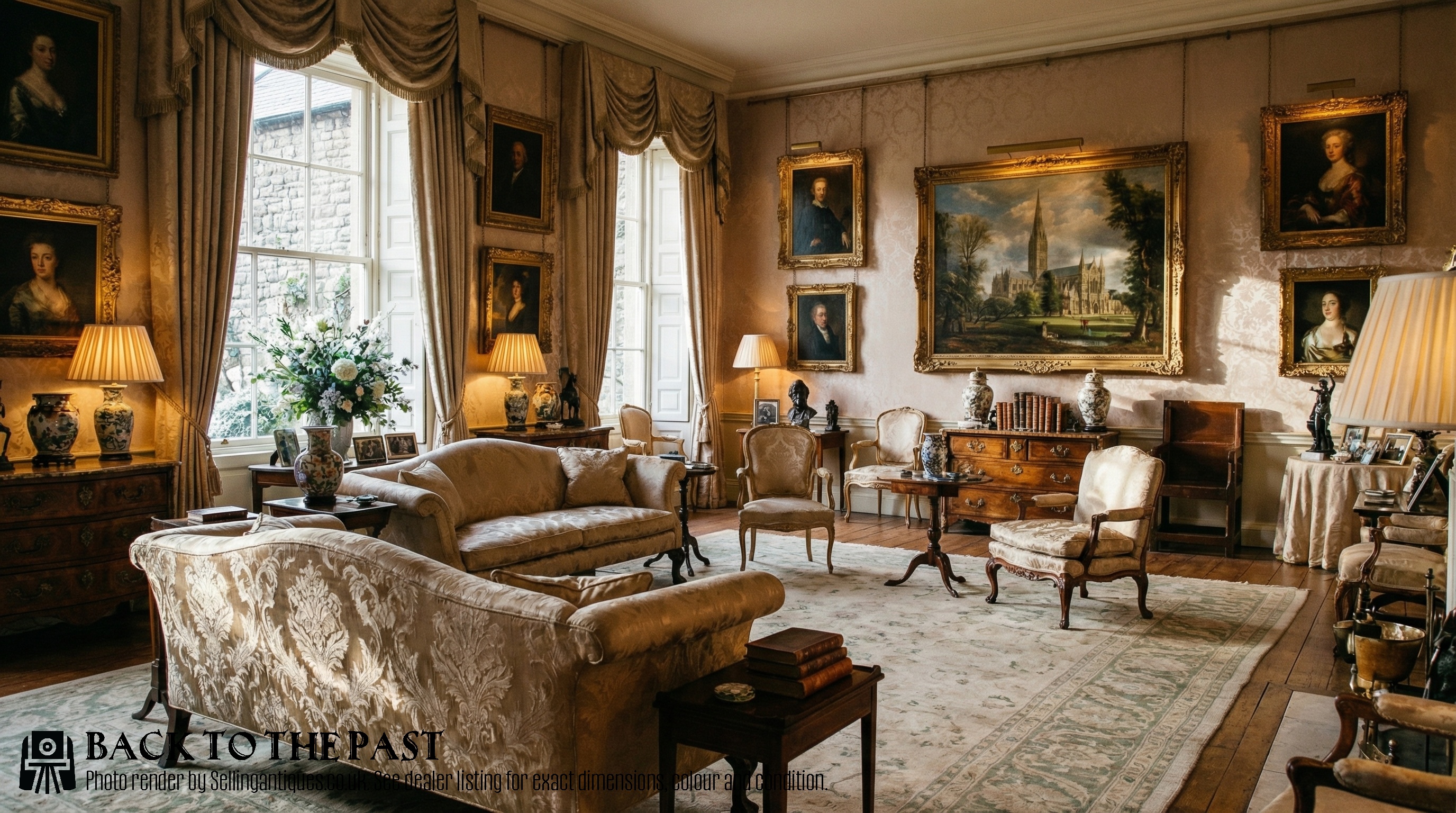
Convertible Chair Table
A convertible chair table is a dual-purpose item of furniture that shifts from a seat into a flat-topped table by pivoting or folding the backrest. The examples catalogued here range from the seventeenth century through to the art deco period, taking various forms such as monks benches, hall seats, settlers, and children's seating.
The version most commonly encountered on this page is the oak monks bench, often featuring a lift-up seat compartment or a carved back. These pieces draw on vernacular traditions, with styles spanning Jacobean revival, Georgian vernacular, and Victorian dark oak designs.
Makers historically produced these clever dual-purpose objects for modest interiors where floor space was at a premium. Surviving pieces demonstrate how households adapted their furniture for dining, working, and resting within a single footprint.
How they were made
Construction relies heavily on sturdy native timbers, predominantly oak and pine, joined to withstand the physical stress of pivoting mechanisms and daily dual usage. Carpenters utilised pegged mortise and tenon joints to secure the frames of these heavy timber seats.
Surface decoration on these dual-purpose items often includes hand carving, panelled backs, and painted finishes. Iron and brass fittings provide the structural pivots and hinges required to transition the backrest smoothly between a chair and a table top.
Listings feature items built from oak and pine, spanning periods from the seventeenth century through to art deco and the nineteen-thirties.
What varies in quality
Quality in a convertible chair table rests on the integrity of the timber framing and the original mechanics of the pivoting action. Superior examples display thoughtful proportions, integrated storage boxes beneath the seat, and harmonious joinery that endures centuries of transformation.
The distinction between ordinary and exceptional pieces lies in the crispness of the hand carving and the selection of well-figured oak or pine boards. Later revival items differ from early vernacular pieces in their tool marks, patination, and the authenticity of their hardware.
The Convertible Chair Table Glossary
- Monks bench
- A dual-purpose wooden seat with a pivoting back that folds down to form a small table top. This form served domestic spaces where single-use furniture consumed too much floor area.
- Vernacular
- Furniture made by local craftsmen using regional traditions and readily available materials rather than following high-style metropolitan fashions. These pieces often display idiosyncratic construction methods.
- Jacobean revival
- A nineteenth and early twentieth-century style that imitates the robust, dark oak furniture of the early seventeenth century. Items in this style typically feature deep geometric mouldings and heavy turned legs.
- Patination
- The surface sheen and colour acquired by wood and metal over decades of handling, exposure to light, and polishing. It serves as a visual indicator of age and genuine use.
- Settle
- A high-backed wooden bench with solid arms and a closed base designed to keep out draughts in older rooms. When combined with a folding top, it functions as a convertible chair table.
Convertible Chair Table: Frequently Asked Questions
How do convertible chair tables work?
The upper backrest pivots forward on wooden pegs or metal hinges to rest flat across the arms, creating an instant table surface. The base frequently doubles as a box chest accessed by lifting the hinged seat.
This mechanism allowed small households to clear space by day and set a dining surface by night without needing separate tables and chairs.
Are these pieces comfortable to sit on?
Most antique convertible chair tables feature upright wooden backs and solid timber seats designed for utility rather than lounging. Upholstered cushions or separate tapestry pads were sometimes added historically to soften the seat.
The upright posture reflects the domestic habits of earlier centuries when seating was built for upright dining and working tasks.
How do I date a convertible chair table?
Dating relies on examining the timber species, tool marks, joinery techniques, and the style of the carving. Seventeenth-century examples display hand-split oak and pegged joints, whereas later Victorian and Edwardian revival pieces show mechanical saw marks.
Comparing the hardware, such as iron or brass pins, also helps distinguish genuine early periods from later regional revivals.
Where should I place one in a modern home?
These compact items suit hallways, entryways, or small sitting rooms where their dual function remains useful for storage and surface space. Placing them against a wall allows the back to remain upright as a decorative hall seat until a table is needed.
Keep them away from direct heat sources to prevent the dry pine and oak timbers from splitting over time.