

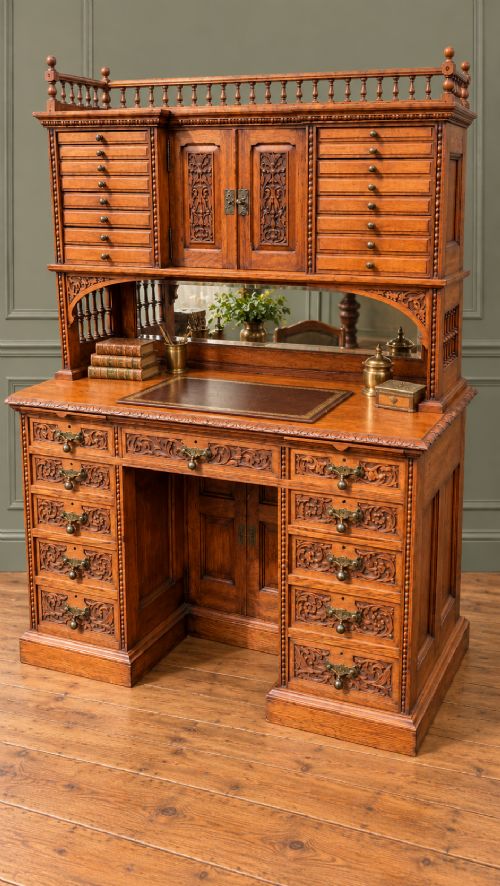


Antique Hutch Table
An antique hutch table is a dual-purpose seating and surface piece that saves space in smaller rooms.
Antique Hutch Table
When you search for an antique hutch table, you are looking at utilitarian convertible furniture that shifts between a chair or bench and a table. The pieces found here include chair tables, monks benches, and metamorphic cupboards originating across several centuries.
The versions you are most likely to meet on this page date from the seventeenth century through to the Victorian era. They combine heavy timber construction with practical household utility.
How they were made
These items rely on solid timber construction using oak and pine, often joined with traditional pegged or panelled methods. Heavier pieces utilise durable hardwoods that withstand the physical stress of constant transformation between seating and surface.
Metal hardware such as iron and brass appears on hinges, catches, and drawers to facilitate movement and storage. Carved geometric details and painted surfaces sometimes decorate the primary wooden structure.
Antique Hutch Table Retail Price Guide 2026
Typical asking prices for hutch table among the pieces listed under this phrase on Sellingantiques today, from the lower quarter to the upper quarter. They describe what is for sale here now, not the wider market.
This site's listings show oak and pine as the predominant materials used across seventeenth-century and Victorian pieces.
What varies in quality
The grade of an antique hutch table rests upon the integrity of its timber and the mechanical soundness of its pivoting or folding mechanism. Early seventeenth-century examples display deeply worked surfaces and structural joinery that differ significantly from later Victorian interpretations.
Originality of components defines the upper tier of the range, where untouched timber patination and functional hardware remain intact. Lesser examples show replacement sections or altered proportions that diminish their historical coherence.
The Antique Hutch Table Glossary
- Monks bench
- A dual-purpose seating unit with a solid back that tilts forward to form a tabletop. This form is central to the history of convertible vernacular furniture.
- Chair table
- A seating piece with a wide back that rests horizontally upon arms or a base to create a flat surface. It represents a common space-saving design in older domestic interiors.
- Vernacular
- Everyday domestic design built by regional makers rather than high-style cabinetmakers. Such items reflect local building traditions and available materials.
- Metamorphic
- Descriptive term for furniture designed to change its form and function through hinged or sliding elements. These clever designs maximise utility in compact spaces.
- Jacobean Revival
- A nineteenth-century style imitating the heavy, dark oak furniture of the early seventeenth century. It utilises geometric carvings and robust turnings.
Antique Hutch Table: Frequently Asked Questions
What is an antique hutch table?
An antique hutch table is a multifunctional item of furniture designed to serve as both a seat and a table. The top tilts or folds to alternate between a high-backed chair and a flat surface.
These pieces were historically used in small homes where floor space was at a premium. They combine practical utility with traditional cabinetmaking techniques.
How do you use a monks bench?
A monks bench functions as an enclosed bench with storage beneath the seat and a hinged back. When pivoted forward, the back rests on the armrests to create a table.
In a modern home, it serves as hallway seating or a compact dining surface. The internal compartment provides concealed storage for household items.
How can you tell the age of these pieces?
Age is determined by observing the timber species, joinery methods, and tool marks left on the wood. Earlier pieces from the seventeenth century often feature pegged construction and hand-rived oak.
Later Victorian versions display machine-cut elements and softer pine timbers. Stylistic details like geometric carvings also point to specific periods of manufacture.