


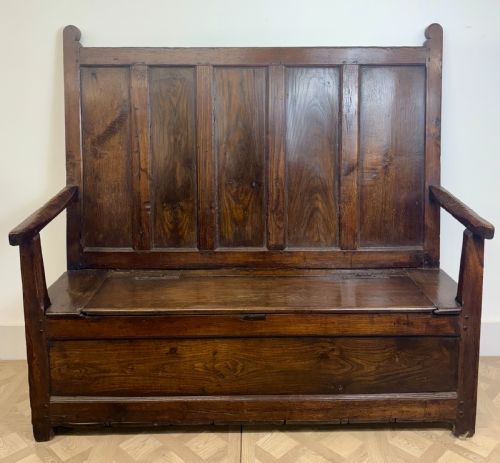
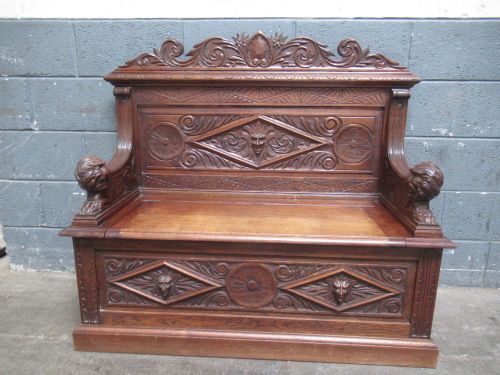
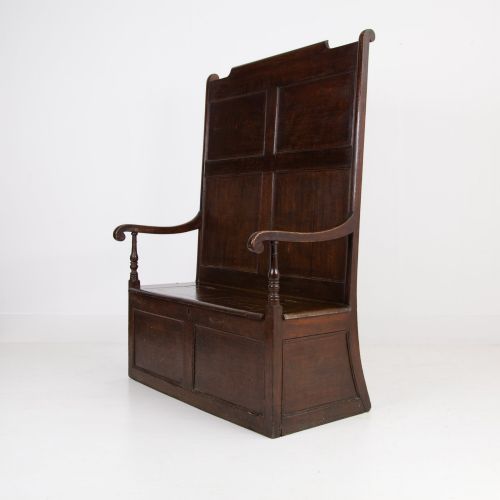
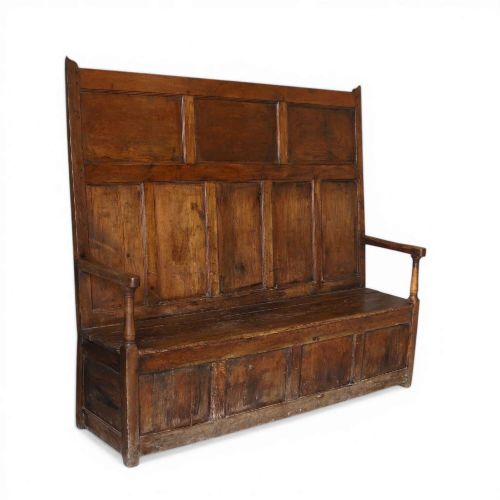


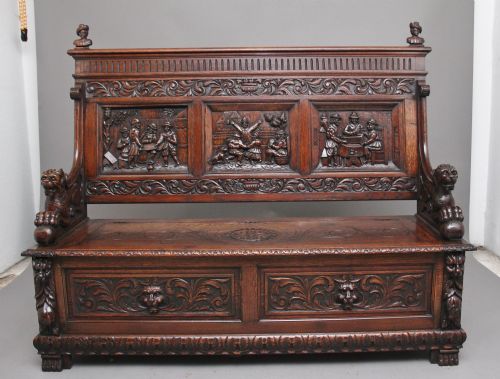
Brown Oak Monks Bench
A brown oak monks bench is a sturdy timber seat that doubles as a table, offering period character and clever storage for a hallway.
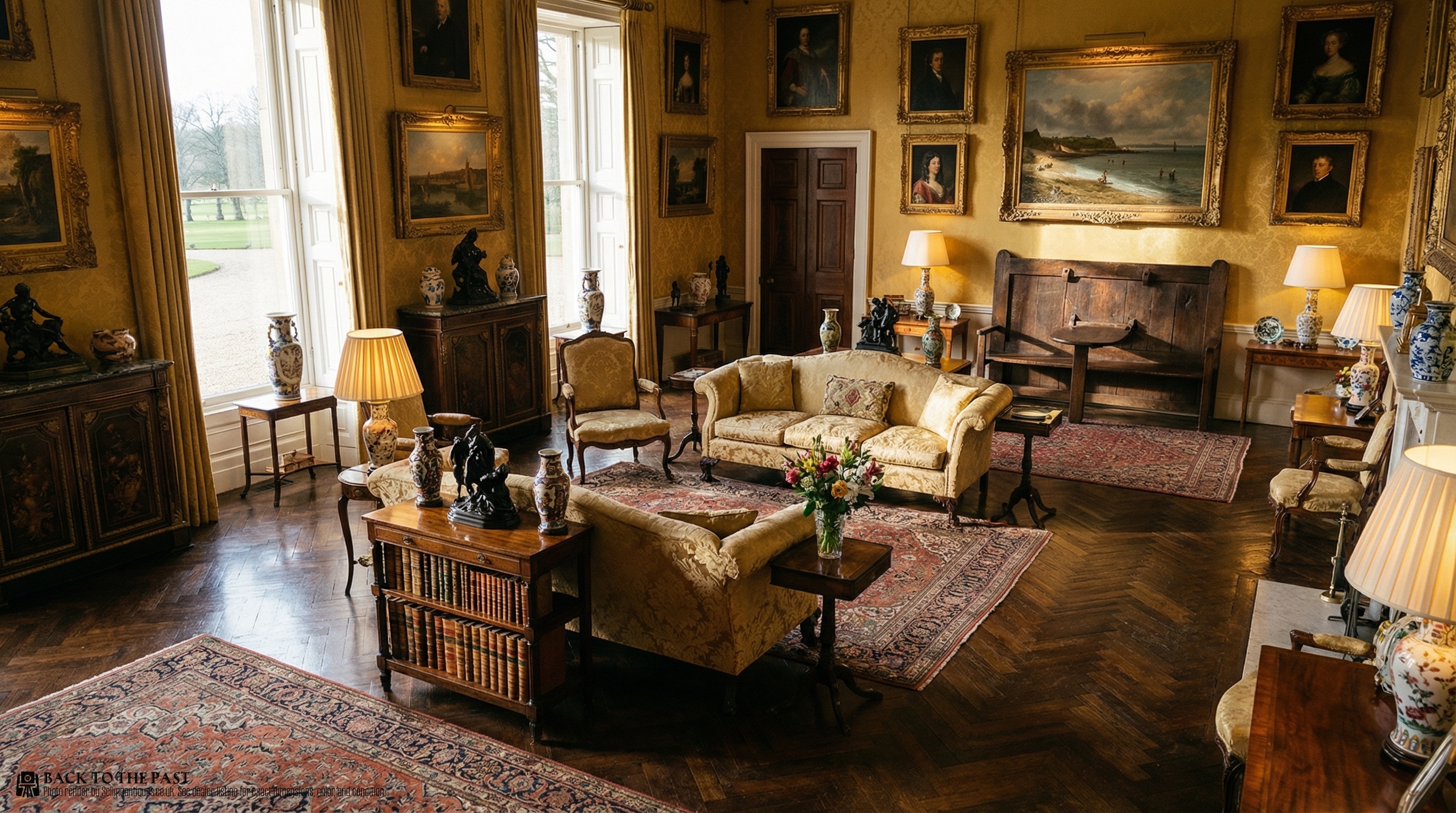
Brown Oak Monks Bench
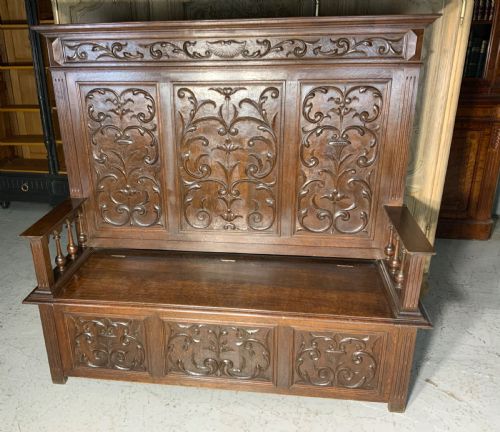
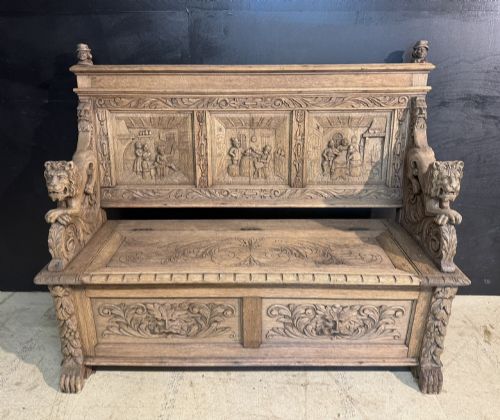
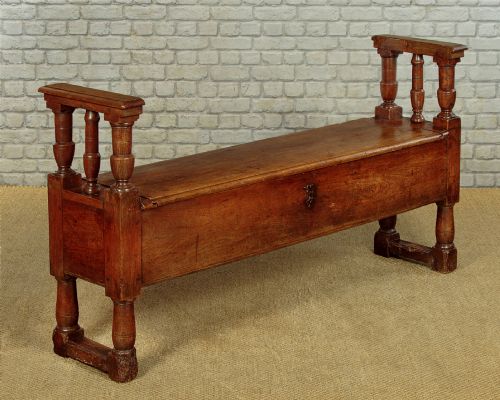
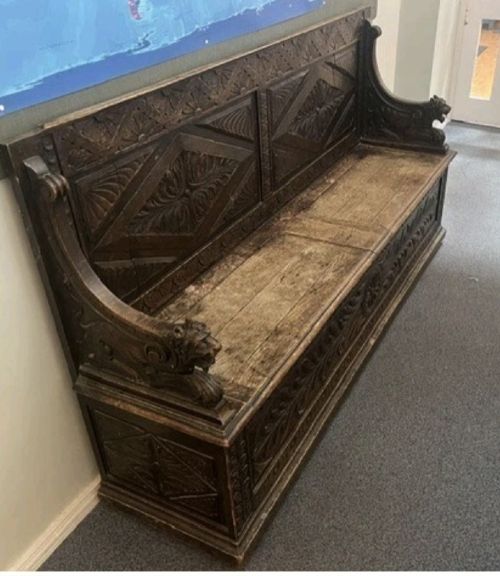
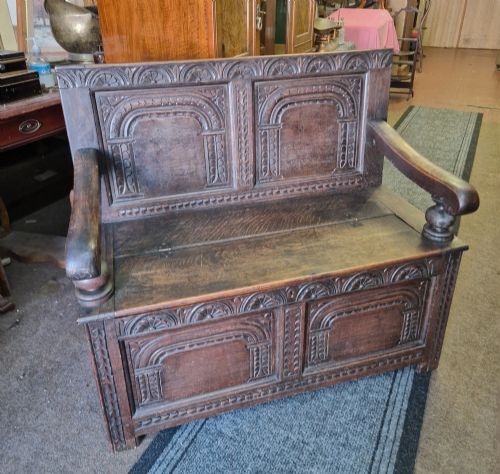
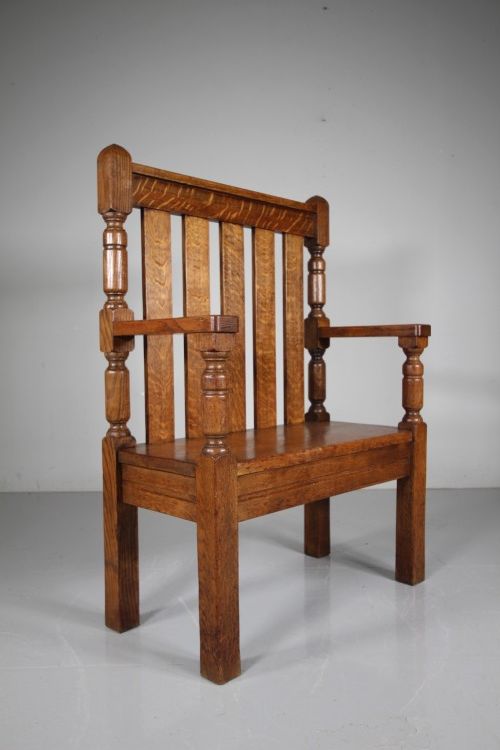
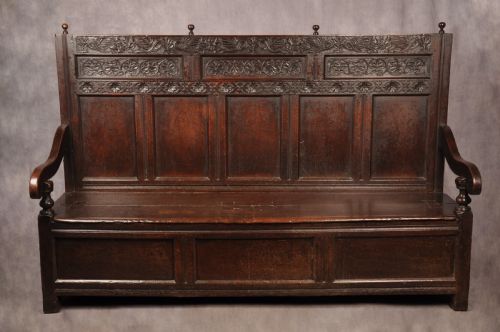
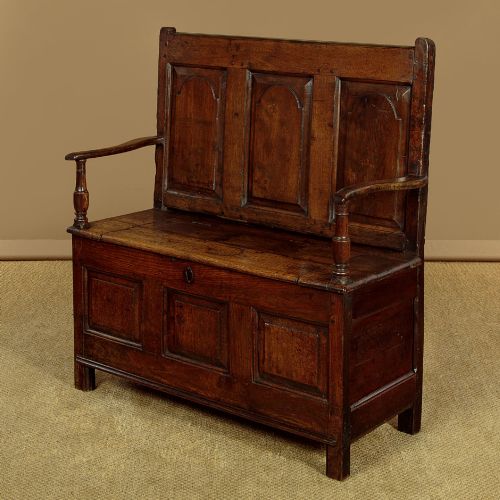
When you search for a brown oak monks bench, you are looking at substantial timber seating pieces that bridge the gap between historic settles and multifunctional hall furniture. These domestic items appear across several eras, with Victorian interpretations and later twentieth-century revival pieces forming a large portion of what you encounter.
The form typically combines a hinged top or back that converts the seat into a table surface, alongside a box compartment beneath for household storage. Examples range from compact hall seats to high-backed settles carrying centuries of domestic use.
Origins span English, Welsh, and Scottish workshops, utilising native hardwoods shaped by regional traditions. You will find both simple vernacular designs and heavily carved revival styles bearing the motifs of earlier centuries.
How they were made
Joiners constructed these pieces primarily from solid oak, sometimes combining ash, elm, or fruitwood for secondary framing and panels. Boards were joined using traditional framing techniques, frequently employing pegged mortise and tenon joints to withstand the stress of daily seating and table conversion.
Surface decoration relied on hand-carved panels, linenfold motifs, or applied mouldings rather than applied veneers. Blacksmiths provided essential structural support through wrought iron hinges, latches, and brackets that secured the moving top mechanisms.
Brown Oak Monks Bench Retail Price Guide 2026
Typical asking prices for brown oak monks bench among the pieces listed under this phrase on Sellingantiques today, from the lower quarter to the upper quarter. They describe what is for sale here now, not the wider market.
Listings feature oak alongside elm, ash, and fruitwood, spanning periods from the 17th Century through the Arts & Crafts era.
What varies in quality
The distinction between ordinary examples and finer pieces lies in the selection of the timber and the depth of the carving. Heavier gauge oak and crisp, hand-chiselled detailing elevate a piece above standard factory-produced revival furniture.
Structural integrity also separates grades of manufacture, particularly around the pivot points and box bases. Original hardware and undisturbed timber patination indicate a higher standard of preservation and craftsmanship.
Liberty
The Brown Oak Monks Bench Glossary
- Monks bench
- A multifunctional hall seat featuring a pivoting back or top that converts into a table. This form provides both seating and a flat surface.
- Settle
- A wooden wooden bench with a high back and solid arms, designed to keep out draughts in older homes. They often incorporate a box seat for storage.
- Box settle
- A variant of the settle featuring a lidded compartment beneath the seat for storing blankets or garments. These served as practical storage furniture in historic hallways.
- Panel-back
- A construction method where the backrest is made from fitted wooden panels held within a frame. This technique accommodates seasonal wood movement.
- Vernacular furniture
- Domestic pieces made by local craftsmen following regional traditions rather than high-style metropolitan designs. These objects reflect the practical needs of rural households.
Brown Oak Monks Bench: Frequently Asked Questions
How do I use a monks bench?
The hinged back rotates forward to rest upon the armrests, creating a flat table surface while you sit or stand beside it. Lift the back upright again when you need a traditional hall seat.
The enclosed box beneath the seat serves as a practical repository for winter garments, shoes, or everyday clutter in a narrow entryway.
Are these benches genuinely old?
The pieces span a wide chronological range, including authentic seventeenth and eighteenth-century examples alongside Victorian revivals and early twentieth-century interpretations. Examining the construction methods and timber ageing helps determine the exact period.
Revival pieces from the nineteenth and twentieth centuries often replicated earlier Jacobean or Gothic styles for Victorian and Edwardian homes.
Where should I place one?
Hallways and entryways remain the traditional and most practical locations for these dual-purpose items. Their narrow profiles allow them to sit flat against a wall without blocking high-traffic thoroughfares.
They also function effectively in large living rooms or reception spaces where extra seating and hidden storage are required.